

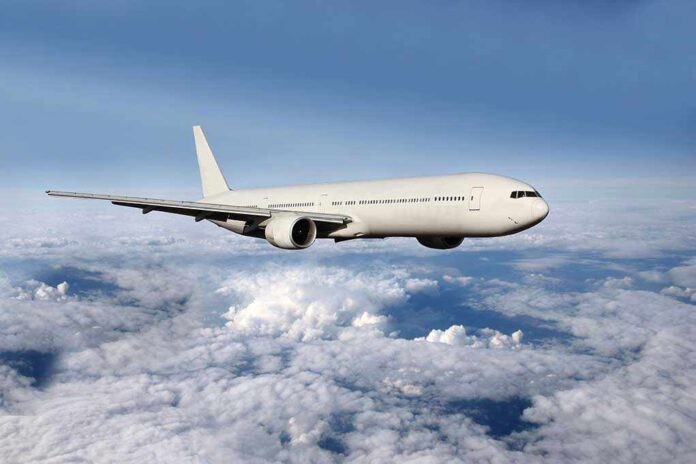
A sudden plunge of 100 feet by a commercial aircraft raises concerns about cosmic rays impacting aviation safety.
Story Highlights
- Cosmic rays suspected in sudden aircraft dive
- Incident raises questions about aviation safety and space weather
- Potential implications for airline safety protocols
Cosmic Rays: A Threat to Aviation?
A recent incident involving a commercial aircraft plunging 100 feet in mid-air has brought to light the potential dangers of cosmic rays. These high-energy particles, originating from outer space, can interfere with avionics systems, causing unexpected behavior. This raises significant concerns for aviation safety, especially as air travel becomes more prevalent.
The aircraft, carrying passengers from a major airline, experienced a sudden drop, which experts believe might be linked to cosmic ray interference. This phenomenon, though rare, poses a real threat to aviation as it can affect navigational and communication systems, leading to potentially dangerous situations.
Understanding Cosmic Rays and Their Impact
Cosmic rays are high-energy particles from outer space that constantly bombard Earth. While our atmosphere shields us from most of these particles, at high altitudes, like those reached by commercial airliners, their effects can be more pronounced. This incident highlights the need for further research into how these rays interact with aircraft systems and what measures can be taken to mitigate their impact.
Airlines and aviation authorities are now looking into strengthening safety protocols to address potential vulnerabilities caused by cosmic rays. This includes revisiting aircraft design and enhancing monitoring systems to detect such interferences before they pose a risk to flight safety.
Implications for Future Aviation Practices
The recent incident serves as a wake-up call for the aviation industry. As experts continue to investigate the effects of cosmic rays, there is a push for increased collaboration between scientists and aviation engineers to develop robust solutions. This may involve designing aircraft with improved shielding or developing new technology to predict and counteract cosmic ray interference.
Ultimately, ensuring passenger safety remains a top priority. As our understanding of space weather improves, so too will our ability to safeguard against its potential threats, ensuring that incidents like this become a thing of the past.
Sources:
How cosmic rays grounded thousands of aircraft