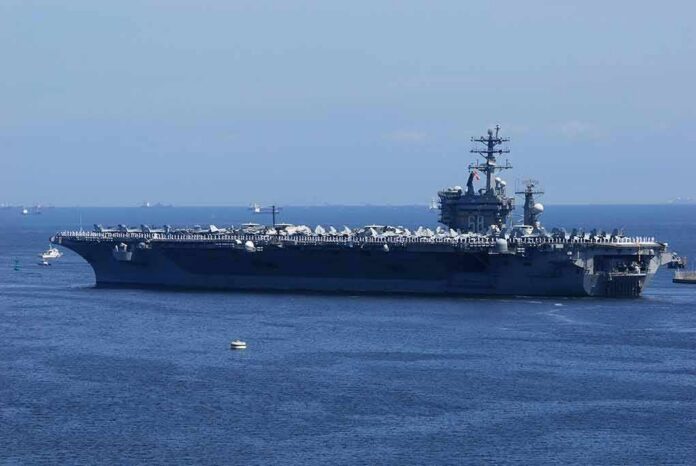
Two alleged overboard attempts aboard the USS Abraham Lincoln have put a hard spotlight on a problem the Navy has struggled with for years: long deployments can grind sailors down fast.
Story Snapshot
- Reports say sailors aboard the USS Abraham Lincoln faced severe strain during a long deployment.
- Peer-reviewed research links shipboard deployments to high depression screening rates and rising symptoms.
- Navy and military sources have long said sleep loss, family separation, and poor access to care matter.
- The Navy has expanded counseling and resilience programs, but the public debate still centers on shipboard stress.
What the reports say
The immediate story is not about a theory. It is about reported sailor distress on a carrier that had been at sea for months. The Guardian reported that multiple sailors aboard the USS Abraham Lincoln tried to jump overboard during an extended deployment, and that family members described exhaustion, fear, and a crew under heavy strain. That account matches a broader body of Navy and military research showing that ship life can wear people down over time.
The most striking part is how ordinary the warning signs sound. The research package does not point to one dramatic event alone. It points to repeated stressors that build up: lack of sleep, family separation, hard work, limited privacy, and pressure that does not let up. A Navy study found more than half of sailors in one shipboard sample screened positive for depression risk at every point in the deployment cycle.
Why long deployments hit hard
Military medicine has described shipboard service as a setting with real mental strain. A study on Navy deployment found minor psychiatric symptoms increased midway through missions and again near the end, while stronger family support reduced those symptoms. Another evidence map said shipboard sailors show behavioral-health problems at levels similar to some ground combat groups. That does not prove every hard deployment turns into a crisis, but it does show the setting itself is risky.
Navy-facing sources back up the same theme from inside the service. The Naval Institute’s Proceedings said record-setting deployments were affecting the health of the force and families, and it described resiliency counselors as one response. Navy messaging also tells sailors to sleep, use medical help, and reach out to chaplains and counselors. Those steps are sensible, but they also show the Navy knows shipboard stress is not a minor issue.
What the Navy already does
The Navy has not been silent on the problem. Navy Times reported that sailors on several ships received licensed counselors and trained educators early in deployment under the Departure and Separation Program. A DVIDS feature on the USS Abraham Lincoln also said the ship provides 24-hour access to care when a sailor feels stressed or overwhelmed. Those programs matter, but they can also make it easier for leaders to say the system is already working well enough.
😁Mental health crisis on USS Abraham Lincoln
5,000 sailors and Marines remain on a record 9-month deployment off Iran with no port calls — the longest for any modern carrier.
Families and lawmakers are raising alarms. Navy Times and Stars and Stripes report several attempts by… pic.twitter.com/KBIdIteiJn
— Ignorance, the root and stem of all evil (@ivan_8848) August 12, 2026
That is where the public debate gets messy. The strongest evidence in the research package supports mental strain, not a full crew-wide breakdown or a proven spike in self-harm. The studies mostly measure symptoms, screening results, or psychiatric medevacs, not every serious incident on one ship. The specific USS Abraham Lincoln claims still need ship logs, medical records, and command reports before anyone can measure the full picture with confidence.
What this says about the Navy
The larger issue goes beyond one carrier. When a force spends months at sea, keeps moving, and asks sailors to absorb stress without much relief, mental health problems can rise even if no one breaks publicly. That is why this story resonates far outside the military. It fits a wider frustration with big institutions that promise readiness while families, crews, and taxpayers are left trying to judge whether the system is really protecting the people inside it.
For readers who have lost trust in government, this case will feel familiar. The Navy has support programs, public messaging, and formal care paths. The research still shows those tools operate inside a system where long deployments, poor sleep, and family strain can hit hard. If the USS Abraham Lincoln reports are fully confirmed, they will not show a mystery. They will show what happens when a demanding system keeps pushing people after the warning signs are already there.
Sources:
19fortyfive.com, usni.org, theguardian.com, academic.oup.com, apa.org, wavy.com, reddit.com, americanhomefront.wunc.org, pmc.ncbi.nlm.nih.gov
© theredwire.com 2026. All rights reserved.