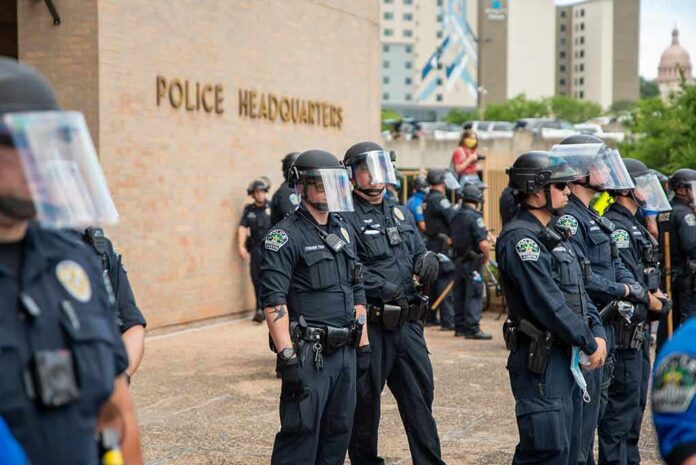
Federal agents arrested a man identified as Ayden Langevin after online posts urged killing President Trump and Secret Service agents, prompting a fast federal response.
Story Snapshot
- FBI identified and arrested Ayden Langevin after explicit online threats against President Trump and Secret Service.
- Authorities treat serious threats to the president as federal crimes under long-standing law and practice.
- Cases like this fit a wider rise in violent online rhetoric aimed at public officials since 2021.
- Public frustration with safety, speech, and trust in institutions shapes the debate over threat enforcement.
Arrest Follows Online Threats Targeting President and Protection Detail
The Federal Bureau of Investigation (FBI) moved to arrest Ayden Langevin after social media posts called for mass violence against President Trump and United States Secret Service agents, according to initial reporting that said agents identified him and took him into custody. The reported language was explicit and targeted the president’s protective detail. The arrest reflects how federal authorities prioritize direct threats to the president. Charges and court filings were not yet available at time of publication.
Federal law treats threats to the president as serious crimes. The Federal Bureau of Investigation defines a threat as a communicated intent to cause harm or carry out illegal hostile action. Agents assess context, capability, and credibility when deciding on arrests and referrals to prosecutors. Arrests often follow tips, open-source monitoring, or viral posts. Once a suspect is located and identified, agents secure evidence and coordinate with prosecutors on potential charges.
Why This Case Fits a Larger Enforcement Pattern
This alleged threat sits within a long trail of federal actions against people who post violent messages about presidents and senior officials. Justice Department press releases show recurring arrests across states for online threats that prosecutors say crossed the legal line from hyperbole to a “true threat” under federal law. While the standard protects lawful speech, it allows charges when a reasonable person would view the statement as a serious intent to harm.
Transactional Records Access Clearinghouse data show the government has brought more than one thousand cases involving threats against presidents or those in the line of succession since the mid-1980s. That history signals a standing federal priority to deter would-be attackers and respond fast when threats appear credible. The pace of prosecutions responds to both volume and attribution. Many threats are reported, but only a fraction lead to charges after identification and review.
Rising Violent Rhetoric Raises Safety and Liberty Concerns
Independent researchers report sharp growth in violent online rhetoric aimed at public officials since 2021. One analysis found a 241 percent increase when comparing the twelve months ending in September 2022 to the twelve months ending in September 2025, with spikes around heated political events. This surge strains law enforcement, raises costs for security teams, and fuels public fears about political violence. It also raises hard questions about platform policies and accountability.
🚨 Threats Against Trump Lead to Same-Day Arrest
Libs of TikTok exposed a man making repeated death threats against President Trump. Less than 24 hours later the FBI arrested Ayden Langevin and took him off the streets.
Public exposure plus rapid law enforcement response is…
— The Ugly Patriot (@the_uglypatriot) August 24, 2026
Americans across the spectrum worry that government is not protecting them or respecting their rights. Conservatives see a culture that excuses threats against leaders they support. Liberals fear heavy-handed policing that chills speech. Both sides see powerful insiders calling the shots. Clear rules help: call 911 if danger is immediate, then report online threats to state or local police and the FBI so trained investigators can judge the risk and act when the law is broken.
Sources:
thegatewaypundit.com, yahoo.com, ic3.gov, justice.gov, thestate.com, washingtontimes.com, pbs.org
© theredwire.com 2026. All rights reserved.