
Robert F. Kennedy Jr.’s blanket claim that “500 million Arabs don’t produce science” was swiftly dismantled by named prize records and sparked bipartisan outrage over reckless group labeling.
Story Snapshot
- Kennedy said Arabs “don’t produce science” and tied decline to the Muslim Brotherhood at a Michigan event.
- Fact checks cited Arab Nobel and Wolf Prize winners that contradict his claim, including Ahmed Zewail.
- The Council on American-Islamic Relations demanded Kennedy’s firing over “vile” anti-Arab rhetoric.
- Coverage noted Kennedy blurred “Arab” ethnicity with “Muslim” religion, widening the backlash.
What Kennedy Said And Why It Blew Up
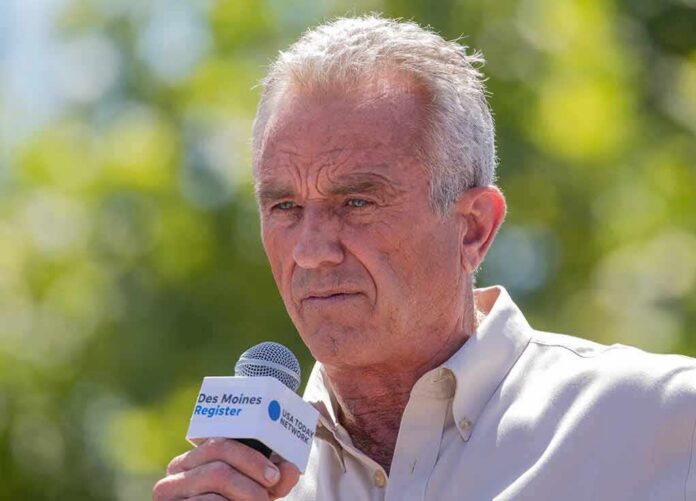
At a Grand Rapids, Michigan event, Robert F. Kennedy Jr. praised an early Islamic “golden age,” then claimed that “500 million Arabs” today do not produce science, literature, or major prize winners. He traced the alleged decline to the Muslim Brotherhood, founded in 1928, which he said pushed a harmful political ideology. The remarks were recorded and widely circulated. The sweeping “don’t produce science” line became the focus of rapid backlash and fact checks that challenged the claim’s accuracy.
Reports said Kennedy tried to draw a line between historic Islamic civilization and modern political Islam. But the wording shifted between “Arabs,” “Muslims,” and “Arab Muslims,” which are not the same. “Arab” is a broad ethnic and language category; “Muslim” is a religion. That shift made the target unclear and amplified anger across communities. The blurring of identities also undercut the effort to frame the critique as about a specific political movement rather than about people as a group.
The Facts That Undercut The “No Science” Claim
Fact-checks pointed to multiple Arab prize winners as direct counterexamples. Egyptian-American chemist Ahmed Zewail won the 1999 Nobel Prize in Chemistry and the 1993 Wolf Prize in Chemistry, which flatly contradicts the claim that Arabs do not win such awards. Other coverage cited Egyptian novelist Naguib Mahfouz, who won the 1988 Nobel Prize in Literature, and Arab Peace Prize laureates, further weakening the blanket assertion. These named records were enough to pierce the core line in Kennedy’s remarks.
Outlets also highlighted that Kennedy did not cite a dataset for his broader claim about scientific output. He gave no measure of research funding, patents, or publication share. Without those numbers, a large causal claim about the Muslim Brotherhood and “stagnant societies” lacked a clear test. Analysts said other drivers like war, authoritarian rule, weak schools, and brain drain could explain performance gaps. The absence of comparative evidence left his argument open to easy factual challenges.
The Organized Response And The Political Stakes
The Council on American-Islamic Relations called the remarks “vile” and “bigoted” and urged that Kennedy be fired. That demand gave the story an institutional flashpoint and drew more press. Public condemnation grew as the video spread, and health and science figures pushed back by naming Arab scientists and achievements. The organized reply turned a campaign-style attack into a governance test about rhetoric, accuracy, and respect for citizens and allies abroad.
US Health Secretary Claims Arabs Contribute Nothing to Science or Literature, Sparking Outcry
US Health and Human Services Secretary Robert F. Kennedy Jr. has sparked widespread criticism after claiming that Arabs and Muslims no longer make notable contributions to science and… https://t.co/BvXQsV2myx
— وصل للأخبار (@waslnew) October 29, 2026
The episode taps a deeper pattern in American politics. Leaders claim to target an ideology, but their words paint whole peoples. That pattern feeds culture wars, distracts from policy, and leaves regular people feeling unseen. Voters on the right and left keep saying elites dodge real work on schools, jobs, research, and security. Broad slurs are easy lines to deliver. Careful reforms that raise results are harder. People notice who does which work, and they remember.
What Matters For Readers Across The Spectrum
For conservatives, the concern is discipline and results. If the goal is to challenge political Islam’s excesses, then build the case with data, name the policy tools, and show how they protect free speech, minority rights, and national security. For liberals, the concern is equal dignity. Broad labels miss real lives and fuel bias. For both, the fix is the same: precise language, named evidence, and clear policy steps that solve problems without blaming entire peoples.
Two takeaways stand out. First, facts beat rhetoric. Named Nobel and Wolf Prize winners exist, so absolute claims fail on contact with the record. Second, category mistakes cause damage. “Arab” and “Muslim” are not interchangeable, and policy aimed at a specific group like the Muslim Brotherhood must not become a smear of hundreds of millions of people. Leaders who want trust should talk narrowly, show their sources, and focus on policy outcomes the public can track.
Where This Story Goes Next
Reporters have asked for the full event recording and transcript to fix the context and wording. That record will show how tightly Kennedy linked his claims to the Muslim Brotherhood, and whether he will correct or refine the “don’t produce science” line. Real debate here needs numbers, not slogans: research funding, lab capacity, publication rates, and brain drain. If officials want change, they should fund science, partner with allies, and defend free inquiry at home and abroad.
Sources:
zerohedge.com, thereporteronline.com, news4jax.com, huffpost.com, newarab.com, aol.co.uk, openthemagazine.com
© theredwire.com 2026. All rights reserved.