

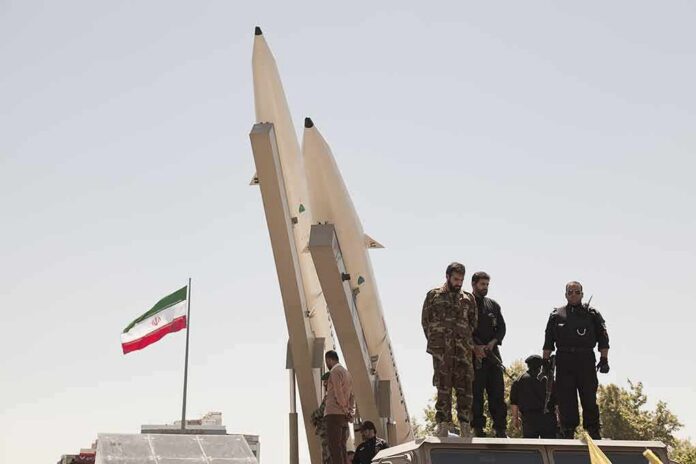
Iran’s supreme leader reportedly told his military to bring every U.S. and Israeli asset within reach, promising an “immediate” response without geographic limits if struck again.
Story Highlights
- A public directive attributed to Mojtaba Khamenei orders expanded targeting of U.S. and Israeli assets.
- The statement frames the move as deterrence and ties action to renewed attacks by the U.S. or Israel.
- Orders reportedly include more weapons production and stronger military intelligence.
- U.S. officials have their own expanded target lists and warn of fast-strike options if authorized.
What Iran’s New Order Says and Why It Matters
Reports say Iran’s supreme leader, Mojtaba Khamenei, directed the armed forces to update their target lists to include “all” U.S. and Israeli assets, both physical and digital, and to prepare for an “immediate” response with no geographic limits if the United States or Israel strikes again. The language signals a broader threat envelope. It covers not only bases and ships, but also cyber systems and economic assets. The statement cites deterrence and “intelligent combat readiness” as the aim.
The directive reportedly goes beyond target lists. Accounts describe orders to boost ammunition and weapons output, strengthen military intelligence, and expand indigenous defense programs. Those steps suggest Iran wants to harden supply lines and improve its ability to fight under sanctions. The statement also says Iran will decide when and how the conflict ends if enemies resume attacks, underscoring a posture of control over escalation timing. These details point to sustained readiness, not a single surge.
How This Fits the Current U.S. and Israeli Posture
U.S. officials have told reporters that Central Command and the Pentagon already built wide-ranging Iran target lists. Those include energy sites, military facilities, and nuclear infrastructure. Planning timelines discussed in public reporting suggest fast execution if President Trump orders strikes. This means both sides are signaling reach and speed. Analysts warn that such moves can raise the cost of any misstep, because strike options are prepped and ready on short notice.
U.S. intelligence assessments described in recent coverage say Iran and the Houthis are unlikely to launch preemptive attacks on Americans or Israel right now, but would respond if struck first. That reading mirrors Iran’s stated “if attacked, we hit back” trigger. It also highlights a shared danger: once one side crosses its red line, retaliation could target U.S. personnel and facilities across the region and beyond. This tit-for-tat logic is familiar, but the scope discussed this week feels larger.
What We Know, What We Do Not, and Why Citizens Should Care
The available reports establish a public directive with sweeping language. They do not prove that Iran loaded new, specific U.S. or Israeli targets into an operational system, or that it can strike “all” assets it names. The statement’s trigger—renewed attacks—is also vague. It does not say whether cyber operations, proxy actions, or sanctions count. Multiple outlets appear to rely on the same October 31 language, which limits independent corroboration. These are real gaps readers should keep in mind.
NEW: Senior officials from the Mecca Pact’s three signatories met with senior Iranian officials in Tehran on October 26 to discuss a new US-Iran deal in concert with ongoing Pakistani and Qatari efforts.
Read more ⬇️ https://t.co/7Ax5kkxQE1
— Institute for the Study of War (@TheStudyofWar) October 27, 2026
For Americans, the stakes are concrete. If conflict widens, service members, diplomats, and contractors face greater risk. Energy markets could jump. Digital systems that power banks, hospitals, and pipelines could be targets. Both conservatives and liberals have seen this movie: leaders promise control, but wars and shadow strikes expand. Many citizens feel left out while powerful players trade blows. Clear rules and honest risk-talk are how a healthy republic should act. Vague red lines invite surprise and pain.
How To Read the Signal Without the Spin
Iran’s message mixes deterrence and threat. The “unrestricted” phrase will lead headlines. The condition—“if struck again”—may get missed. U.S. planning stories will also focus on speed and reach. Together, these signals raise pressure while claiming to prevent war. That is escalation by another name. The prudent takeaway is simple: preparation is not inevitability, but it narrows choices. When both sides move pieces into place, accidents or misreads can trigger a chain reaction that leaders cannot easily stop.
What Accountability Should Look Like Now
Citizens deserve facts, not fear theater. Officials should define triggers in plain terms. Congress should demand briefings on goals, legal grounds, and exit ramps. The administration should state how strikes would protect Americans rather than widen the fight. Iran should clarify what actions it sees as attack, and whether cyber or proxy hits qualify. When plans hide behind slogans, the public pays. Sunshine and limits can cool hot tempers and keep Americans, Israelis, and Iranians out of a deeper war.
Sources:
facebook.com, dailysabah.com, store.jpost.com, indiatoday.in, timesofindia.indiatimes.com, humenglish.com, f.aa.com.tr
© theredwire.com 2026. All rights reserved.