
Federal agents say more than 700 white-powder letters were mailed to public officials across the country in a two-year span, and an Oklahoma man now faces charges tied to the spree.
Story Snapshot
- Prosecutors allege a nationwide series of 700+ white-powder mailings tied to one sender.
- Authorities say letters hit election offices near voting in 2024 and 2026.
- Some letters included threats and hidden ultraviolet-ink messages, agents say.
- Tested powders were yeast or flour, but evacuations still followed several mailings.
Charges Center On A Nationwide Pattern Of Mailings
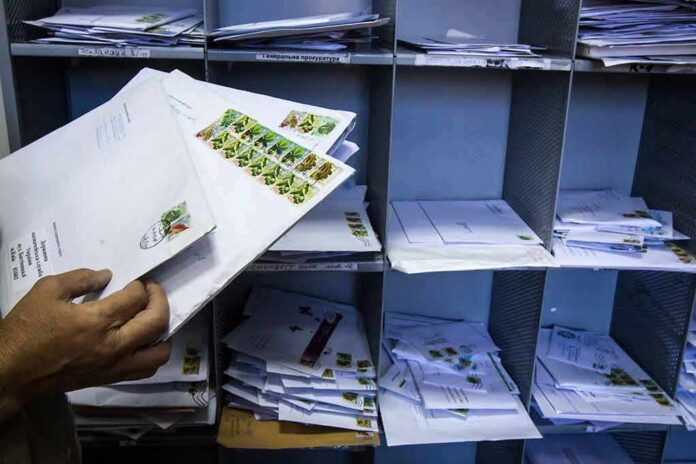
Federal prosecutors in Oklahoma unsealed a complaint that charges an Oklahoma City man with mailing white-powder letters to officials across the country. Investigators say they linked the same sender to more than 700 envelopes sent to election offices, members of Congress, media outlets, pollsters, and law enforcement. The case points to a broad, coordinated effort that stretched across many states. Reuters reported the filing came on November 3, 2026, hours before voters headed to the polls nationwide.
Investigators say the operation spanned the 2024 and 2026 election cycles. Reports describe similar letters hitting state election offices around September 16, 2024, and new waves appearing again in October 2026. That timing sits at the center of the government’s theory that the mailings aimed to intimidate officials and disrupt work near voting. Multiple outlets reported the Oklahoma State Election Board received a letter on October 13, 2026, prompting an evacuation as teams checked the substance.
Threat Language And Hidden Messages Described By Agents
Federal Bureau of Investigation (FBI) agents wrote that the letters included threat-focused language. CBS News reported a three-page document titled “DECLARATION OF WAR” in 2024 and that 2026 letters cited a “United States Traitor Elimination Army.” One letter warned that officials could be arrested for treason “OR WORSE!!” Agents also said some envelopes carried writing that only appeared under ultraviolet light. That suggests extra planning to send a message beyond the plain text.
Several targets went beyond election offices. Reporters say letters also went to members of Congress, national media, polling firms, and federal agencies. That wider list raises the public stakes. It also helps explain the large, joint response by local police, postal inspectors, hazmat teams, and the FBI. Roll Call said Congress was rattled by the cascade of envelopes during the fall run-up to voting, with staff following strict safety steps after earlier scares.
Powders Tested Harmless But Disruptions Were Real
Laboratory tests identified yeast or flour in the samples checked so far, according to press reports that cite the criminal complaint. Not every sample has been fully tested, but agencies told recipients to treat all such mail as dangerous until proven otherwise. Even non-toxic powder can cause fear, shutdowns, and costly responses. USA Today and local outlets reported evacuations, mail scans, and building sweeps after letters were opened or intercepted.
🚨 OKLAHOMA MAN CHARGED IN NATIONWIDE WHITE-POWDER MAIL SCARE TARGETING GOVERNMENT AND ELECTION OFFICIALS
Federal authorities have charged an Oklahoma man accused of sending hundreds of suspicious letters containing white powder to government officials ahead of the 2024 and 2026…
— MDBayNews (@MDBayNews) November 3, 2026
This case lands in a broader climate where election workers report more threats and harassment since 2020. A 2026 Brennan Center survey found that 32 percent of local election officials said they faced threats, harassment, or abuse because of their job. More than half worried about the safety of colleagues, and nearly one-quarter feared being assaulted at home or work. These are self-reported figures, but they show the pressure many officials feel today.
How The Case Fits The Moment
The complaint’s timeline, scale, and targets cut across party lines and institutions. That matters because it shows how anger at government often spills onto frontline workers who run elections and process public business. Whether people lean conservative or liberal, most agree that government must protect basic functions like safe elections and free debate. Hoax letters waste time and money, pull first responders from other calls, and make it harder for honest workers to do their jobs.
The alleged mailings also touch a shared concern about trust. When threats and hoaxes rise, officials lock down offices and limit access. That can make government feel more distant and less responsive to citizens. The result is a loop: fear drives more security, and more security feeds the belief that leaders are hiding or unaccountable. Breaking that loop requires tough enforcement against real threats and clear, steady communication with the public.
What Comes Next In Court And Security
The defendant faces federal charges and remains presumed innocent unless the government proves its case. Prosecutors will need to show who planned and sent the letters, what the messages said, and how the timing connects to intent. Defense counsel will have a chance to test the evidence, including any links across the hundreds of mailings. Meanwhile, election offices and mailrooms will keep using safety checks so voting and public services continue on time.
Officials on the ground will also look at lessons from this scare. Simple steps can help: scan inbound mail, train staff on handling suspicious items, and keep clear lines to local fire and police units. At the federal level, continued coordination among the FBI, the United States Postal Inspection Service, and state agencies can speed alerts and reduce panic. These moves protect workers and the public without shutting the doors to civic life.
Sources:
washingtontimes.com, usatoday.com, cbsnews.com, news9.com, wftv.com, delcotimes.com, rollcall.com, rmb.reuters.com
© theredwire.com 2026. All rights reserved.