

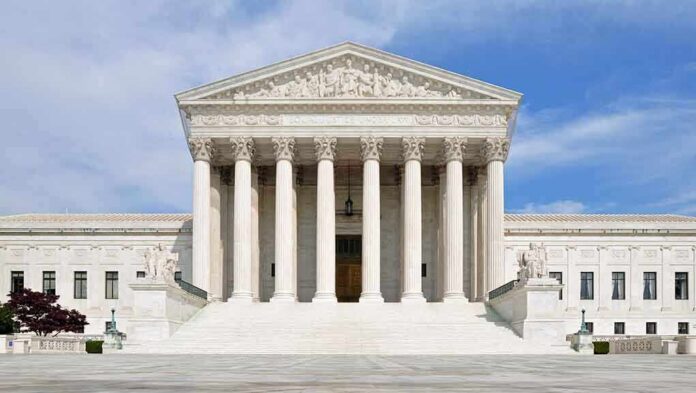
The Supreme Court will decide whether immigrants arrested inside the United States can be held without bond hearings under a Trump policy that aims to close dangerous loopholes in the law.
Story Highlights
- The Supreme Court will review a Trump policy on mandatory detention without bond hearings for certain interior arrests.
- The Fourth Circuit ruled many such detainees must get bond hearings under a different statute.
- The administration argues habeas lawsuits should not short-circuit removal cases that address the same issues.
- The case involves named detainees and real custody orders, not abstract policy fights.
What The Supreme Court Is Being Asked To Decide
Reuters reported that President Trump’s administration asked the Supreme Court to allow federal officers to detain certain noncitizens arrested in the interior without bond hearings while removal cases proceed. The government argues Congress required detention for “applicants for admission” and that courts must follow that command under the immigration statute. A separate petition asks whether detainees can use habeas corpus to attack custody when those claims overlap with removal issues now before immigration courts.
The government’s request comes after years of split rulings. Some courts have limited the use of the strict detention statute. Others have recognized broad authority to hold recent border crossers without bond at all. The current question turns on labels that Congress wrote. If someone counts as an “applicant for admission,” detention without bond hearings may apply. If the person counts as already inside and arrested there, a different statute may allow a bond hearing.
How Lower Courts Framed The Conflict
The United States Court of Appeals for the Fourth Circuit issued a published decision saying the interior detainees before it were held under the wrong statute. The court said Section 1226 controls, which means the detainees may seek a bond hearing before a neutral judge. The ruling rejected using the “applicant for admission” label to deny any chance at release for people arrested after long presence in the country.
Case filings show the government pushed the opposite view in that same dispute. The administration argued that “all applicants for admission” may be detained without bond. That reading would allow consistent custody for people who entered without inspection, even if they lived here for years, until their immigration cases finish. The Fourth Circuit disagreed, creating a direct conflict that invites Supreme Court review.
Why This Fight Matters For Border Security And Due Process
Congress wrote tough detention rules to stop catch-and-release and prevent flight. The administration says mandatory detention for this group is necessary to ensure court appearances and final removals. Officials warn that quick bond access can invite absences, stall cases, and reward illegal entry. Advocates reply that many detainees are long-present, have families, and deserve an individualized check on danger or flight risk before being locked up for months.
The Supreme Court case also asks a process question with big stakes: when a detainee files a habeas petition, can a district court jump in while immigration courts are already weighing removability? The government says Congress channeled these disputes to the immigration system to avoid piecemeal, conflicting rulings. The Fourth Circuit allowed habeas on detention conditions even as removal issues continued, which the administration says undercuts orderly enforcement.
Real People, Real Orders, And A Live Circuit Split
Reuters identified Badar Khan Suri, an Indian national detained in 2025, as one of the named figures in the dispute. His case highlights how detention challenges can move on a different track from removal. The appeals court upheld jurisdiction to hear his custody claims and affirmed his release, sharpening the clash over whether federal courts may use habeas to second-guess detention while removal cases run their course.
The Supreme Court agreed to take up an immigration detention fight that could determine whether some immigrants arrested far from the border can be held for months, or longer, without ever getting a bond hearing. https://t.co/Szr2sbLw4R
— ARC El Paso (@ARCElPasoTV) October 1, 2026
Court records from the Lopez Garcia case confirm this is not an academic exercise. The Fourth Circuit expedited the dispute and issued a published opinion. That decision said the government used the wrong statute for interior arrests and required bond hearings. The government’s briefs defended mandatory detention for those it views as seeking admission. The result is a clean legal question for the justices to settle this term.
What Conservative Readers Should Watch Next
Supreme Court review can restore a clear, uniform rule nationwide or leave a patchwork in place. A ruling that backs the administration’s reading would close a major loophole that encourages illegal entry and forum shopping. A ruling that keeps broad bond access could strain local facilities, slow removals, and weaken deterrence. Either way, the Court’s answer on who counts as an “applicant for admission” and when habeas is allowed will shape border security and due process at the same time.
Sources:
sfgate.com, courthousenews.com, courtlistener.com, ca4.uscourts.gov, immigrantjustice.org, reuters.com
© theredwire.com 2026. All rights reserved.