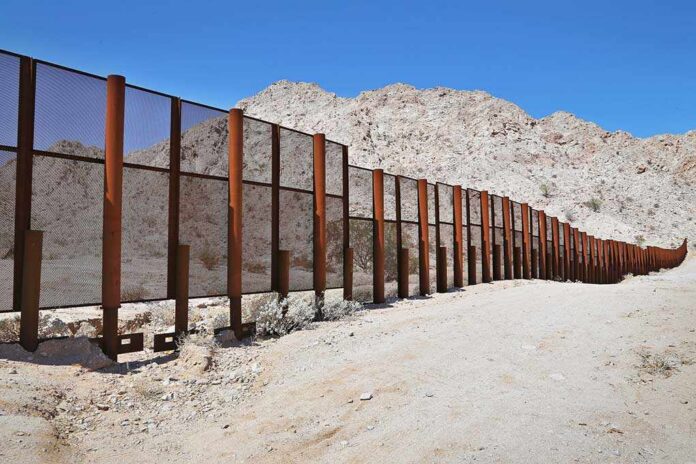
Texas ranchers along the Big Bend now face a brutal choice: sign away border-wall access or risk Washington using federal power to slice through their land anyway.
Story Snapshot
- Federal border wall plans in West Texas are pressuring families to sign access deals or face condemnation threats.
- DHS and Customs and Border Protection are invoking sweeping powers Congress gave them to build barriers and take land for “public use.”[3][4]
- Past wall fights show landowners can lose property first and spend years in court just to get fair pay.[4][9]
- Texas state law now protects landowners from state seizures for the wall, but federal eminent domain still looms over private ranches.[4][1]
How Federal Border Wall Powers Collide With Texas Property Rights
For landowners in far West Texas, the border wall fight is not a TV debate. It is a letter in the mailbox telling them the federal government wants a strip of their ranch for surveys, roads, and steel.[2][3] Congress gave the Department of Homeland Security broad power under immigration laws to build barriers, roads, and sensors along the southern border, and to “contract for or buy any interest in land” needed to control the border.[3] When owners refuse to sell, that authority stretches to eminent domain, the power to seize private land for public use with “just compensation.”[4][12] On paper, that sounds orderly. On the ground, families who have held land for generations feel Washington holding a legal gun to their head, forcing them to choose between signing now or fighting a costly battle they are warned they will likely lose.[14]
Customs and Border Protection letters sent to Texas landowners lay out that stark choice in plain terms.[2][6] Owners can sign “right-of-entry” or “right-of-entry construction” agreements that let federal crews onto their property to survey, drill, and even start building border infrastructure before any final purchase.[2][3][6] Some offers dangle a few thousand dollars as a signing bonus, pocket change compared with the value of a working ranch.[2][6] The letters also warn that if owners delay or refuse, the case may be turned over to the Department of Justice to file a condemnation lawsuit, letting the government take the land first and argue over the price later.[3][6][4] For families with limited cash and no team of lawyers, the message is simple: cooperate, or Washington will steamroll you in court.
Why Texas Landowners Are Pushing Back Against Wall Easements
Despite this pressure, many Texans are saying no. For the state-run wall program, the Legislature barred the use of eminent domain in 2021, so state officials must rely on voluntary easement contracts and cannot seize land the way they do for highways.[4][5] Reports show that at least a third of landowners approached for state wall easements have refused, leaving state segments fragmented and shoved into remote stretches where owners were more willing to sign.[4][5] That resistance reflects deep mistrust built over years of federal takings on the border. Investigations into earlier fence projects found Homeland Security cut bad deals, waived safeguards meant to protect owners, and even paid the wrong people for land, then paid again once the true owners were found.[9][4] Many landowners watched neighbors dragged into lawsuits that have lasted more than a decade, with the wall already built and compensation still unresolved.[4][9] When the same federal agencies now show up in Big Bend asking for quick signatures, ranchers know this history and do not want to be the next cautionary tale.
Legal experts warn that, under current federal law, stopping a taking outright is very hard.[14][15] Congress, through laws like the Illegal Immigration Reform and Immigrant Responsibility Act and the Secure Fence Act, told the Department of Homeland Security to build hundreds of miles of border barriers and even allowed the Secretary to waive other legal requirements to speed construction.[3][1][15] Courts have generally accepted that “border security” is a valid public use, which satisfies the Fifth Amendment’s requirement when the government seizes land.[4][14] That leaves most fights focused on money, access gates, and damage to the rest of the property, not on whether Washington can take the strip at all.[4][12][14] For a conservative landowner who believes in small government and strong property rights, that legal reality is hard to swallow. The same Constitution that should shield their ranch is being cited to justify carving it up in the name of national security, with the federal government deciding what “just compensation” means.
Big Bend Lawsuits and the Growing Fear of Federal Overreach
The latest flashpoint is the Big Bend region, one of the most rugged and remote parts of the southern border.[2] Environmental groups and local landowners have sued the Department of Homeland Security over waivers used to fast-track wall construction through the area, arguing that the department is using powers Congress never clearly approved to push a cross-continent wall.[2] They say DHS waived dozens of laws that protect clean air, water, historic sites, and public lands, and that doing so for such a sweeping project violates core constitutional limits on agency power.[2][15] Separate reports describe federal contractors bulldozing property in other Texas counties before right-of-entry agreements were signed or condemnation finished, raising fears that process is becoming a box-checking exercise, not a real safeguard.[11] Those allegations are still being tested, but even the appearance of crews moving in early makes many West Texas families feel their land is no longer truly theirs once it lands on a map in Washington.
In far West Texas, the threat of land seizures for a border wall has families on edge.
In the Big Bend region, where some families have lived for generations, government letters seeking access to their land is sparking fear and resistance. https://t.co/iM6GEXs14i
— Texas Tribune (@TexasTribune) June 16, 2026
At the same time, federal agencies and allied commentators insist the wall is needed to deter illegal crossings, drug smuggling, and human trafficking, and that the government is simply using long-standing eminent domain tools to build vital national security infrastructure.[3][7][12] Construction funds have already been awarded, and officials say contracts and statutes legally obligate them to proceed.[3][8] For many conservatives, this creates a painful tension. They want a secure border, tougher enforcement, and an end to the chaos driven by open-border policies and weak leadership in past years. But they also believe the right to property is a bedrock American freedom, almost as sacred as the right to bear arms. The lesson from the Rio Grande to Big Bend is clear: Texans on the front line of border security need both—strong walls to protect the nation, and strong protections so that federal power does not trample the very citizens those walls are meant to defend.
Sources:
[1] Web – Texas Landowners Face a Difficult Decision: Allow Border Wall or Lose …
[2] Web – DHS waives certain legal regulations to expedite border wall …
[3] Web – Lawsuit Challenges Big Bend Border Wall Construction
[4] Web – [PDF] obstructing human rights: the texas-mexico border wall
[5] Web – [PDF] Eminent Domain Along the Southern Border: Government Seizures …
[6] Web – Official Border Wall plans have been released for the Big Bend. If …
[7] Web – Response to Public Comments Regarding the Construction of …
[8] Web – In far West Texas, the threat of land seizures for a border wall has …
[9] Web – As landowners resist, Texas’ border wall is fragmented and built in …
[11] Web – Angry Texas landowners confront feds over sloppy border wall plans
[12] Web – Zapata County landowners say border wall contractors … – TPR
[14] Web – Texas Landowners Dig In to Fight Trump’s Border Wall – VOA
[15] Web – Texas landowners in the Big Bend region are fighting federal efforts …
© theredwire.com 2026. All rights reserved.