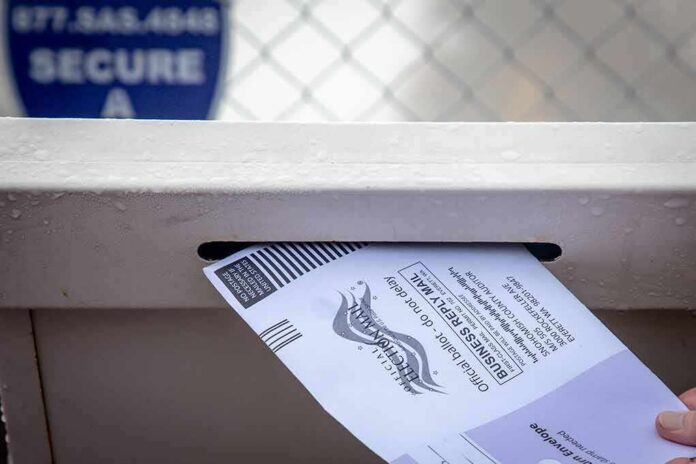
Michigan’s absentee ballot returns are up 30% over 2022 with four weeks to go, signaling a bigger, earlier electorate than last midterm.
Story Highlights
- More than 2 million Michiganders have requested absentee ballots, a 27% jump from 2022.
- Over 201,000 ballots are already back, equal to 2.7% of active registered voters.
- Southeast Michigan leads requests, with large totals in Wayne, Oakland, and Macomb Counties.
- Experts say higher early voting shows a shift in voting method, not a clear partisan edge.
State Data Shows Bigger Early-Vote Universe
Michigan’s Department of State reported a sharp rise in absentee activity as of October 6. Officials said more than 2,047,000 voters had requested a mail ballot, and ballots returned were up 30% compared with the same point in 2022. Returned ballots totaled 201,909, which equals about 2.7% of the state’s active registered voters. The state also noted nearly two million voters on the permanent absentee list, which helps explain the scale of early participation.
Local coverage echoed the same surge. Detroit outlets reported over two million requests statewide and more than 125,000 to 200,000 ballots already in by early October. Reporters also highlighted strong demand across metro Detroit counties. Wayne County had more than 336,000 requests, Oakland had about 324,000, and Macomb had about 181,000, pointing to heavy early interest in the state’s population center. These local tallies align with the state dashboard.
Primary-Season Pattern Was Already Rising
Michigan’s 2026 primary showed similar momentum. One day before the August primary, voters had returned 1,075,571 absentee ballots, which was a 21.5% increase over the same point in 2022. Requests also neared two million during the primary phase, suggesting many voters shifted to vote-by-mail this cycle. Those primary figures set the baseline for the current rise. The fall data now shows that the elevated mail voting pattern has carried into the general election period.
This trend fits a broader shift in how Americans vote. Researchers have found mail voting rose steadily over two decades, with the share of midterm mail ballots tripling nationally from 2002 to 2022. That history suggests more people are choosing a different method, not necessarily changing which party they support. Michigan’s own 2024 turnout report underscored expanded early and absentee use across the state’s electorate, which may normalize higher mail totals in 2026.
What The Numbers Mean—and What They Do Not
These figures confirm larger and earlier participation by mail. They do not prove a clear advantage for either party. The state updates and local stories present raw counts, not the party mix of voters returning ballots. Analysts caution that method-of-voting trends are poor stand-ins for final results, especially before Election Day. As a result, the best reading is simple and concrete: more voters are acting sooner, and administrators must process a higher early volume.
For readers who see Washington as out of touch, this surge cuts both ways. Higher early participation can reflect voters taking control of their own timelines, using tools added by state reforms. It can also stress systems if clerks lack staff or funds. People across the spectrum worry that those in power protect themselves first. Transparent reporting, clear ballot tracking, and timely processing are the basic steps that rebuild trust while early voting grows.
Sources:
twitchy.com, michigan.gov, whtc.com, fox2detroit.com, cbsnews.com, wxyz.com
© theredwire.com 2026. All rights reserved.