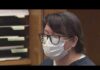
A TV host who built her public brand on equal justice under the law was caught on police bodycam footage trying to use her celebrity status and legal credentials to get her son out of a trespassing citation — on active railroad tracks.
Story Snapshot
- Gabriel Hostin, 24, was caught jogging on active Metro-North Railroad tracks in New Rochelle, New York, on June 16, 2026, ignoring posted “no trespassing” signs.
- His mother, “The View” co-host Sunny Hostin, called police and invoked her son’s Harvard degree, her own career as a former federal prosecutor, and her TV fame in an attempt to avoid a citation.
- Officers still issued the citation but reduced the charge from a misdemeanor to a trespass violation — a lesser offense.
- Court records show Sunny Hostin is now representing her son as his attorney in the case.
What Happened on the Tracks
Shortly before 8 p.m. on June 16, 2026, Metropolitan Transportation Authority (MTA) police spotted Gabriel Hostin jogging along the right-of-way of active Metro-North Railroad tracks near 24 Station Plaza in New Rochelle, New York. Officers said he was in clear violation of posted “no trespassing” signs. Gabriel, 24 and a Harvard University graduate, was detained on the spot. He quickly told officers his mother was Sunny Hostin, co-host of the daytime talk show “The View.”
Sunny Hostin was already on the phone with her son when police stopped him. She then spoke directly with officers. Bodycam footage, later released by the New York Post, captured the exchange. She told police her son “has no criminal record” and identified herself as a former federal prosecutor. She also made clear she was a co-host on “The View.” Officers listened — and still wrote the citation. They did, however, reduce the charge from a misdemeanor to a lesser trespass violation under New York law.
The “Do You Know Who I Am” Moment
The bodycam footage shows an officer explaining his decision on camera. “Normally it’s a misdemeanor charge,” the officer said. “Obviously, we’re cutting it down to the violation because he… listen, he’s uh…” The officer did not finish the sentence, but the implication was clear. Critics quickly noted the contrast: a TV personality who regularly discusses fairness and equality appeared to receive — and actively seek — preferential treatment based on her fame and her son’s Ivy League pedigree.
Court records confirm that Sunny Hostin has since filed as her son’s legal representative in the case. She also submitted a written request to the district attorney’s office on his behalf. For many viewers, the episode raised an uncomfortable question: does knowing the right people — or being the right kind of famous — change how the law is applied? That question cuts across political lines and touches a frustration shared by millions of Americans who feel the system works differently for the well-connected.
Railroad Trespassing Is Not a Minor Issue
Active railroad tracks are among the most dangerous places a person can be. Trespassing on rail lines is the leading cause of rail-related deaths in the United States. In one recent year, 575 out of 888 total rail fatalities involved trespassers. About 90 percent of victims are adult males, and the largest group killed falls between the ages of 20 and 49 — exactly Gabriel Hostin’s demographic. Jogging along tracks is specifically listed among the most common reasons people trespass on rail lines.
WATCH: Bodycam Shows Sunny Hostin Trying to Get Son Off After Track Trespassing Stop – Redline Headlines. @TheView. Hey Sunny , what's this? Can't believe you think you are anything special and deserve preferential treatment. Playing the name game? https://t.co/mNyIvgqykE
— Joan nolan (@Nolanjep144) July 19, 2026
Rail safety advocates stress that “no trespassing” signs exist for life-and-death reasons, not bureaucratic ones. A train traveling at full speed cannot stop in time to avoid a person on the tracks. The law treats track access seriously because the consequences of ignoring it are often fatal. When high-profile families push back against citations in these cases, critics argue it sends the wrong message — that the rules apply to everyone except those with connections, credentials, or a platform.
Why This Story Resonates Beyond the Headlines
This story is drawing attention well beyond the usual celebrity gossip crowd. For conservatives, it looks like a clear example of elite privilege in action — a liberal TV personality who lectures others about fairness asking for special treatment the moment the rules touched her own family. For liberals, it raises its own uncomfortable questions about how wealth and fame shape outcomes in the legal system. Both sides, it turns out, are watching the same bodycam footage and drawing the same basic conclusion: one set of rules for the powerful, another for everyone else.
Sources:
twitchy.com, youtube.com, nypost.com, hindustantimes.com, talkofthesound.com, particle.news, dailymotion.com, instagram.com, lawenforcementtoday.com, core.ac.uk, nbcnews.com, faculty.wcas.northwestern.edu, cranemasters.com, nap.nationalacademies.org
© theredwire.com 2026. All rights reserved.