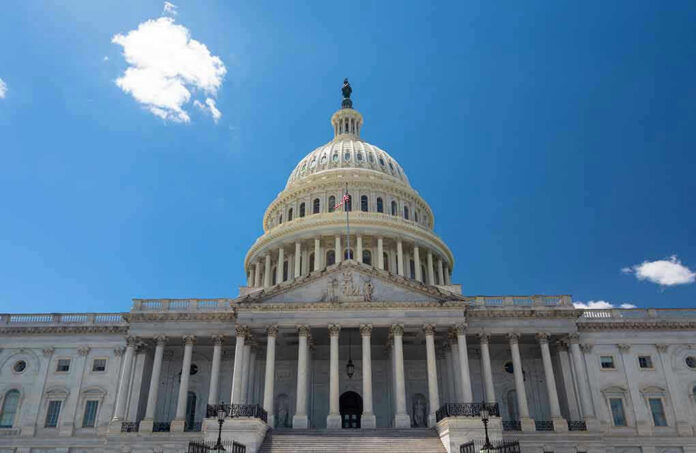
The real shock in today’s “expulsion wave” talk is that the story is mostly about lawmakers choosing the exit door before voters—or colleagues—can push them through it.
Story Snapshot
- Departures ahead of the 2026 midterms include retirements, resignations, and bids for higher office, not a documented expulsion spree.
- Every vacancy matters more because Republicans hold a razor-thin House majority, turning routine career moves into power shocks.
- High-profile names signal deeper incentives: redistricting pressure, safety concerns, party friction, and plain ambition.
- Democrats see openings in competitive seats; Republicans face math problems that get ugly fast when numbers are tight.
“Expulsion wave” versus resignation wave: why the framing matters
Expulsion is a formal punishment that requires colleagues to act; resignation and retirement are personal decisions that let a member leave on their own terms. The available reporting behind this headline doesn’t document a sequence of expulsion proceedings. It documents churn: lawmakers stepping aside, seeking higher office, or bowing out after political and personal stressors pile up. That distinction isn’t academic—it changes how you read the risk to governing.
US House braces for rare expulsion wave, threatening legislative stability and market confidence. Political risk rises in Washington, with potential impacts on bonds and equities. Investors on alert. 🚨 pic.twitter.com/RgI22whxdN
— Flash Feed Macro (@FlashFeedMacro) April 13, 2026
Headlines that imply a purge can trigger the same public reaction as a real purge: distrust, fatigue, and the sense that Congress can’t police itself. Common sense says voters deserve clarity. If members are leaving because the job has become more dangerous, less civilized, or less compatible with family life, that’s one diagnosis. If members are leaving to avoid investigations or accountability, that’s another. The evidence here supports churn, not proven mass discipline.
Razor-thin majorities turn normal exits into immediate leverage
A narrow House majority turns each departure into a countdown clock. Vacancies can slow committee work, complicate floor scheduling, and force leadership to triage priorities around attendance rather than policy merit. Conservatives tend to value functional institutions that can execute core duties—budgets, oversight, and basic lawmaking. When the margin is thin, a single resignation can elevate procedural gamesmanship over governing, because every vote becomes a high-stakes roll call.
The strategic incentive becomes obvious: don’t wait to be cornered by a tough reelection, a newly hostile district map, or a primary challenge. Leave early, reshape the battlefield, and protect your brand. That’s not corruption; it’s politics as practiced. The trouble is what it does to the public’s sense of representation. A district that chose a lawmaker for a term doesn’t always get the full term when Washington’s incentives shift.
Who’s leaving and why: a mix of ambition, maps, and stress
The roster of departures described in the research spans both parties and multiple motivations. Some lawmakers cite redistricting, including changes upheld by the Supreme Court that can make a seat less winnable. Others step aside amid a climate of incivility and threats that has turned public service into personal risk. Some pursue higher office—Senate and gubernatorial bids—because the House can feel like permanent trench warfare with limited upside.
High-profile names amplify the storyline because they signal trend, not exception. A longtime figure retiring after decades sends a message that an era is closing. A member resigning after a public break with a party leader signals internal conflict and the limits of personal loyalty politics. Conservatives who prefer accountability should notice the key point: none of these motives require an expulsion vote; the institution can be destabilized without a single formal disciplinary action.
How this reshapes 2026: open seats are the real battlefield
Open seats behave differently than incumbency races. Without an incumbent, campaigns become more nationalized, donors move faster, and outside groups treat the district as purchasable attention. Democrats often view retirements as invitations to compete in places they might otherwise concede. Republicans, defending a narrow edge, can’t afford many “learning-cycle” candidates who need a year just to stop making unforced errors. Candidate quality and ground game start to matter more than slogans.
Iowa’s ripple effect shows how one decision at the top can scramble a state’s whole board. A Senate retirement can pull a House member into a statewide race, creating a vacancy, tempting other ambitious politicians, and reassigning donor networks overnight. Voters end up with musical chairs: less continuity, more auditioning. The public’s frustration makes sense; people want legislators focused on the job, not permanently interviewing for the next one.
The conservative common-sense takeaway: churn is a governance problem, not gossip
“Political headwinds” can mean many things, but the pattern looks like a workplace that’s getting harder to tolerate and harder to win. Conservatives who respect stable governance should worry less about sensational “wave” language and more about the incentives driving exits: district lines that make representation feel artificial, security threats that deter normal people from running, and a culture that rewards viral conflict over legislative competence. Fixing that starts with truth in framing.
Limited data remains on any true expulsion pipeline, and that matters because expulsion carries a different moral weight than retirement. Until credible reporting documents formal proceedings, treat “expulsion wave” as a rhetorical flare, not a verified event. The verified story is still consequential: a House in motion, a majority on a knife’s edge, and a 2026 map being redrawn in real time by people who decided the next fight was safer—or smarter—somewhere else.
Sources:
List: Who is leaving Congress ahead of the 2026 midterms
June 5, 2025 Hearing Transcript
som107ap_pp_guidelines_ltcf.pdf