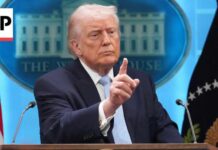
President Trump vowed to hunt down and prosecute the leaker who revealed a second U.S. airman was missing in Iran, transforming a covert rescue operation into a deadly race against time after Iranian forces issued a bounty on the evading servicemember.
Story Snapshot
- Media leak exposed second missing F-15E crew member, prompting Iranian forces to issue bounty and intensify search efforts
- U.S. airman evaded capture for over 24 hours in hostile Iranian terrain before successful rescue under fire on April 4, 2026
- Trump announced plans to subpoena media outlets, threatening jail time for those refusing to identify the leaker
- Defense officials labeled the mission “no-fail,” requiring CIA assets and expanded special operations forces due to leak-induced complications
Leak Compromised Covert Rescue Operation
President Donald Trump announced at an April 6, 2026 White House briefing that his administration will pursue the individual who leaked classified information about a missing U.S. airman in Iran. The F-15E Strike Eagle crashed over Iranian territory on Friday, April 3, with special operations forces quickly recovering the pilot. Iranian forces remained unaware a second crew member, the weapons systems officer, was missing until media outlets including Channel 12 news in Israel and The Associated Press published reports revealing the incomplete rescue. This disclosure prompted Iranian authorities to issue a public bounty, mobilizing both military units and civilians to hunt the evading airman across rugged terrain.
Airman Survived 24 Hours Behind Enemy Lines
Defense Secretary Pete Hegseth detailed how the weapons systems officer scaled ridges and evaded Iranian forces for more than a day while U.S. military planners worked to re-establish contact. The airman activated an emergency transponder on Saturday, April 4, enabling U.S. forces to pinpoint his location. Intelligence officials described the search as comparable to finding a grain of sand in a desert, requiring extensive CIA human intelligence networks and technical surveillance capabilities. The successful rescue mission launched under hostile fire involved deception tactics and a significantly larger force deployment than originally planned, all necessitated by the heightened Iranian awareness following the media disclosure.
Administration Threatens Media Subpoenas
Trump stated his administration will subpoena the media companies that published the leak, demanding they surrender the source’s identity or face prosecution. The President characterized the leaker as a “sick person” whose actions endangered American lives during an active military operation in hostile territory. Senior officials described the mission as “no-fail,” emphasizing the extraordinary risks faced by rescue teams operating in Iranian-controlled areas now alerted to the missing servicemember. This aggressive stance toward media outlets echoes previous Trump administration efforts to identify and prosecute individuals who disclose classified information, though it raises significant First Amendment concerns among journalism advocates who argue such subpoenas threaten press freedom.
National Security Versus Press Freedom Debate Reignited
The incident underscores longstanding tensions between operational security requirements and media reporting on military activities. While Trump officials frame the leak as a direct threat to American personnel that transformed a manageable situation into a crisis, the broader context reveals government frustration with information disclosures during sensitive operations. The case presents a clear example of how unauthorized revelations can materially alter adversary responses, shifting from passive unawareness to active pursuit with financial incentives. For Americans across the political spectrum increasingly skeptical of unaccountable government actions, this incident highlights a legitimate security concern while simultaneously raising questions about transparency during undeclared conflicts and the mechanisms used to silence dissent or scrutiny of military operations abroad.
The successful rescue concluded with the airman’s safe extraction on Saturday, but the Trump administration’s pursuit of the leaker continues as an active investigation. No specific media outlet or individual has been publicly named as the subpoena target, though the President’s statements make clear the Justice Department has been directed to use all available legal tools to identify the source. This case will likely set precedent for how aggressively the administration pursues leakers during ongoing military operations, with potential long-term implications for both national security protocols and the relationship between the defense establishment and news organizations covering classified military activities in conflict zones.
Sources:
‘Very hostile’: Trump details airman rescue inside Iran – Military.com
Iran Did Not Know F-15 Airman Was Missing. Then A Leaker Broke The Story – NDTV