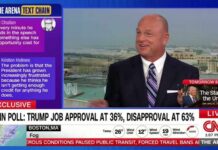

Memphis is showing what happens when Washington stops excusing criminals and starts backing law enforcement with real manpower.
Story Snapshot
- The Trump administration’s “Memphis Safe Task Force” surged federal agencies and National Guard support into a city battered by violent crime.
- Reported results include more than 1,700 arrests in a recent month, hundreds of firearms seized, and dozens of missing children located.
- Local data cited by officials shows steep declines in serious “Part 1” crimes compared with the prior year, though the operation’s long-term durability is still unknown.
- Some local leaders challenged the National Guard deployment in court, even as city and state officials also cooperated with the crackdown.
- Investigative reporting raised civil-liberties questions about immigration arrests that allegedly began with traffic stops unrelated to violent crime.
Federal Surge Puts a “Law and Order” Template on Display
President Trump’s administration launched the Memphis Safe Task Force in late September 2025, sending a coordinated wave of enforcement into Memphis, Tennessee. The effort combined National Guard support with multiple federal agencies working alongside local police, according to published reporting. Officials framed the surge as a response to chronic violence and disorder that had made daily life unsafe for residents. The operation has remained active into 2026 with no publicly stated end date.
Attorney General Pam Bondi publicly tied the initiative to measurable public-safety outcomes and a broader policy message: tolerating crime is a choice, and the administration chose enforcement. That framing matters because it contrasts with years of soft-on-crime rhetoric that many Americans associate with rising disorder, understaffed departments, and communities told to accept chaos as “systemic.” Memphis became a test case for whether aggressive, coordinated enforcement can reverse a city’s trajectory.
Arrests, Guns Seized, and Children Located: What’s Documented
Reported numbers vary by time period, but the publicly cited trend is consistent: the task force generated high-volume enforcement activity. One recent month produced more than 1,700 arrests and 293 firearms seized, with totals since launch reported at more than 500 guns recovered. Officials also highlighted 76 missing children located and 126 identified gang members arrested. Those figures, if sustained and accurately attributed, point to a strategy focused on warrants, guns, and repeat offenders.
Crime reduction claims are also central to the story. Reported comparisons tied to Memphis Police Department data showed fewer “Part 1” crimes in early 2026 versus early 2025, including a cited January drop from 3,709 incidents to 1,908 and a February decline of 38% year over year. Another cited metric described a 46% reduction in serious crime since early September 2025. The available reporting supports significant declines, but it does not fully isolate causes.
The “6,800 Arrests” Claim Doesn’t Match the Sourced Totals
Readers have likely seen headlines claiming 6,800 criminals were arrested. The research provided with this story flags that number as inconsistent with the underlying sourcing: the more consistently documented cumulative figure is “over 3,000” arrests since the task force’s inception, with an additional snapshot of 1,700 arrests in a recent month. Without documentation showing how 6,800 was calculated, the safer conclusion is that the verified totals are lower than viral claims.
This distinction matters for credibility. Conservatives don’t need inflated numbers to make the case for enforcement; the reported reductions and thousands of arrests are consequential on their own. When numbers overshoot the documented record, critics use it to dismiss the broader results and re-litigate the same arguments that kept cities stuck—endless process, no accountability, and political cover for offenders. The stronger argument is straightforward: focus on what is supported and demand transparency on what is not.
Court Challenges and Civil-Liberties Questions Center on Scope
The deployment also prompted legal pushback. Reporting cited in the research indicates some local leaders sued Governor Bill Lee over the National Guard decision. At the same time, other local officials cooperated with the operation, reflecting a city caught between public demand for safety and political concerns about federal presence. The research notes no clear evidence of a coordinated Democratic lawsuit aimed at stopping the entire task force, despite how some commentary frames it.
Investigative reporting raised sharper questions around immigration enforcement patterns during the operation. The research cites findings that nearly 90% of immigration-related “administrative” arrests over a 65-day period began with traffic stops not tied to violent-crime investigations, along with federal charges against 11 men accused of assaulting or resisting arrest during traffic-stop encounters. Supporters see immigration enforcement as basic rule-of-law governance; critics argue traffic stops risk expanding the mission beyond violent crime.
National Guard Helps Memphis Arrest 6,800 Criminals as Dems Sue to Stop Deployment https://t.co/102eB6DXE8
— ゆきひろ (@vaioboy4767) March 8, 2026
For constitutional-minded Americans, the key issue is whether enforcement stays within lawful limits while prioritizing genuine public safety. The reporting provided supports two truths at once: serious crime declines appear substantial, and the tactics used—especially where immigration arrests originate—deserve scrutiny for proportionality and focus. If the Memphis model spreads, voters should insist on transparent metrics, clear operational boundaries, and sustained results that outlast a temporary surge.
Sources:
https://www.foxnews.com/politics/trump-administration-notches-1700-arrests-after-one-month-memphis
https://dailymemphian.com/article/55065/national-guard-deployment-memphis-tennessee-donald-trump