Modernism did not just annoy the Church; it forced Catholics to ask whether the faith could survive a new age without changing its soul.
Quick Take
- The Catholic Church has a real anti-modernist history, and Pope Pius X treated Modernism as a grave doctrinal threat.
- Vatican II answered that crisis with a pastoral style, not with an older pattern of canons and anathemas.
- Traditionalists see that shift as dangerous because it can blur doctrine and invite confusion.
- Supporters of Vatican II see the same shift as a lawful way to speak to the modern world without denying core belief.
The Old Fight That Never Went Away
The fight over tradition and modernism is not new. It runs through the late nineteenth century, Pope Pius X’s anti-modernist campaign, and the debates that still surround Vatican II today.
That older conflict matters because the Church did not treat Modernism as a mild trend. Catholic reference works describe it as a defined theological system, and Catholic sources say Pius X saw it as a threat to doctrine itself.
That history gives traditional Catholics a strong starting point. If the Church once condemned modernist ideas as dangerous, they argue, then modern reforms must be judged very carefully. This is why Vatican II remains the flash point.
Why Vatican II Became the Breaking Point
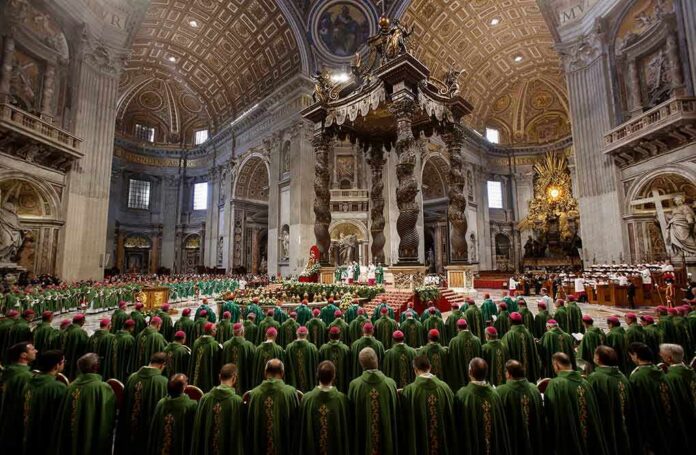
Vatican II was presented as a pastoral council. John XXIII wanted the Church to speak to the modern world in a fresh way, and later commentary notes that the council issued no canons or anathemas in the old style.
For critics, that was the problem. They say the council’s broad language left room for confusion, especially on religious liberty, ecumenism, and the Church’s relation to the modern world.
For supporters, that was the point. They argue that the council did not abandon doctrine. It adapted its language so the ancient faith could be heard in a new age.
Why Traditionalists Keep Pushing Back
Traditionalists do not see themselves as rebels. They see themselves as heirs of an older Catholic instinct that distrusted ideas shaped by the spirit of the age. One speaker in the supplied material even defines modernity as a worldview marked by an arrogant rejection of tradition.
That view explains the emotional force behind the argument. If modernity is not just a time period but a rival mindset, then the issue is larger than style, music, or vestments. It becomes a choice over who gets to set the terms of belief.
The strongest traditionalist case is historical, not speculative. The Church really did fight modernism hard. It really did impose discipline on priests and teachers. And it really did speak as if doctrinal drift could poison the whole Church.
What the Counter-Case Gets Right
The reform side has a serious point too. Catholic scholarship shows that the Church’s struggle with modernity stretched across generations, not just one crisis moment. That long pressure helps explain why some bishops wanted a more pastoral answer.
Supporters also point to the Church’s own postconciliar choices. Catholic materials note that the anti-modernist oath and the Index were later abolished, which shows that reform was not treated as betrayal by the Church itself.
With all respect, Mr. Tezak, but the clock comparison is a fallacy that ignores the very nature of error. A broken clock ceases to be an instrument designed to measure time because its mechanism has failed. Modernism is a system that has actively replaced God’s time with the time…
— Mαr Mounier 🌐 (@elhigadodmarita) July 29, 2026
Still, the reform case is strongest when it argues for legitimate development, not when it pretends the older warnings never existed. That older anti-modernist memory still shapes how many Catholics hear every new statement from Rome.
The Real Choice Catholics Face
The deepest issue is not whether the Church can change its language. It can. The issue is whether change protects the faith or slowly hollows it out.
That is why this dispute keeps returning. Traditionalists fear that modern language can conceal a break. Reformers fear that rigid resistance can freeze the Church in a defensive posture that no longer speaks to real people.
Both sides draw from real Catholic history. Both sides can point to documents, councils, and discipline. But the missing piece is still the same: a clear, official, line-by-line answer on where development ends and rupture begins.
Sources:
lifesitenews.com, youtube.com, en.wikipedia.org, fr.wikipedia.org, academic.oup.com, churchlifejournal.nd.edu, newadvent.org, genealogiesofmodernity.org, acatholiclife.blogspot.com, catholicstand.com, catholic.com
© theredwire.com 2026. All rights reserved.