

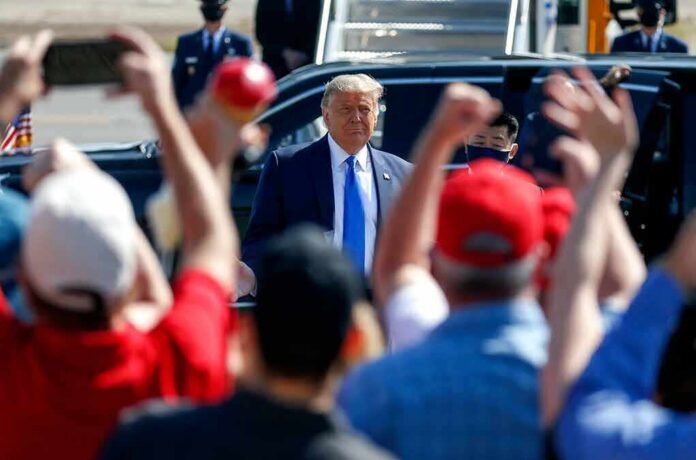
President Trump warned Mexico to stop a fast-growing migrant caravan or face higher tariffs on its exports, putting border security and trade on a collision course.
Story Highlights
- Trump said tariffs on Mexico would be “immediately doubled” if it fails to halt the caravan.
- Reports said more than 1,000 migrants began moving north from southern Mexico on November 10.
- Existing tariffs already hit Mexican autos at 25% and steel and aluminum at 50%, though targets for any doubling were not specified.
- Mexico’s president said caravans have not reached the U.S. border since 2025 and touted humanitarian management over force.
Trump Links Mexico’s Caravan Response To Trade Penalties
President Trump issued a clear warning to Mexico on November 12. He said Mexico must stop the migrant caravan now, or U.S. tariffs on Mexico will be doubled. He added there would be no leniency. He said his message went to Mexico, Texas leaders, the United States Border Patrol, and Immigration and Customs Enforcement. His post did not name which tariffs would rise, which products would be hit, or a date to start the increase.
Trump’s warning followed fresh reports of a caravan pushing north. Texas Public Radio said more than 1,000 migrants left Tapachula near the Guatemala border on November 10, aiming for Mexico City. That movement gave the White House a concrete trigger. The policy tool is tariffs. The administration views them as leverage to make Mexico act before the group reaches the United States border and strains agents and local communities again.
What The Tariff Threat Could Mean For Trade And Enforcement
Business outlets noted that U.S. tariffs were already in place on key Mexican goods. Cars made in Mexico faced a 25 percent tariff, and Mexican steel and aluminum faced 50 percent. Trump did not specify whether these rates or other product lines would be doubled. That leaves open questions on scope, exemptions, and timing. Even so, the message sought quick action from Mexico by tying migration control to market access.
The approach echoes 2019, when tariff pressure preceded a deal to expand Mexican enforcement. That episode showed that trade leverage can force fast talks and new deployments. But it also showed trade threats risk supply chain disruption. Today, manufacturers and farmers rely on cross-border parts and sales. Any new tariff shock could raise costs for American buyers, while still aiming to push Mexico to prevent mass movement north before it reaches the line.
Mexico Pushes Back, Citing Humanitarian Management Of Caravans
Mexican President Claudia Sheinbaum responded that no caravan has reached the northern border since Trump returned to office in 2025. She said Mexican authorities manage these groups by giving information on United States limits and by providing humanitarian help. She rejected using force to break up caravans. She said one group fell from about 600 people to fewer than 100 after officials explained the reality to travelers.
Donald Trump is now threatening to double tariffs on Mexico because 1,500 migrants started walking north.
Meanwhile, his Treasury Secretary is telling everyone he’s optimistic about a new trade deal.
What an absolute fucking clown show.
Think about what Trump is actually…
— No Filter (@the_jimmy_says) November 13, 2026
Her comments point to a clash in methods. The United States is signaling costs if caravans move unchecked. Mexico says its softer approach is already keeping caravans from the border. Both positions can be tested in the days ahead. The caravan’s size, pace, and end point are the proof. If Mexico slows or disperses it, pressure could ease. If not, the White House has framed tariffs as the stick, even if details on products and timing still need to be spelled out.
Why This Matters For Border Communities And Constitutional Priorities
Border towns and ranchers live with the results when large groups arrive at once. Local police get stretched. Hospitals and shelters feel the strain. Federal agents must shift to care and processing. That undermines law-and-order and drains resources from stopping drugs and criminals. The administration’s warning aims to deter mass entry and uphold immigration law. Voters who value secure borders expect firm action that protects families, property rights, and the rule of law.
Supporters of the warning argue that Mexico must be a real partner. They say caravans should not reach our line in the first place. Critics point to trade risks and unanswered legal details on tariff authority. Both views underline the need for clear, fast outcomes. The near-term test is simple. Does Mexico stop or disperse the caravan before it threatens another border surge? The answer will shape whether tariffs move from threat to policy and whether supply chains face new shocks.
What To Watch Next
Watch for Mexican National Guard or migration officials along the caravan’s route and signs of group dispersal. Look for new United States directives that define tariff targets, legal basis, and start dates. Track statements from the United States Border Patrol on expected arrivals. Monitor local leaders in Texas and Arizona for resource needs. The key measures are caravan size at each checkpoint, daily dispersal rates, and any arrests of smugglers or cartel guides tied to the group.
Americans want a secure border and an orderly system. They also want affordable goods and steady jobs. The White House is betting that pressure today prevents a crisis tomorrow. Mexico is betting its humanitarian approach will keep caravans from reaching the border. The facts on the ground will decide which path holds. Until then, the warning stands, and the costs for inaction are clear for both sides.
Sources:
youtube.com, tpr.org, abcnews4.com, supplychaindive.com
© theredwire.com 2026. All rights reserved.