

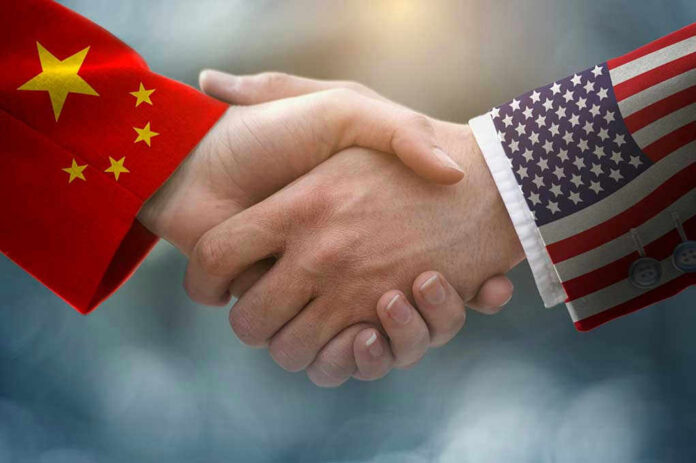
Trump’s historic 12-day Asia tour in 2017 showcased America First diplomacy at its finest, securing massive trade deals while forcing regional powers to acknowledge U.S. strength after years of Obama-era weakness.
Story Highlights
- Trump completed the longest presidential Asia tour in over 25 years, visiting five nations to restore American leadership
- Secured $300 billion in trade deals while demanding fair and reciprocal agreements from Asian partners
- Revived the Quad alliance as a strategic counterweight to China’s growing regional influence
- Prioritized North Korean denuclearization and strengthened security partnerships with key allies
Restoring America’s Position After Years of Decline
President Trump’s November 2017 diplomatic mission across Japan, South Korea, China, Vietnam, and the Philippines marked a decisive break from the Obama administration’s failed “pivot to Asia.” The 12-day tour represented the most extensive presidential engagement in the region since 1992, addressing critical security threats and trade imbalances that previous administrations allowed to fester. Trump’s assertive approach directly confronted China’s rising influence while reassuring traditional allies of America’s renewed commitment to Indo-Pacific stability.
Demanding Fair Trade After Decades of Bad Deals
Trump’s trade-focused agenda delivered tangible results, securing approximately $300 billion in economic agreements while demanding reciprocal terms that put America first. The president criticized previous administrations for allowing massive trade deficits to develop, particularly with China, while projecting the United States as open for business under fair conditions. This transactional approach represented a fundamental shift from the globalist policies that had undermined American workers and manufacturers for decades.
Strengthening Security Partnerships Against Regional Threats
The tour’s security dimension focused heavily on North Korean denuclearization efforts and reinforcing alliances with Japan and South Korea. Trump revived the Quad partnership with Japan, India, and Australia as a strategic counter to Chinese expansionism in the region. These moves demonstrated genuine leadership in addressing threats to American interests, contrasting sharply with the previous administration’s ineffective diplomatic strategies that allowed North Korea’s nuclear program to advance unchecked.
Confronting China While Building Strategic Alliances
Trump’s meetings with Chinese President Xi Jinping emphasized the need for Beijing to address trade imbalances and pressure North Korea, marking a shift toward more competitive U.S.-China relations. The president’s approach balanced engagement with firmness, refusing to accept the status quo that had advantaged China at America’s expense. His revival of the Quad alliance provided Asian partners with alternatives to Chinese economic and security dependence, strengthening the regional balance of power.
The 2017 Asia tour demonstrated how strong presidential leadership can advance American interests abroad through direct engagement and principled negotiation. Trump’s success in securing substantial trade agreements while strengthening security partnerships proved that America First policies could effectively counter threats from hostile nations like North Korea and China while reassuring allies of continued U.S. commitment to regional stability.
Sources:
Trump’s Asia Trip: What He Accomplished and What Remains Unclear – TIME
President Trump’s Trip to Asia – U.S. Department of State
Trump Asia Trip Comes to a Close – Voice of America
Trump’s Foreign Policy Moments – Council on Foreign Relations