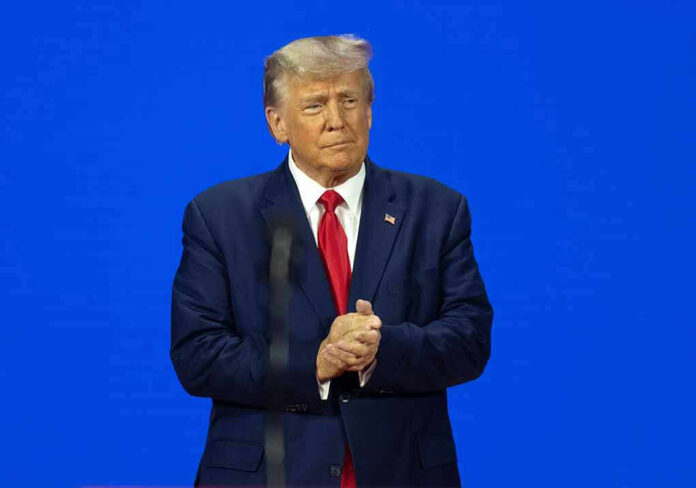
With Congress poised to let President Trump personally appoint Washington, D.C.’s attorney general, local voters could lose their voice in law enforcement overnight—marking a dramatic federal power grab that rewrites the balance between national authority and democratic self-rule.
Story Snapshot
- The House Oversight Committee will consider a bill giving President Trump direct power to appoint D.C.’s attorney general, ending local elections for the position.
- The move follows Trump’s recent federalization of D.C.’s police and claims of reduced crime rates.
- The new law would immediately terminate the current attorney general’s term, with no Senate confirmation for Trump’s pick.
- Experts warn this sets a precedent for federal intervention and politicizes law enforcement, eroding local autonomy.
Federal Authority Expands Over D.C. Justice System
The House Oversight Committee is set to mark up a Republican-led bill, sponsored by Rep. Pat Fallon of Texas, that would remove the elected D.C. attorney general and make the office a presidential appointment. If passed, this legislation would allow President Trump to select the next attorney general for Washington, D.C., bypassing local voters and even the Senate confirmation process. The bill is part of a broader push by Republican lawmakers to assert federal control over the District’s criminal justice system, particularly in response to concerns about juvenile crime and the perceived failures of local leadership.
Congressional Republicans argue that federal intervention is necessary to address persistent crime and inefficiency in the District. Following President Trump’s federalization of the Metropolitan Police Department and deployment of National Guard troops in August 2025, crime rates reportedly dropped by half, according to Rep. Fallon. The administration claims these results justify further federal oversight, including the power to appoint top law enforcement officials. This marks a significant escalation in federal-local power dynamics and has sparked heated debate among policymakers, local leaders, and legal experts.
Dramatic Shift in Local Governance and Democratic Norms
Since the passage of the Home Rule Act in 1973, Washington, D.C. has maintained limited self-governance, with most local affairs managed by city officials and substantial federal oversight reserved for Congress. The attorney general’s office became an elected position only in 2014, reflecting efforts to increase democratic accountability in the District. The proposed bill would abruptly terminate the current attorney general’s term and eliminate local electoral control, reshaping how justice is administered in the nation’s capital. D.C. Attorney General Brian Schwalb, the current officeholder, has already filed a lawsuit challenging federal control, arguing that the move undermines both the principle of home rule and the will of D.C. voters.
Opposition to the bill has emerged from D.C. Mayor Muriel Bowser and other city officials, who welcome increased resources but insist that emergency federal control is an overreach. The Justice Department, meanwhile, has revised its emergency orders, designating the DEA administrator as liaison to D.C. officials rather than installing an emergency police chief. These developments illustrate the complex negotiations underway as federal and local authorities vie for influence over law enforcement policy and practice in the District.
Implications for Constitutional Principles and Conservative Values
If enacted, the bill would set a precedent for expanded federal intervention in local criminal justice systems, raising questions about the future of self-governance, electoral accountability, and constitutional rights. Critics, including legal scholars and advocacy groups such as the Brennan Center, warn that politicizing law enforcement threatens democratic norms and public trust. Reform advocates express concern that local reforms could be rolled back, potentially increasing incarceration rates and punitive policies. For conservative Americans, the erosion of local autonomy and unchecked federal power may echo broader frustrations with government overreach and threats to foundational constitutional principles. Supporters of the bill argue that decisive federal action is needed to restore order and effective governance in the capital, reflecting a broader law-and-order philosophy.
As the House Oversight Committee prepares to mark up the bill, the outcome will shape not only D.C.’s future but also the ongoing debate about federal versus local authority across the nation. The stakes are high: whether the measure passes or fails, it will send a signal about the limits of presidential power, the role of Congress in local governance, and the endurance of American democratic traditions in turbulent times.
Sources:
House Oversight to Take Up Bill Giving Trump Power to Appoint DC Attorney General
Project 2025’s Plan: Criminal Justice Under Trump
Trump’s First 100 Days: Friend or Foe to Criminal Justice Reform