
Vice President JD Vance announced the government is cutting off Microsoft’s ability to sponsor green cards, accusing the company of laying off 6,000 American workers while bringing in thousands of foreign hires on visas.
Story Snapshot
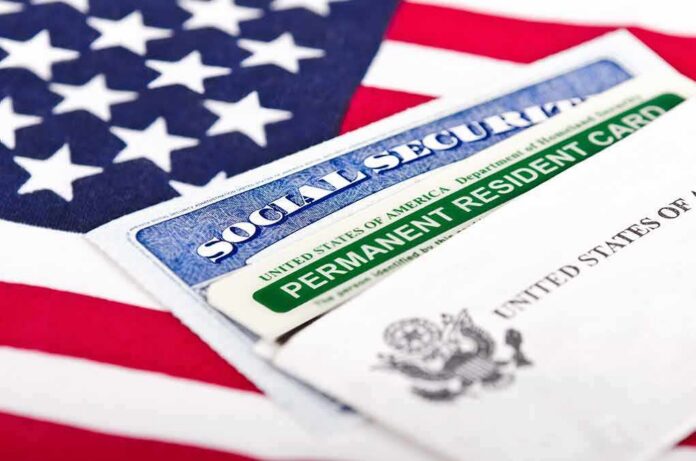
- The Trump administration suspended Microsoft, Adobe, and several IT outsourcing firms from the PERM program, which lets companies sponsor foreign workers for green cards.
- Vice President Vance said Microsoft laid off 6,000 American workers last year while benefiting from 6,300 H-1B visas and nearly 3,000 green cards.
- Officials linked the suspension to active federal fraud investigations, including a Department of Labor inspector general probe.
- Microsoft says its layoffs were based on business need, not visa status, echoing a defense it has used before.
- No public investigative file has been released yet showing the laid-off jobs and sponsored visa roles were the same positions.
Government Blocks Green Card Pipeline For Tech Giants
The Trump administration suspended Microsoft, Adobe, and a group of major IT outsourcing firms from the PERM program on October 8, 2026. PERM is the labor-certification step employers use before sponsoring most employment-based green cards. Officials said they will not accept new applications or process pending ones for these companies while investigations continue.
Vice President Vance delivered the announcement at a White House press event, framing it as a “hire American workers” enforcement push. He said Microsoft laid off 6,000 American workers last year. At the same time, he said, the company got 6,300 H-1B visa approvals and nearly 3,000 green cards.
Vance went further, claiming Microsoft filed 3,682 PERM applications overall. Nearly 1,000 of those, he said, overlapped with jobs held by the American workers who got laid off. That specific number is the heart of the administration’s displacement argument: not just general visa use, but overlap with eliminated roles.
Fraud Investigations Give The Claim An Enforcement Basis
Officials said the suspension was not just political messaging. They tied it to multiple active federal investigations, including a major probe by the Department of Labor inspector general into alleged H-1B and PERM fraud. That gives the allegation a concrete investigatory foundation, even though the underlying case files have not been made public.
The suspension was not limited to Microsoft. Adobe and several large IT outsourcing firms, including companies with major operations serving Indian tech workers, were also cut off from the program. Applying the measure broadly suggests officials believe the problem extends beyond one company, though it also risks blurring company-specific evidence into a general tech-sector narrative.
What The Public Record Does Not Yet Show
The numbers cited by Vance, the 6,000 layoffs, 6,300 visas, and nearly 3,000 green cards, come from his public remarks and reporting built on them. No released document set verifies the methodology behind those figures or confirms they cover the same time period. That does not make the numbers false, but it means they have not been independently audited in public yet.
More importantly, nothing publicly available shows the laid-off workers and the visa-sponsored hires held the same jobs, in the same business units, at the same locations. The suspension itself is an enforcement action, not a legal finding of wrongdoing. Blocking future PERM filings is a penalty based on suspicion, not a court ruling that Microsoft broke the law.
Microsoft’s Defense Echoes Past Statements
A Microsoft spokesperson responding to a related report earlier this year said layoff decisions were “based on business need, not visa status”. That statement did not address the October suspension directly, but it reflects the company’s long-standing position. Back in 2009, Microsoft publicly said the vast majority of its U.S. hires would be American workers, and that foreign hires filled specialized roles or gaps when no qualified American was available.
A lot of wrong information is going around about tonight's US news. Here is what actually happened, in simple words.
The US Labor Department has suspended 8 companies from something called the Permanent Labor Certification programme, also known as PERM. The 8 are TCS, Infosys,… pic.twitter.com/eDgYFomjCh
— Sann (@san_x_m) October 8, 2026
Microsoft also has a documented history with immigration-related hiring complaints. In 2021, the company settled with the Justice Department over allegations it improperly asked non-U.S. citizen applicants for unnecessary immigration documents during early hiring stages, agreeing to overhaul those practices. That settlement involved discrimination against foreign applicants, the opposite direction of the current displacement accusation, but it shows Microsoft’s hiring process has faced federal scrutiny before.
Why This Resonates Beyond One Company
This story taps into a frustration shared across the political spectrum: big companies using government programs in ways that seem to serve corporate bottom lines over everyday workers, while regulators and politics move faster than proof. Workers who lost jobs want answers now. Foreign workers and outsourcing firms caught in the suspension, including Infosys, Wipro, TCS, and others, face real uncertainty over green card plans already in motion.
Whether the administration’s numbers hold up under scrutiny matters for both sides of this debate. If investigators eventually show direct job-for-job replacement, it would confirm a long-standing fear among American tech workers. If the case narrows or doesn’t hold up, it raises questions about how enforcement announcements get made before the evidence is public.
youtube.com, washingtonexaminer.com, timesofindia.indiatimes.com, etnownews.com, nypost.com, newsquawk.com, bnnbloomberg.ca, oneindia.com, bhaskarenglish.in, mercurynews.com, dailysignal.com
© theredwire.com 2026. All rights reserved.