

Munich exposed the fastest way to turn a serious security forum into a political own-goal: import America’s loudest slogans, then aim them at the wrong audience.
Quick Take
- AOC used a Munich Security Conference town hall to slam Secretary of State Marco Rubio’s alliance message as “cultural nostalgia” and light on substance.
- She tied Trump-era foreign policy theatrics, including Greenland talk and border rhetoric, to domestic politics rather than strategy.
- Her claim that U.S. aid “enabled a genocide” in Gaza, coupled with a Leahy Laws reference, triggered the sharpest backlash.
- Munich’s historical gravity magnified the fallout, and critics argued her framing was legally and factually off-target.
Munich’s Unforgiving Stage: Why the Setting Made Every Word Heavier
The Munich Security Conference exists for one reason: to keep America and Europe talking when history gives them every excuse to stop. That makes it a terrible place for fuzzy accusations and a great place for surgical arguments. On February 14, 2026, AOC stepped into that arena after Marco Rubio’s speech and tried to reframe the U.S.-Europe relationship as vibes and nostalgia. Munich rewarded none of it.
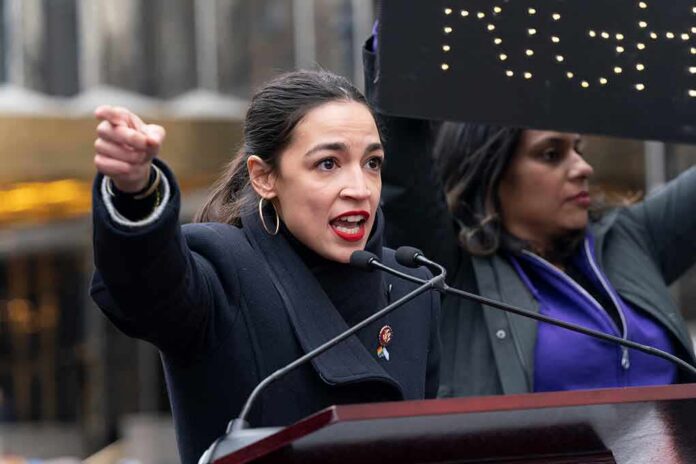
Rubio’s morning remarks framed the alliance around shared interests, border realities, and the case for staying aligned even when politics diverge. AOC responded at a town hall by going after the premise: she portrayed the speech as dressed-up sentimentality and implied the administration used foreign policy theatrics to feed domestic narratives. The contrast mattered. Rubio spoke like an executive stewarding commitments; AOC spoke like an activist cross-examining a system.
Rubio’s “Cultural Nostalgia” Problem: A Useful Critique, Poorly Landed
AOC’s line about “cultural nostalgia” carried a kernel of legitimate skepticism: alliances can’t run on symbolism forever. Americans over 40 remember the post–Cold War autopilot years, when leaders assumed NATO solidarity would self-renew. The problem is Munich isn’t a college seminar; it’s a room full of governments who treat words as signals. Calling the Secretary of State unserious without offering a clearer alternative reads as performance.
She also took aim at immigration rhetoric, a reliable progressive pressure point, and connected it to how the U.S. presents itself abroad. Conservative common sense says border control and national sovereignty form the baseline for credibility, not a contradiction of it. European leaders may dislike American bluntness, but they understand enforcement because they grapple with it too. AOC’s approach risked sounding like she confused national interest with national shame.
When Gaza Enters the Conversation, Munich Stops Laughing
The real detonation came when AOC accused U.S. aid to Israel of enabling “genocide” in Gaza and invoked the Leahy Laws as the corrective. That charge does not function like ordinary political criticism. “Genocide” is a legal term with a specific meaning and a moral weight that, once dropped, changes the room’s oxygen. In Munich—where the memory of industrialized murder sits close to the surface—language like that is not casual.
Critics highlighted the mismatch between the accusation and the evidentiary threshold. Commentators and historians cited in coverage argued her claim failed legally and factually, emphasizing Israel’s efforts to mitigate harm, the existence of humanitarian corridors and safe zones, and the complex reality of Hamas tactics, including the use of civilians as shields. Reasonable Americans can debate proportionality and strategy; calling it genocide demands a case, not a vibe.
The Leahy Laws: A Real Tool, Not a Magic Phrase
AOC’s reference to the Leahy Laws sounded authoritative, and that’s the trap: a policy name can masquerade as proof. Leahy restrictions exist to prevent U.S. support from flowing to foreign security units credibly implicated in gross human-rights abuses. Applying that framework requires specific findings, targeted units, and due process. Dropping “Leahy Laws” into a broad “U.S. enabled genocide” claim reads less like oversight and more like branding.
Conservatives tend to value clear chains of responsibility: who did what, when, under what authority, and with what verified evidence. That standard protects the innocent and keeps America’s moral language from becoming a partisan weapon. If Congress wants conditions on aid, it can pursue them through concrete benchmarks and audits. Turning the most explosive charge in international law into a rally chant undermines the credibility of lawful accountability.
Why the Backlash Stuck: Credibility, Coalition Politics, and 2028 Shadows
The immediate outrage followed a familiar pattern: clips travel faster than context, and international audiences consume American intraparty fights as if they were national policy. The longer-term risk is subtler. AOC’s comments landed at a moment of transatlantic tension and post-election recalibration, when allies look for steadiness. Conservative media framed the episode as humiliation, but the deeper issue is credibility: serious venues punish exaggeration.
Her critics also pointed to domestic consequences. Claims that blur into antisemitic-tinged incitement, even if unintended, tend to harden coalitions against the speaker and force Democrats into defensive silence or awkward distancing. That matters for any politician rumored to have national ambitions. Adults who lived through the Cold War understand that America’s words abroad can become leverage against America later. Munich remembers everything.
AOC Just Humiliated Herself on the World Stage #PJMedia https://t.co/Fdn9Yw5F63
— Matt Margolis (@mattmargolis) February 14, 2026
The episode left one open question that won’t go away: does the progressive foreign-policy critique mature into evidence-driven oversight, or does it stay addicted to maximalist language that thrills activists and alienates allies? Munich offered a test, not a stage. The audience wasn’t looking for a viral moment; it was looking for an argument that could survive contact with history, law, and the responsibilities of power.
Sources:
AOC accuses Israel of genocide in Germany where Holocaust launched sparking outrage
Fox News Video: AOC accuses Israel of genocide in Germany sparking outrage