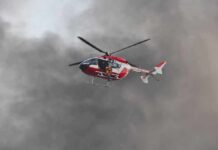
Georgia wildfires have obliterated 120 homes in record numbers, sparked by everyday negligence like a foil balloon and a welding spark, leaving nearly 1,000 more in peril as winds dictate survival.
Story Snapshot
- Two massive blazes in southeast Georgia destroyed 122 homes total, the most in state wildfire history.
- Highway 82 Fire in Brantley County razed 87 homes; Pineland Road Fire in Clinch County took 35.
- Nearly 39,000 acres scorched, with only 10-15% containment amid drought and high winds.
- Gov. Brian Kemp toured devastation, labeling fires top U.S. threats; National Guard deploys Blackhawks.
- Evacuations displaced thousands; human causes highlight preventable risks in rural areas.
Timeline of the Blazes’ Rapid Devastation
On April 18, 2026, the Pineland Road Fire ignited in Clinch County from a suspected welding spark. It swiftly destroyed 35 homes and threatened 160 more across 50 square miles in Clinch and Echols counties. Dry conditions and winds propelled its growth, forcing early responses from local crews. By April 20, the Highway 82 Fire erupted in Brantley County, likely from a foil balloon arcing on power lines. This blaze alone claimed 87 homes, shattering Georgia records for single-fire losses.
April 23 and 24 brought mandatory evacuations near Nahunta along Highway 110 and voluntary ones along U.S. 301. Curfews restricted access in threatened zones. The Georgia Forestry Commission reported low containment—15% for Brantley, 10% for Clinch—while 31 new small fires flared statewide. Georgia National Guard deployed aircraft, but shifting winds kept firefighters on the defensive, protecting 4,000 homes in Brantley alone.
Governor Kemp Leads On-Ground Response
Gov. Brian Kemp toured the scorched sites on April 25, witnessing firsthand the unprecedented destruction. He declared the fires among America’s most dangerous, burned 39,000 acres total, with federal agencies prioritizing air tankers and retardant drops. Kemp praised first responders’ tireless efforts and noted weather as the pivotal factor. More Blackhawk helicopters arrived, focusing on flank containment and structure defense amid ongoing threats to 1,000 homes.
Georgia Emergency Management Agency ordered evacuations near the Satilla River. Forestry Commission spokespeople Seth Hawkins and Joey Cason emphasized critical evacuations and wind monitoring. Col. Will Cox of the National Guard oversaw aerial operations. Statewide burn bans covered 91 counties, reflecting resource strains from 150-plus regional fires.
Human Causes and Preventable Tragedies
Suspected origins—a foil balloon on power lines and a welding spark—underscore common-sense prevention. Balloons conduct electricity, arcing sparks in dry air; welding demands strict fire watches. These rural, home-dense areas near Florida amplified impacts. No Georgia deaths occurred, though a linked Florida firefighter fatality occurred. Air quality alerts spread smoke to distant cities, straining health and visibility.
Georgia wildfires that destroyed more than 120 homes continue to threaten residents https://t.co/dbqmtxMj0N pic.twitter.com/VCA6QlSNAw
— WOKV News (@WOKVNews) April 25, 2026
Short-term, evacuations displaced families, curfews limited rebuilding starts, and smoke haze persisted. Long-term, drought-prone rebuilding demands resilient planning and funding precedents. Economic hits include property losses and suppression costs for heavy equipment. Socially, rural communities face displacement; politically, Kemp’s hands-on leadership aligns with conservative values of decisive, local-first action over bureaucracy.
Sources:
Georgia wildfires: Gov. Brian Kemp touring damage south Georgia today
Growing wildfires blamed for destruction of 120 GA homes, death of FL firefighter