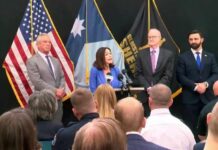
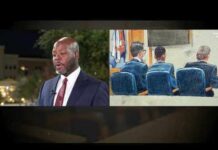
America just watched the most famous doctor in the country stare down senators and say, over and over, that he would rather stay silent than help them put him “behind bars.”
Story Snapshot
- Dr. Anthony Fauci invoked his Fifth Amendment right and refused every substantive question at a Senate hearing.
- Senator Rand Paul led the Republican panel, accusing Fauci of lies and a cover-up over COVID-19’s origins.
- Fauci blamed Paul’s “unhinged obsession” and fear of a legal trap, not guilt, for his decision to stay silent.
- The clash highlights a bigger fight over trust, power, and whether powerful officials ever face real accountability.
A nationally known doctor chooses silence over answers
Dr. Anthony Fauci walked into the Senate Homeland Security and Governmental Affairs Committee knowing exactly what he would do. He had been subpoenaed by Senator Rand Paul to answer for the government’s COVID-19 response and for what Republicans call a cover-up of the virus’s origins. When the time came, Fauci read prepared remarks saying that, on the advice of his attorneys, he would invoke his right under the Fifth Amendment to refrain from answering questions. Then he followed through, refusing every real question put to him.
Reporters in the room and on live streams described the same pattern. Senators asked about COVID-19 origins, about National Institutes of Health funding of research in China, about gain-of-function work, and about his role in lockdowns and public messaging. Each time, the veteran health official gave the identical reply: “On the advice of counsel, I respectfully decline to answer based upon my rights under the Fifth Amendment to the Constitution.” One clip shows him using that line even when senators tested him with simple, almost mocking questions about the color of his tie.
Rand Paul’s long fight with Fauci reaches a boiling point
This hearing did not come out of nowhere. Senator Rand Paul has hammered Fauci for years, accusing him of lying about risky research and hiding the possibility that COVID came from a lab leak in China. Fauci has called those charges “preposterous” and has insisted he did not fund research that caused the pandemic, a point House Democrats also highlighted in a separate committee record. In this latest showdown, Paul made clear he wanted more than sound bites. He talked about prosecution, perjury, and what he views as a long pattern of deception.
Paul argued that Fauci’s Fifth Amendment claim was “unsupported” because of a blanket pardon Joe Biden gave Fauci before leaving office, covering the period in question. From Paul’s perspective, a man who has already been pardoned cannot fear self-incrimination for that past conduct and therefore should not be able to hide behind the Fifth. That argument tracks a common-sense view many conservatives share: if you say you did nothing wrong and you are legally protected anyway, why not answer? For Paul, the refusal looks less like prudence and more like calculated stonewalling.
Fauci’s explanation: fear of a legal trap and an ‘unhinged obsession’
Fauci and his lawyers offered a very different story. He said it “pained” him to invoke the Fifth because of his long record of working with Congress and respect for the legislative branch. But he claimed the real reason he was there was not to seek truth about COVID, but to satisfy Paul’s repeated public pledge to see him “behind bars.” In his words, Paul has an “unhinged obsession” with him and wants to trap him into a statement that could be used in a criminal case. From that angle, staying silent becomes self-defense, not confession.
Major outlets covering the hearing reminded viewers that invoking the Fifth Amendment is not an admission of guilt. The Fifth exists to protect people from being forced to help build a case against themselves, and even innocent people sometimes use it under tough questioning. That legal reality matters. Yet politically, many Americans look at such a stark refusal from a powerful figure and see something else: a man who will not explain what taxpaying citizens funded and why key pandemic decisions were made the way they were.
A partisan clash that leaves core questions unanswered
The committee’s questions dug into some of the most sensitive topics of the past decade: U.S.-backed research in Wuhan, gain-of-function experiments, and decisions that shut down schools and businesses. Critics hoped this hearing would expose a paper trail tying National Institutes of Health or National Institute of Allergy and Infectious Diseases money to work that might have sparked the pandemic. Supporters of Fauci pointed to earlier Republican-led reviews that said they found no evidence he funded research that caused COVID-19 or lied about gain-of-function work. Those prior findings blunt the harshest claims, but they have not settled public doubts.
Sen. Bernie Moreno of Ohio used a Senate hearing to deliver a blistering, profanity-laced attack on Anthony Fauci, saying COVID-era restrictions inspired him to run for office. Fauci repeatedly invoked the Fifth Amendment. Story: https://t.co/XaiEtF6MeO
— Sabrina Eaton (@sabrinaeaton) July 29, 2026
What this hearing did show, beyond any dispute, is how little patience many Americans now have for unelected experts who act as if they answer to no one. While senators laid out their concerns on the record, Fauci’s blanket silence kept new facts from coming out. That may be smart lawyering. It is not satisfying oversight. For citizens who value transparency and equal treatment under the law, watching a powerful official repeatedly decline to answer feels like another reminder that the rules work differently at the top than they do for everyone else.
Sources:
reason.com, pbs.org, cbc.ca, nbcnews.com, statnews.com, yahoo.com, facebook.com
© theredwire.com 2026. All rights reserved.