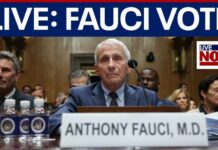
The Trump administration just launched the largest healthcare fraud takedown in U.S. history — charging 455 people for schemes totaling $6.5 billion in fake Medicare and Medicaid claims.
Story Highlights
- The Department of Justice charged 455 defendants on June 8, 2026, in the biggest healthcare fraud crackdown ever recorded.
- The administration replaced the old “pay and chase” system with an AI-powered “detect and prevent” model that stops bad payments before they go out.
- Medicare payment suspensions jumped 500% in early 2026 compared to 2025, and provider billing revocations rose 40%.
- Enforcement returns $106 for every dollar spent — but a widely cited $42 billion savings figure traces back to 2013–2014, not 2026.
Biggest Fraud Bust in U.S. History
On June 8, 2026, Attorney General Todd Blanche announced charges against 455 defendants across the country. The alleged schemes involved more than $6.5 billion in false claims filed with Medicare, Medicaid, and other federal health programs. The Department of Justice called it the largest national healthcare fraud takedown ever. Defendants included doctors, nurses, and clinic owners accused of billing for services that were never provided.
The Centers for Medicare and Medicaid Services (CMS) also rolled out a new West Coast Strike Force as part of the effort. That team alone charged 295 defendants tied to more than $518 million in fraudulent Medicaid claims. A White House anti-fraud task force, led by Andrew Ferguson, is coordinating the whole-of-government push. Vice President JD Vance’s task force also uncovered a 7,100% spike in Medicare claims for organ transplants over the past six years, surging to $14.4 billion.
AI Replaces the Old “Pay and Chase” Model
For years, the federal government paid claims first and investigated fraud later — a slow, costly approach. The Trump administration replaced that with a “detect and prevent” strategy using artificial intelligence and real-time data analysis. The goal is to flag suspicious claims before any money leaves the door. Health and Human Services Secretary Robert F. Kennedy Jr. highlighted the shift at the June 8 announcement, calling it a fundamental change in how the government protects taxpayer dollars.
The numbers back up the new approach. CMS reported a 40% increase in provider billing privilege revocations and a 500% jump in Medicare payment suspensions in early 2026 compared to the same period in 2025. The Department of Justice’s Healthcare Fraud Unit says enforcement now returns $106 for every dollar spent. CMS also suspended new Medicare enrollment nationwide for six months to stop bad actors from entering the system in the first place.
The $42 Billion Figure Needs Scrutiny
Some reports tied this crackdown to a headline claim of $42 billion in savings. That number is real — but it comes from fiscal years 2013 and 2014, when CMS first deployed its Fraud Prevention System under the Obama administration. The 2026 enforcement action documented $6.5 billion in alleged fraudulent claims — a major achievement, but a different figure entirely. No official 2026 CMS report has been released attributing $42 billion to the new strategy.
This matters because accuracy strengthens the case for aggressive enforcement. The real 2026 results — 455 charged, $6.5 billion in fraud exposed, 500% more payment suspensions, and a 7,100% billing spike uncovered — are genuinely historic on their own. Taxpayers lost an estimated $233 billion to $521 billion to Medicare fraudsters between 2018 and recent years alone. The Trump administration’s crackdown is a serious step toward fixing that. The numbers just need to be reported straight.
Sources:
redstate.com, go.boarddocs.com, facebook.com
© theredwire.com 2026. All rights reserved.