Russia’s 2026 election is doubling as a showcase for Ukraine war veterans, turning the ballot into a stage for war messaging rather than open competition.
Story Snapshot
- United Russia elevated a wounded veteran and a war correspondent to lead its slate.
- Election officials cleared about 1,586 war veterans to run across Russia.
- Kremlin signals the vote helps legitimize its wartime agenda, not just pick leaders.
- Plans to pack parliament with veterans were reportedly scaled back for control.
How Veterans Became the Face of the Campaign
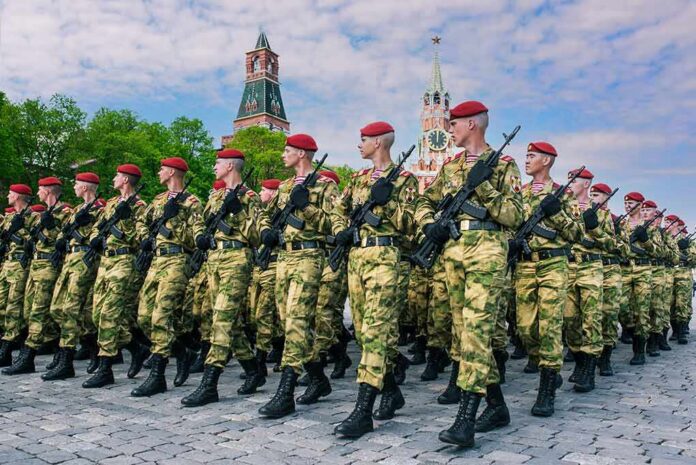
United Russia began its push on June 28, 2026 in Moscow. Party chief Dmitry Medvedev named Ukraine war veteran Vladislav Golovin and state television war correspondent Yevgeny Poddubny to head the party’s candidate list. The party also featured top officials to anchor the slate. The message was clear. Service at the front and voices from the front would lead the ticket into the September vote. That choice set the tone for the wider campaign.
Russia’s Central Election Commission then opened the gates to a large pool of veterans. Chair Ella Pamfilova said 1,586 veterans who filed had been cleared to run in federal, regional, and local races. That scale gave the Kremlin a broad bench of military-linked candidates across the map. Most were backed by parties, with details on party splits left vague. The number signaled reach and intent in the middle of a long war.
What the Kremlin Says the Election Is For
Kremlin messaging links veteran candidacies to renewal and unity. State statements have stressed how veterans campaigned and won in recent cycles, and how few lost. The line is that veterans earned a place in civil life and can help lead now. Supporters say this looks like normal turnover through elections. Critics counter that access to the ballot is tightly managed, so the effect is to validate the war, not to open real choice.
Independent and Western outlets describe the same pattern in plainer terms. They report the Kremlin is using the election to project mass backing for the war and to give a veneer of legitimacy to its choices. Analysts say this cycle ties politics even tighter to the military story. The ballot becomes a national broadcast about sacrifice, security, and loyalty. That show crowds out debate on costs, rights, or policy failures at home.
Why the Veteran Push Met Limits
Early reports spoke of a plan to bring roughly one hundred veterans into the State Duma after the vote. Later reporting said those targets were scaled back. The reason given was control. Political managers favored figures who were loyal, predictable, and often already inside the system. That choice kept the message of valor while lowering the risk that popular “war heroes” might act on their own once in office.
🚨Russian officials have denied a new mobilization at least 17 times since June – including four times in the first half of September alone.
Russian independent outlet Important Stories counted four denials in July, six in August and another four by mid-September. Vladimir Putin…
— EKStrategies (@EKStratcom) September 16, 2026
This tension shows up in party primaries and candidate lists. Many “military” hopefuls turned out to be seasoned insiders with military ties, not unknown rank-and-file soldiers. The design leans toward symbolic inclusion and message discipline, not a broad transfer of power. The result is a campaign heavy on uniforms and war branding, but light on bottom-up change. That mix fits a vote built to manage outcomes and craft a story, not to test the government.
Why It Matters for Americans Watching
Elections that sell a story instead of choice should concern people across the spectrum. Conservatives see state power used to script consent and paper over costs of war. Liberals see shrinking space for dissent and fair competition. Both can spot the pattern: leaders use the ballot to legitimize themselves while everyday people face rising prices, limits on speech, and fewer real options. A stage-managed vote abroad is a warning about complacency at home.
Sources:
19fortyfive.com, usnews.com, themoscowtimes.com, russian-election-monitor.org, szru.gov.ua, russiapost.info
© theredwire.com 2026. All rights reserved.