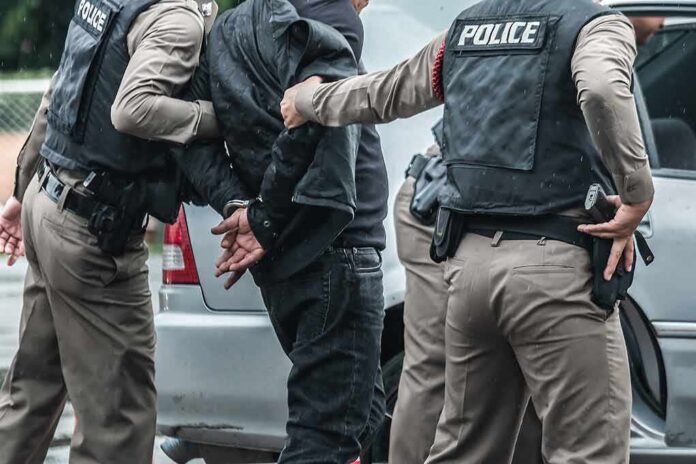
At sunrise on a quiet Costa Rican farm, a decade-long manhunt for the drug boss called “Diablo” finally exploded into an hour of gunfire that ended with the country’s most wanted fugitive in handcuffs.
Story Snapshot
- Costa Rican police captured alleged drug boss Alejandro Arias Monge, known as “Diablo,” after an armed standoff at a rural property.
- The United States had posted a reward of up to $500,000 and describes him as leader of a violent transnational criminal organization.
- The raid left at least one suspect dead and multiple officers wounded, highlighting the risks frontline agents face in the drug war.
- The case shows how cross-border crime, big money, and official secrecy fuel public distrust in governments on both the right and the left.
How “Diablo” Was Finally Caught
Costa Rican judicial authorities say police moved before dawn on a rural property in Río Frío, a town in the province of Heredia about 56 miles northeast of San José. Officers had tracked Alejandro Arias Monge, the alleged drug trafficker known as “El Diablo,” after nearly ten years on the run. When police entered the farm, they were met with gunfire, and what should have been a simple arrest turned into a long and dangerous firefight.
Officials report that the exchange of shots lasted about an hour as tactical officers pushed forward under fire. In the end, one suspected criminal was killed and between five and eight officers were wounded, depending on which official count you read. Despite the chaos, police say they managed to take Arias Monge alive and move him into custody for questioning. For many Costa Ricans, the arrest closed a bloody chapter tied to rising cartel-style violence.
Who “Diablo” Is and Why the US Cared
The United States Department of State describes Alejandro Arias Monge as the head of a violent transnational criminal organization and Costa Rica’s most wanted fugitive. Washington had offered a reward of up to $500,000 for information leading to his arrest or conviction on drug trafficking charges. Authorities accuse him of helping move cocaine from Colombia through Central America, linking a small, peaceful country to the wider international drug trade that also feeds addiction and crime inside the United States.
Reports from Costa Rica say Arias Monge is tied to homicide, armed robbery, money laundering, and turf wars that shocked a nation long seen as safer than many of its neighbors. He allegedly slipped away from a murder trial about a decade ago and is believed to have hidden in nearby Nicaragua while building his network. That history matters to Americans across the political spectrum who see drugs, border security, and cartel power as proof that elites talk about “solutions” but rarely fix the underlying problems.
A Cross-Border Victory That Still Raises Hard Questions
After the shootout, the United States Embassy in San José publicly praised Costa Rica, calling the arrest a major strike against organized crime and repeating that Arias Monge was the country’s most wanted criminal. On paper, this looks like exactly what many citizens say they want: police from a small democracy and agencies from the United States working together to stop a violent trafficker who profits from human misery. It is a clear tactical win in the wider war on drugs.
Costa Rica: After over a decade on the run, Alejandro Arias Monge, alias Diablo, identified as Costa Rica’s most wanted drug lord and alleged head of a transnational criminal organization tied to at least 100 murders, was captured during a one-hour operation in Sarapiquí.
The… pic.twitter.com/n3fWOx2Etx
— Crime Intel (@WorldCrimeIntel) July 25, 2026
Yet the way the story is told points to deeper worries shared by both conservatives and liberals. Almost every detail about “Diablo” comes from official statements and press releases, not from open court records or public evidence files. Media outlets repeat the same talking points about rewards, leadership roles, and seized items, but the underlying warrants, proof, and case documents are not easy for regular people to see. That gap feeds the sense that the “deep state” controls the narrative while citizens are asked to simply trust it.
What This Case Reveals About Modern Governments
Many Americans who are tired of crime, drugs, and weak borders can still look at this case and ask why it took ten years and a half-million-dollar bounty to catch one man. If governments can coordinate raids in rural Central America, why do they seem so clumsy at stopping fentanyl in US cities, protecting honest workers, or keeping criminal money out of politics? These are fair questions that link faraway events in Costa Rica to everyday frustration in towns from Ohio to California.
At the same time, people on the left who worry about human rights and inequality see another pattern. They see secretive operations, officers hurt in battle, a suspect branded a kingpin before trial, and a system that is tough on high-profile drug cases but slow to tackle poverty, corruption, and demand for narcotics. Both sides see proof that large institutions respond fastest when big headlines are at stake. Arresting “Diablo” matters, but it does not change the long trail of broken promises from leaders who say they will fix the drug crisis and rarely do.
Sources:
pjmedia.com, cbsnews.com, state.gov, freemalaysiatoday.com, infobae.com, facebook.com
© theredwire.com 2026. All rights reserved.