The Pentagon is now openly pressuring our closest Pacific allies to brace themselves for a potential war with China over Taiwan—a move that signals just how dangerously close the world is to a conflict that nobody in Washington’s elite ever seems willing to stop, even as American taxpayers foot the bill and our own borders have finally started to see some sanity under President Trump.
At a Glance
- The Pentagon is urging Japan and Australia to ramp up military readiness for a possible conflict with China over Taiwan
- Allied governments remain non-committal, refusing to guarantee support if China attacks Taiwan
- Joint U.S.–Japan military exercises have increased near Taiwan, raising tensions in the region
- Experts warn that alliance hesitancy and rising military activity could invite disaster and economic chaos
Pentagon Turns Up Pressure: Allies on Edge as U.S. Demands Readiness
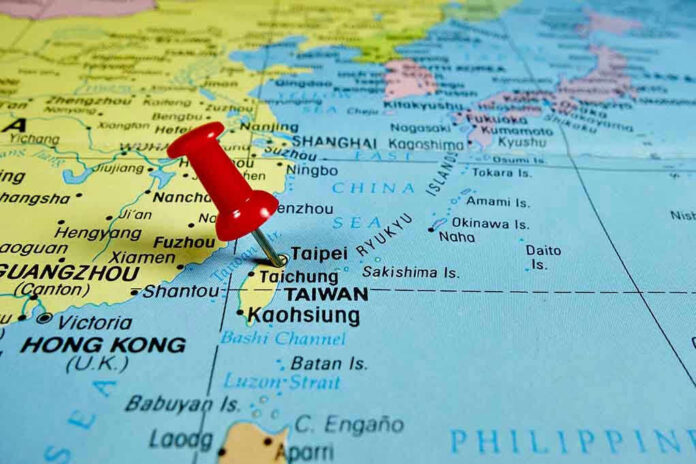
The Biden administration’s endless dithering and reckless posturing may be history, but the fallout of years of indecision and weakness lingers. Now, the Pentagon is demanding that Japan and Australia prepare for war with China—yes, actual war—over Taiwan. U.S. officials are pushing allies to boost defense spending and train for the unthinkable, with joint exercises in the Ryukyu Islands, just a stone’s throw from Taiwan’s shores. The logic? It’s about deterrence, they claim. But when you see the U.S. military flexing in the Pacific, lighting up drills with Japan, and barking at allies to open their wallets, you have to ask: how did we get here, and how much more will Americans be forced to pay for conflicts that aren’t of our making?
The U.S. has always embraced “strategic ambiguity” over Taiwan, providing weapons and support but never promising to send troops if China attacks. Now, with Beijing increasing its military pressure—sending ships and planes closer and closer to Taiwan—the Pentagon’s message has shifted from subtle hints to outright pressure. Japan and Australia, whose cooperation is vital for any U.S. operation in the region, have been less than enthusiastic. Their leaders publicly hedge, refusing to say whether they’d actually fight to defend Taiwan, preferring to keep their options open. You can see why: why should they jump into war when Washington’s own record of commitment is as murky as ever?
Tensions Build, But Allies Refuse to Commit
Since late 2020, China has ramped up its military aggression toward Taiwan, with frequent air and naval incursions that sound alarms across the Pacific. The U.S. response has been to drag its allies into more joint exercises—troops, hardware, and all—across the strategic Ryukyu Islands. Yet both Japan and Australia are playing it cool, sticking to the script that their governments will decide what to do “at the time of crisis.” This is classic political two-stepping: play along with Washington’s requests, but don’t make promises that could drag your country into disaster. The message is clear. They don’t want to be caught holding the bag if China makes a move, and they’re not about to take orders from D.C. hawks who won’t even secure their own southern border without years of dithering and debate.
Meanwhile, American defense officials—like Elbridge Colby, a favorite among “peace through strength” conservatives—insist that Japan’s participation is non-negotiable. Without U.S. bases in Japan and Japanese support, defending Taiwan is a pipe dream. Yet, as experts have pointed out, the more the U.S. pushes, the more likely it is that China will respond with even greater military force. It’s a classic powder keg scenario, and the fuse is getting shorter by the day.
Military Build-Up, Economic Risks, and the Cost to Taxpayers
The implications of this Pentagon campaign are enormous—and not just for the people of Taiwan. For Japanese and Australian citizens, any conflict would mean the real prospect of war on their doorstep. For Americans, it means more taxpayer dollars funneled into military readiness in the Pacific, more deployments, and more risk to our service members. The global economy, already battered by years of reckless spending and inflation, would take another hit. Taiwan is a linchpin in the semiconductor supply chain; one spark in the Taiwan Strait and the world economy could grind to a halt. Yet the Pentagon’s answer is more spending, more pressure, and more military activity—hardly a recipe for peace or prosperity.
The reality is that Washington’s foreign policy establishment is addicted to these endless games of brinksmanship, always demanding more from our allies, always asking American families to sacrifice, but never willing to put their own priorities in order. While President Trump is finally restoring order at our own border—a fact supported by actual drops in illegal crossings and new executive actions—the same cannot be said for the Pentagon’s approach overseas. It’s as if the lessons of the last decade—waste, overreach, and the price paid by American communities—have already been forgotten.
Sources:
UPI: America First, Allies Always: securing the Asia-Indo-Pacific together
RealClearDefense: Pacific Allies Are Training to Fight China
Defense.gov: Hegseth Outlines U.S. Vision for Indo-Pacific, Addresses China Threat
Fox News: Pentagon presses Japan, Australia on role in possible Taiwan conflict