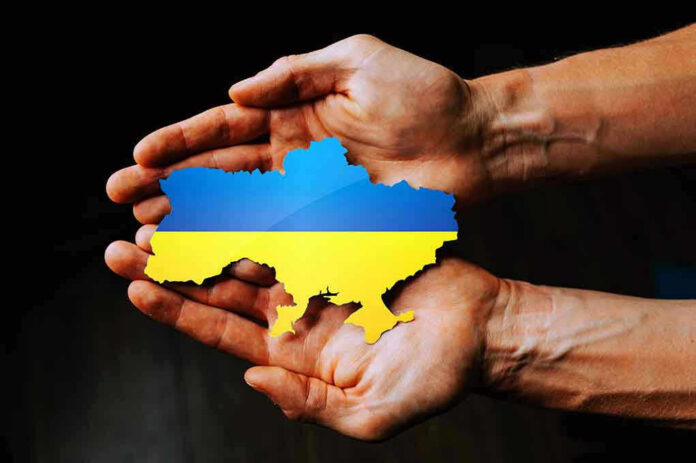
Ukraine’s parliament has approved state energy boss Sergii Koretskyi as prime minister in the middle of war and a feared “hardest winter yet,” putting a corporate energy manager in charge of a frontline democracy’s government.
Story Snapshot
- Naftogaz chief Sergii Koretskyi is now Ukraine’s prime minister after a fast-track vote in parliament.
- President Volodymyr Zelensky pushed Koretskyi as the “most prepared” candidate to guard energy supplies before winter.
- Koretskyi built his career in oil and gas firms, turning loss-making energy companies into profitable ones during Russian attacks.
- Critics question his short time at Naftogaz and lack of government experience, warning of big risks if Ukraine’s lights go out.
Energy boss becomes wartime prime minister
Ukraine’s lawmakers voted on July 16 to confirm Sergii Koretskyi, the chief of state energy company Naftogaz, as the country’s new prime minister. President Volodymyr Zelensky had formally sent Koretskyi’s nomination to parliament after the sudden exit of Prime Minister Yulia Svyrydenko, who had held the job for about a year. The move fits a wartime pattern: a leader under fire leans on a crisis manager to keep the country’s basic systems running, especially power and heat.
Parliament Speaker Ruslan Stefanchuk announced that Zelensky’s proposal made Koretskyi the official candidate, and the chamber moved quickly to a vote the next morning. That tight timeline gave opposition voices little room to organize detailed resistance, even though the job now carries huge responsibility for Ukraine’s war economy and civilian grid. For American readers, this would be like putting the head of a major power company in charge of the entire federal government in the middle of a war.
Zelensky’s bet on winter and critical infrastructure
Speaking to reporters in Kyiv, Zelensky said Koretskyi was “surely the most prepared candidate” for prime minister because Ukraine’s top priority is getting ready for the coming winter. He linked the choice directly to Russian missile and drone strikes on energy facilities, saying the new leader must protect fuel and power infrastructure and keep families warm during what he warned could be the most difficult winter in Ukraine’s history. In short, Zelensky is betting the country’s survival on energy security.
During meetings with Zelensky’s Servant of the People party faction, Koretskyi outlined his main goals as social support for citizens, preparing for the heating season, strengthening the Defense Forces, and defending critical infrastructure. That list shows why he was chosen: he speaks first about keeping homes heated and then about the military that depends on steady power and fuel. This framing will matter for American conservatives who watch how foreign aid and energy policy tie into our own security and costs.
Who is Koretskyi? From oil rigs to the prime minister’s chair
Koretskyi is a 48-year-old Ukrainian executive with a long career in the energy sector. He ran major state-owned oil and gas companies Ukrnafta and Ukrtatnafta starting in November 2022, where he oversaw new drilling projects and equipment upgrades. Under his leadership, Ukrnafta shifted from heavy losses to strong profits, turning into one of Ukraine’s most successful state firms even as Russian attacks hammered infrastructure. Energy experts have praised him as a “great crisis manager” with a solid reputation.
Naftogaz’s supervisory board appointed Koretskyi as chief executive officer in 2025, after an open and competitive process that highlighted his skills in crisis handling and technical management. Since then, he has focused on keeping gas flowing during strikes on production and storage sites, with natural gas often being the only reliable energy source through the last heating season. Koretskyi also holds degrees in engineering mechanics, business economics, and oil and gas engineering, giving him both technical and business training in energy. On paper, he knows how to keep fuel moving when the grid is under attack.
Risks, doubts, and what this means for American interests
Despite that resume, Koretskyi has very limited direct government experience. His background is corporate leadership, not running ministries or passing laws. Some reports note he had been at Naftogaz’s helm for only about six months when top officials first floated him for energy minister, with insiders saying they wanted him to stay put to maintain stability at the company. He even declined earlier offers to take a cabinet post, citing his recent move to Naftogaz and the need to keep the firm steady. Now he has skipped straight to the top job.
🇺🇦⚡️ Ukraine's Parliament has approved Serhii Koretsky, CEO of the state energy company Naftogaz, as the country's new Prime Minister. The appointment comes at a critical time as Ukraine continues to face war and major economic challenges. https://t.co/KcJsF3ULQJ pic.twitter.com/G23Ejm999a
— DDF NEWS (@ddfmarketing1) July 16, 2026
This raises hard questions conservatives in America will recognize. When a wartime president pulls a key energy manager out of the engine room and into the captain’s chair, who is left to keep the turbines running? The same sources that praise his crisis skills also warn that failure on winter energy security will land squarely on Koretskyi. Russian-state outlets are already spinning the move, calling Zelensky head of a “regime” and stressing that he gave no clear answer about the defense minister’s future. That propaganda line suggests Moscow will try to paint Ukraine as more focused on energy executives than on battlefield leadership.
Why this matters to U.S. conservatives watching Ukraine and energy policy
For American conservatives, Koretskyi’s rise is a reminder of how fragile energy systems can shape war and foreign policy. Ukraine is a major test case for what happens when a country lets its grid grow vulnerable and then faces a hostile power that targets pipelines and power plants. If Koretskyi succeeds, it will be because he strengthens domestic production, protects infrastructure, and resists globalist pressure that might push Ukraine into risky energy dependence. If he fails, Western taxpayers may be asked to pay even more to keep Ukraine’s lights on.
The Biden-era push for “green” transitions and heavy spending made many Americans wary of foreign energy entanglements and endless aid packages. Trump’s second-term America is rethinking its role abroad, demanding that allies show serious, competent management before asking for more support. Koretskyi’s appointment fits that demand for accountability: he is a measurable manager with a clear record. But he also sits in a system shaped by European globalists and wartime emergency politics. Watching whether he defends Ukraine’s energy sovereignty—and whether our own leaders learn from his success or failure—will matter for U.S. energy prices, security, and constitutional checks on foreign commitments.
Sources:
insiderpaper.com, kyivindependent.com, iz.ru, pravda.com.ua, meduza.io, naftogaz.com, globalbankingandfinance.com, theedgemalaysia.com, en.wikipedia.org, en.interfax.com.ua, babel.ua
© theredwire.com 2026. All rights reserved.