Louisiana’s top law enforcement officer was hit with 16 felony counts on July 2, 2026, for sending warning letters to city officials — and the judge who appointed the prosecutor has 38 of her cases sitting on his docket.
Story Snapshot
- An Orleans Parish grand jury indicted Attorney General Liz Murrill on 8 counts of malfeasance and 8 counts of intimidation after she warned New Orleans officials they could be removed from office under state law.
- The grand jury launched the investigation on its own — without a prosecutor asking it to — a rare move under Louisiana law that Murrill’s defense team called a “complete misuse of the criminal justice system.”
- Bond was set at $400,000, and reporters were physically removed from the courtroom — one was handcuffed — during the proceedings.
- The Louisiana Supreme Court later issued a stay, temporarily blocking the indictment, while Governor Jeff Landry promised a pardon and ordered state police to investigate the grand jury itself.
What Murrill Actually Did to Trigger This Indictment
The fight started over a court restructuring plan. Louisiana passed a law eliminating the Orleans Parish Clerk of Criminal Court’s office. New Orleans city leaders pushed back hard. They tried to install their own interim clerk and call a special election for a new position. Murrill responded by sending eight letters — one each to Mayor Helena Moreno, District Attorney Jason Williams, and five city council members — warning them they risked removal from office under state usurper laws.
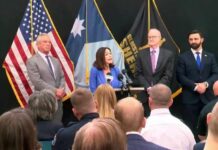
Special Prosecutor Laurie White, a former criminal district court judge, told reporters the grand jury found probable cause on its own. She said no prosecutor had to push them to act. White framed the case simply: elected officials in New Orleans should not be threatened by letter. That framing sounds clean. But the underlying legal question is anything but — because the Louisiana Supreme Court later cleared those same council members of violating the usurper laws, ruling their actions came from confusion about the new law, not intentional defiance.
The Procedural Red Flags That Cannot Be Ignored
Here is where the prosecution’s case gets complicated fast. The grand jury started this investigation without any prosecutor requesting it. That is rare. Defense attorney Bill Aaron called it a “complete misuse of the criminal justice system.” Then there is Judge Leon Rocher, who appointed White as special prosecutor. His court has 38 active cases being prosecuted by Murrill’s office. That is a serious conflict of interest that no one has adequately explained away.
Defense attorneys also allege that grand jurors leaked information during deliberations, which would be a direct violation of grand jury secrecy rules. None of these allegations have been proven. But together, they paint a picture of a process that had problems from the start. When the mechanism used to indict someone looks this irregular, the indictment itself deserves serious scrutiny — regardless of which party the defendant belongs to.
The Louisiana Supreme Court Stepped In Fast
Murrill did not wait around. She immediately filed an emergency supervisory writ with the Louisiana Supreme Court. The court granted a stay, temporarily blocking the indictment from moving forward. That is a significant early signal. High courts do not grant emergency stays just because a defendant asks nicely. They do it when they see a credible legal problem worth examining. This case is far from over, but the stay suggests the indictment has vulnerabilities the court wants to look at closely.
Governor Landry went further. He called the proceedings a “kangaroo court,” ordered state police to investigate the grand jury’s conduct, and promised a pardon for Murrill. Promising a pardon before a trial even begins is a dramatic move. It signals that the state’s executive branch views this prosecution as illegitimate at its core — not just flawed, but fundamentally political.
The Bigger Picture: A State-City War Playing Out in Court
This clash fits a well-worn pattern in Louisiana. Republican-led state government and Democratic-controlled New Orleans have been fighting over local power for decades. The state took over most New Orleans public schools after Hurricane Katrina. Battles over emergency management, court administration, and local elections have followed ever since. Political analyst Dr. Silas Lee pointed to the racial and partisan divide between New Orleans and Baton Rouge as a key factor driving suspicion on both sides.
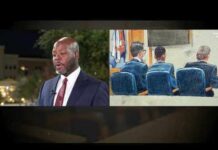
That context matters. But it does not resolve the core legal question. Murrill says she was citing the law. The prosecution says she was threatening elected officials. The Louisiana Supreme Court has already signaled this needs a harder look. And the fact that the court later cleared the council members of the very violations Murrill warned them about makes the intimidation charge look far weaker than the 16-count indictment suggests. A legal expert on local television called the whole thing “a theater of the absurd.” Based on the facts available, that is not an unreasonable take.
Sources:
thegatewaypundit.com, youtube.com, audacy.com, facebook.com
© theredwire.com 2026. All rights reserved.