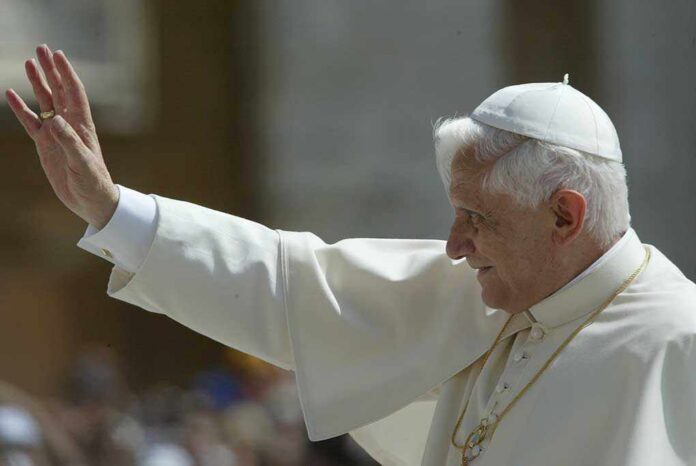
President Trump’s public clash with America’s first U.S.-born pope is turning a religious moral dispute into a high-stakes political fight over war, borders, and who really speaks for ordinary Americans.
Story Snapshot
- President Trump criticized Pope Leo XIV on Truth Social as “weak on crime,” “terrible for foreign policy,” and aligned with the “Radical Left.”
- Pope Leo XIV, the first U.S.-born pope (Chicago), responded that he has “no fear” of the Trump administration and framed his peace appeals as gospel-rooted, not political.
- The dispute unfolded during sensitive U.S.-Iran ceasefire efforts and after the pope warned against “idolatry of self” and war rhetoric in a Vatican vigil.
- Trump also praised the pope’s brother Louis Prevost as “all MAGA,” adding a personal and cultural edge to an already unusual U.S.-Vatican standoff.
What Trump Said—and Why the Timing Matters
President Trump escalated tensions Sunday evening by posting a broadside against Pope Leo XIV on Truth Social, calling him “WEAK on Crime,” “terrible” or “dreadful” on foreign policy, and accusing him of “catering to the Radical Left.” The post targeted issues that reliably divide American politics—immigration, COVID-era disputes, and the administration’s handling of conflict abroad—landing as U.S.-Iran diplomacy sat in a fragile window shaped by a ceasefire and talks overseas.
Trump’s comments also included a culture-war flourish: he praised the pontiff’s brother, Louis Prevost, as “all MAGA,” and contrasted him with the pope. In the same burst, Trump shared an AI-generated image portraying himself in a Jesus-like form, a move that drew attention less for policy substance than for what it signaled about the modern political ecosystem—where viral symbolism and provocation often drive the news cycle as much as legislative outcomes do.
How Pope Leo XIV Responded—and What He Refused to Do
Pope Leo XIV pushed back Monday in interviews and statements, saying he had “no fear” of the Trump administration and stressing that his public appeals are grounded in the gospel rather than partisan positioning. The pope also avoided turning the moment into a personalized feud, signaling he would not trade insults or act as a day-to-day political counterweight from the Vatican. That restraint matters because it forces the dispute back onto substance: war, peace, borders, and state power.
The pope’s weekend vigil at St. Basil’s set the tone for his approach before Trump posted anything. In that vigil, he condemned “delusion of omnipotence” and “idolatry of self,” warning against war rhetoric and advocating a moral framework that rejects vengeance and coercive displays of power. The language—“no sword, no drone, no vengeance”—was widely read as a critique of modern state violence, delivered as U.S.-Iran tensions remained a central global flashpoint.
Why This Feud Hits a Nerve for Both Right and Left
This is not just another social-media spat; it is the first public feud between a U.S. president and a U.S.-born pope, which puts American Catholics in an unusually direct cross-pressure. Conservatives who are already frustrated with globalist institutions and elite moralizing may see the Vatican’s messaging as another attempt to override national sovereignty on immigration and foreign policy. Liberals may see Trump’s language and imagery as disrespectful and dangerous in an already polarized culture.
The Governing Question Behind the Headlines: Authority and Accountability
Republicans controlling Washington means the administration can largely set policy, but the pope’s influence is not legislative—it is moral and cultural, and that can shape public opinion in ways politicians can’t fully manage. CNN analysts framed the conflict as a collision between the pope’s “unjust war” moral critique and Trump’s hard-edged political messaging. Separately, Trump claimed credit for the pope’s election, a statement not supported by other reporting and best treated as rhetorical bluster.
President Trump TORCHES “Weak-on-Crime” Pope Leo XIV in Epic Takedown — Calls Out Vatican’s Radical Leftist Turn https://t.co/XZwpC2mJNp #gatewaypundit via @gatewaypundit
— Mark Groubert (@lordbuckly) April 13, 2026
The larger takeaway is that Americans who feel squeezed by inflation, institutional failure, and endless political theater are again watching elite institutions—government and global religious leadership alike—argue over symbolism while the public asks for results. The available reporting documents the statements and timeline clearly, but it offers limited detail on any behind-the-scenes diplomatic consequences. For now, the dispute stands as a vivid example of how quickly a moral disagreement can become a proxy war over power, identity, and national direction.
Sources:
Trump unleashes tirade against “weak,” “terrible” Pope Leo