

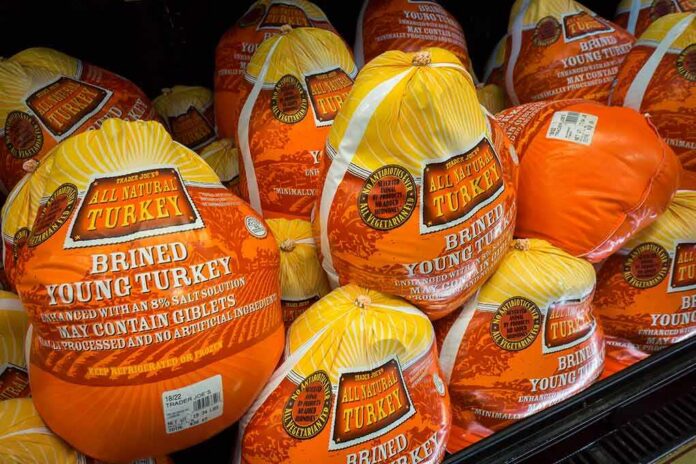
The fastest way to ruin Thanksgiving is washing the turkey and spraying germs across your kitchen.
Story Snapshot
- United States Department of Agriculture warns not to wash raw turkey because it spreads bacteria.
- Safety comes from cooking turkey to 165°F, checked with a thermometer in three spots.
- Separate raw turkey from ready-to-eat foods to stop cross-contamination.
- Most people still rinse poultry, but research shows splashing moves germs around.
Washing Spreads Germs; Heat Kills Them
The United States Department of Agriculture says do not wash raw turkey. Water does not remove bacteria. It helps them travel. When you rinse a bird in the sink, tiny drops can land on counters, utensils, and salad greens. That is cross-contamination, and it is a top cause of foodborne illness on holidays with crowded kitchens. The fix is simple. Cook the turkey to a safe internal temperature of 165°F. Heat, not water, makes the meal safe.
Food safety researchers have shown the mechanism. Washing raw poultry can fling bacteria to nearby surfaces. Lab tests and practical trials both find spread by splashing and by wet hands that touch other items. This is not a scare tactic; it is a physical process. The better path is to keep raw juices contained and to rely on proper cooking to finish the job. That balance protects the family and keeps tradition intact without extra drama.
How To Check Doneness The Right Way
Thermometers remove guesswork. The United States Department of Agriculture says 165°F is the magic number. Check three places to be sure: the thickest part of the breast, the innermost part of the thigh, and the innermost part of the wing. Insert the probe into the center of the meat, not touching bone. If any spot reads below 165°F, put the bird back in the oven and recheck in a few minutes. Do not trust color, juices, or the pop-up timer alone.
Resting the turkey after it reaches 165°F helps juices settle and keeps meat moist. Tent with foil and let it sit for 20 to 30 minutes before carving. Use a clean cutting board and knife for the cooked bird. Keep raw boards and knives out of sight or in the sink to avoid mix-ups. Move leftovers into shallow containers within two hours. Cold slows bacteria. The same simple steps—cook, separate, chill—work every holiday.
Stop Cross-Contamination Before It Starts
Set up your kitchen like a small shop. Make a raw zone and a ready-to-eat zone. Keep raw turkey, its tray, and any packaging away from salads, rolls, pies, and snacks. Wash hands with soap and warm water for 20 seconds before and after handling the bird. Clean and sanitize counters, cutting boards, knives, sink, and fridge handles that meet raw juices. This discipline sounds basic because it is. It blocks the most common path to illness.
Turkey Food Safety from the USDA. Clean, Separate, Cook, and Chill. Let's Have a Happy and Healthy Thanksgiving. #foodsafety #Thanksgiving #turkey #USDA https://t.co/qs9b190gNb pic.twitter.com/Kv8cIHtO4j
— Sandra Frank, EdD, RDN, FAND (@DietitianOnline) November 22, 2026
Many home cooks still rinse poultry because a parent or grandparent did it that way. Surveys show most consumers report washing raw chicken or turkey, and many do not know this is discouraged. Government studies have tested kitchen behavior and found that reminders can reduce rinsing. That is progress. But the real win is changing the setup so bad habits have no room—no sink spray, no shared towels, no salad bowl parked next to the raw roasting pan.
Holiday Playbook: What To Do Instead Of Washing
Thaw safely in the refrigerator, not on the counter. Allow about 24 hours for every four to five pounds. Keep the bird in a pan on the lowest shelf so juices do not drip on other foods. Pat the turkey dry with paper towels if you want crisp skin. Throw the towels out right away. Do not rinse. Season, roast, smoke, or fry with care, but always finish at 165°F at breast, thigh, and wing. That is your insurance policy.
Carve with clean tools on a clean board. Serve hot. Refrigerate leftovers within two hours. Reheat to 165°F before eating. These steps match common sense and align with conservative household values: take responsibility in your kitchen, use tools that work, and avoid waste from a preventable mistake. You do not need bleach on the bird or trendy hacks. You need a thermometer, soap and water for your hands and gear, and the patience to check the temp once more.
Sources:
washingtontimes.com, fsis.usda.gov, usda.gov, pmc.ncbi.nlm.nih.gov, ars.usda.gov, pubmed.ncbi.nlm.nih.gov
© theredwire.com 2026. All rights reserved.