U.S. forces struck more than 80 targets inside Iran after three commercial ships were attacked in the Strait of Hormuz, signaling a sharp bid to keep vital trade lanes open while risks of wider war rise.
Story Snapshot
- CENTCOM said strikes hit over 80 Iranian targets tied to threats against shipping.
- Three named commercial vessels were attacked before the response, according to reports.
- Oil prices jumped and traffic slowed, showing fast economic fallout from the clash.
- Both sides accused each other of breaking a ceasefire, and facts on its status remain disputed.
What The Pentagon Says It Hit And Why It Mattered
United States Central Command said it struck Iranian air defenses, command networks, coastal radar, anti-ship missiles, and more than 60 small boats tied to the Islamic Revolutionary Guard Corps. The command framed the action as a direct answer to “unwarranted” attacks on merchant ships and a move to protect freedom of navigation. Leaders said the goal was to degrade Iran’s ability to hit ships that carry the world’s oil and goods through a narrow sea route.
Officials also said forces remain ready to act again if threats continue. The stated aim was to warn Tehran without triggering a larger war. A television interview cited target sets that included small boats that harass shipping, underground storage, and coastal sensors and radar. That description lined up with the military’s list and its focus on tools used to find, track, and hit passing tankers and cargo ships in the busy chokepoint.
The Trigger: Attacks On Three Commercial Vessels
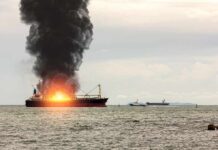
United States statements tied the strikes to earlier blows on three ships: the Marshall Islands-flagged MT al-Rakayat, the Saudi Arabia-flagged MT Wedion, and the Liberian-flagged Cypress Prosperity. U.S. officials labeled those attacks dangerous and a clear break of a ceasefire. Reports said the hits occurred in or near the Strait of Hormuz, a key artery between the Persian Gulf and the open sea, where a fifth of the world’s oil passes each day.
Iranian media offered a competing view, saying at least one tanker ignored warnings, and Iranian officials did not clearly admit to the ship attacks. Tehran’s speaker of Parliament accused Washington of breaking the ceasefire instead. That left a core dispute over who first broke the deal and what the deal still means today. The United States has not yet released detailed evidence, like timestamps or intercepts, to settle the argument in public.
Economic Whiplash And The Risk Of A Wider Fight
Energy markets reacted fast. Oil prices spiked and ship traffic reportedly dipped as operators paused or rerouted. That response highlighted a grim tension at the heart of the policy. The United States said it struck to keep trade safe, yet any exchange of fire in this area can scare crews, insurers, and shippers. Even short slowdowns can push up fuel prices at home, hit family budgets, and strain already thin supply chains for food and goods.
The @CENTCOM:
U.S. Central Command forces began launching more strikes against Iran to continue degrading their ability to attack civilian mariners and commercial ships freely transiting the Strait of Hormuz. The Commander in Chief has directed the strikes to hold Iranian forces…
— Shalinder Wangu (@Wangu_News18) July 12, 2026
Regional players began to hedge. Reports said Gulf states opened or expanded back channels with Tehran to cool tempers. That could help reduce risk, but it also hints at allies charting their own path when Washington uses force. If partners drift, the United States may carry more of the load alone. That outcome adds cost and risk for American troops and taxpayers while doing little to fix the core cycle of strike and counterstrike.
A Long Pattern Of Blame, Denial, And Thin Proof
The Strait has seen repeat crises since 2019. Each time, ship attacks lead to claims and denials, with few cases backed by public forensic proof. Analysts say most incidents lack independent confirmation of who pulled the trigger. That vacuum helps both sides spin the story. It also feeds mistrust at home, where many Americans think elites hide facts and play politics while families pay more for gas and shipping delays ripple through the economy.
United States officials insisted this round was measured and focused. They said the targets were military and tied to ship attacks. But the White House and Congress now face hard questions that cross party lines. How will leaders keep the sea lane open without dragging the country into a larger war? What evidence will they release to prove the case? And how will they shield Americans from price spikes that hit workers and retirees first?
What To Watch Next
Watch for images or intercepts that show the attackers at sea. Look for damage reports from the three ships that could link weapons to Iranian forces. Track whether ship traffic through the Omani route recovers this week. Follow talks by partners like Qatar and the United Arab Emirates to see if quiet deals can lower the risk. Finally, check if future U.S. actions target the same military nodes, which would signal a steady, limited campaign rather than a rush to escalate.
The stakes are simple and large. If the United States can deter more ship attacks without a wider war, oil flows and prices may settle. If the cycle hardens, families will feel it at the pump and in stores, and sailors and troops will bear more danger. Both conservatives and liberals agree on this much: leaders must show results, facts, and restraint in a place where one bad choice can hit every American wallet.
Sources:
townhall.com, youtube.com, thehill.com
© theredwire.com 2026. All rights reserved.