
Hours before key midterm voting, the Justice Department told California to pull aside ballots tied to people it flagged as likely noncitizens, or face emergency court action.
Story Snapshot
- The Justice Department sent California a 48-hour deadline to check names and segregate ballots.
- The letter named state and county officials and arrived on a password-protected thumb drive.
- California leaders say they did not access the list and warn against using unverified data.
- The public still does not know how many people are on the list or how they were flagged.
What the Justice Department Demanded and Why It Matters
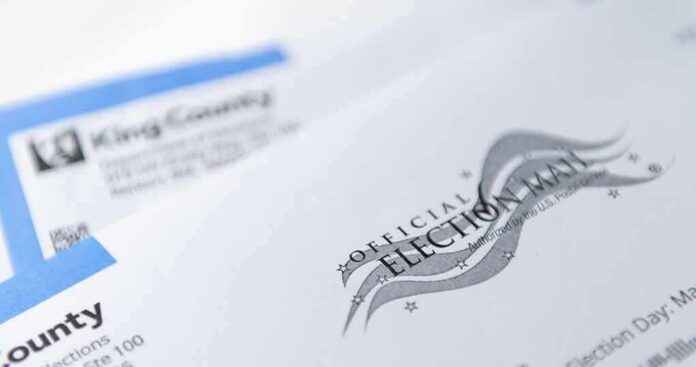
On October 13, the Department of Justice sent a letter to California officials listing people it said were likely noncitizens who were sent mail ballots for November. The letter asked the state to immediately segregate, not cancel, ballots from voters whose citizenship could not be confirmed, and to hold back ballots not yet mailed to listed people. The department gave a 48-hour deadline and warned of emergency legal action if the state did not act.
The demand targeted California Secretary of State Shirley Weber and Los Angeles County Registrar-Recorder Dean Logan, creating a formal paper trail. Reports say the names were delivered on a password-protected thumb drive, which limited outside review. The department’s ask was narrower than removal from the rolls, aiming to quarantine ballots until citizenship checks could be completed. The scope of the list and the matching method were not disclosed publicly.
How California Responded and What Is Verified
California officials pushed back. Secretary Weber said state law only allows United States citizens to register and requires removal of ineligible registrants. She also said the department did not provide the list to her office. Dean Logan said his office did not access the thumb drive due to data-privacy and security rules, and that any voter action must rely on verifiable information, not unconfirmed matches. These statements underscore legal and process limits close to Election Day.
California’s public guidance says applicants must affirm United States citizenship to register. It also says a vote-by-mail envelope is not opened or counted if identity cannot be verified. Those safeguards exist, but they do not answer the key unknowns in this dispute: how the department built its list, how many names are on it, or how accurate the matches are. No report has shown that any listed person actually cast an unlawful vote.
The Missing Evidence and Risks on Both Sides
The public record does not include the list, the source databases, or the matching rules the department used. Without that data, outside experts cannot test error rates or confirm any person’s status. Research on cross-database matching shows that poor matching can create false positives, especially when based on common names or stale records. That risk is higher under a fast, 48-hour deadline, when time to cure mistakes is limited.
DOJ tells California to quarantine ballots tied to possible noncitizen voters within 48 hours.
Rob Bonta and LA County registrar Dean Logan blasted the request as “conspiracy theories” and “unconfirmed data matching.”https://t.co/NPKmcmRwaW https://t.co/98X0HNXt6q
— Billy_Sitches (@Billy_Sitches) October 15, 2026
Election history shows that noncitizen voting in federal races is unlawful and rare, though not zero. A survey of jurisdictions that counted 23.5 million votes in 2016 found about 30 suspected noncitizen incidents referred for review. That base rate helps frame today’s claim: a list of possible noncitizens is not proof of unlawful votes, and a failure to check that list could still allow rare ineligible ballots. Both integrity and access are at stake.
Why This Fight Resonates With Voters Across the Spectrum
Many voters, left and right, worry that powerful institutions play by their own rules. Some see a federal push that could disrupt valid votes. Others see a state resisting checks that could catch ineligible ballots. Both fears grow when agencies move fast, share little evidence, and ask courts to step in close to an election. Transparency on the list, its methods, and any findings would calm doubts and show who, if anyone, got this wrong.
What to Watch Next
Watch for three concrete steps. First, whether a court orders any ballot segregation or data handoff, and on what legal basis. Second, whether California and the department agree on a process to verify each person using authoritative records, with a way to fix mistakes. Third, whether any returned ballots from listed voters were set aside or counted. Clear answers on these points will tell us if this was a needed safeguard or a rushed overreach.
Sources:
yahoo.com, coloradopolitics.com, axios.com, electionlab.mit.edu
© theredwire.com 2026. All rights reserved.