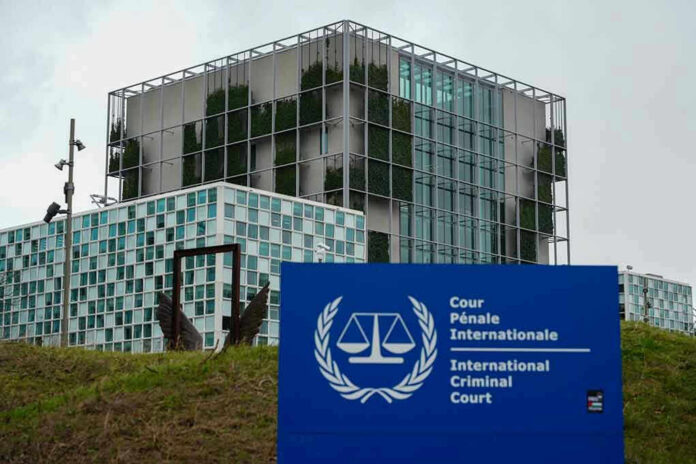
The Trump administration has drawn a clear red line: the International Criminal Court has no right to put American warriors or Israeli leaders on trial, and Washington is using hard sanctions to make sure that threat ends.
Story Snapshot
- The United States now treats International Criminal Court investigations of Americans and Israelis as a national security threat and “illegitimate and baseless.”
- Executive Order 14203 lets the government freeze assets, block travel, and cut off services for court officials who target U.S. citizens or allies.
- At least eleven judges and prosecutors from the court have been sanctioned, many linked to cases against U.S. troops and Israeli leaders.
- United Nations experts and human rights groups claim the sanctions attack “judicial independence,” while three sanctioned judges have sued in U.S. court.
Trump’s Order: Shielding Americans From Foreign Prosecutors
Executive Order 14203, signed by President Donald J. Trump in February 2025, flatly states that the International Criminal Court has “engaged in illegitimate and baseless actions targeting America and our close ally Israel.” The order argues that the court has no jurisdiction over the United States or Israel because neither country joined the Rome Statute that created the tribunal. For many conservatives, this matches a simple principle: if we never agreed to the court’s rules, foreign judges cannot sit in judgment over American troops or elected leaders.
The order goes further by declaring these foreign investigations a direct national security threat. It warns that attempts to probe American service members or officials “set a dangerous precedent” and put current and former United States personnel at risk. That language matters because it is how the White House justifies using emergency economic powers. It says any effort by the court to investigate, arrest, detain, or prosecute a “protected person” without consent of that person’s country of nationality triggers sanctions authority against those involved.
How the Sanctions Work and Who They Hit
Under the order, the government can freeze any property or interests in property of targeted foreign persons that come under control of a United States person. Sanctioned officials can see bank accounts blocked, credit cards canceled, and online services cut off if they touch the American system. United States persons are also barred from providing those officials “funds, goods, or services,” which can include legal help, technology platforms, or business ties. In plain terms, if you help the court push cases against Americans or Israelis, Washington can push you out of the U.S. financial and digital world.
Harvard Law School reporting notes that since Executive Order 14203 was issued, the administration expanded sanctions to at least eleven International Criminal Court officials, including nine judges and the chief prosecutor. Media accounts describe judges and prosecutors suddenly losing access to familiar tools of daily life, from Amazon shopping to email and basic financial services. The State Department has said these moves are aimed at those who directly engage in efforts to investigate United States or Israeli nationals without consent, pointing to arrest warrants and rulings tied to Gaza and Afghanistan.
Israel Cases and the Court’s Push Into U.S. Affairs
The order cites arrest warrants for Israeli Prime Minister Benjamin Netanyahu and former Defense Minister Yoav Gallant as proof of the court’s “abuse of power.” Those warrants accuse Israeli leaders of war crimes and crimes against humanity in Gaza, and they helped trigger sanctions on judges seen as backing the decisions. The State Department has named specific judges and prosecutors whose votes or authorizations supported warrant requests or blocked Israel’s attempts to halt investigations, arguing they “directly engaged” in illegitimate actions against Israel.
Similar concern drives the United States response to court interest in Afghanistan, where American military personnel have faced scrutiny. The administration’s policy defines “protected persons” to include United States nationals and military personnel, along with citizens or lawful residents of certain allies such as Israel. For many on the right, this is a long overdue stand against a globalist body trying to rewrite the rules of war over the heads of sovereign nations. They see the sanctions as a way to stop unelected foreign lawyers from second‑guessing battlefield decisions made under U.S. law and oversight.
Global Critics Cry “Attack on Justice” and Judges Fight Back
United Nations human rights experts have condemned the sanctions as a “direct assault against the independence of the tribunal” and a “devastating blow to victims.” The International Criminal Court itself issued a statement saying the United States measures are a clear attempt to undermine the independence of a judicial institution created by 125 states. Human Rights Watch and other activists argue that blocking funds, goods, and services to judges and prosecutors violates fundamental rights and interferes with ongoing cases. In their view, powerful countries are trying to place themselves above the law when serious crimes are alleged.
🇺🇸 “SOVEREIGN STATES OVER GLOBALISM” — U.S. DECLARES WAR ON THE ICC
The Trump administration is launching a campaign to dismantle the International Criminal Court (ICC), arguing it threatens U.S. sovereignty and unfairly targets America and its Western allies.
Secretary of… pic.twitter.com/IAB14SG6Nt
— Mossad Commentary (@MOSSADil) July 13, 2026
Three sanctioned judges have now taken the fight into a Manhattan federal courtroom, suing President Trump and key officials over the sanctions. Their complaint calls the measures a “financial death penalty,” saying asset freezes, travel bans, and service cut‑offs are meant to punish them for past judicial decisions. They argue the sanctions go beyond what the International Emergency Economic Powers Act allows because the court does not pose a true “unusual and extraordinary threat” to U.S. national security. That lawsuit will test how far a president can go to defend American sovereignty from foreign legal bodies under domestic law.
Big Picture: Sovereignty Versus Globalism
The clash with the International Criminal Court fits a wider pattern where the United States resists international bodies that claim power over its policies and personnel. Trump’s stance reinforces a sovereignty‑first foreign policy, drawing a hard line against globalism and “woke” human rights activism that, in many conservatives’ eyes, too often targets Western democracies while ignoring real tyrants. Supporters believe these sanctions tell the world that American soldiers, officers, and allies will not be dragged before foreign judges who answer to other governments and agendas.
Critics warn that this approach may weaken the “rules‑based order” and leave victims of real atrocities with fewer options. But for many readers tired of activist courts and bloated global institutions, the core issue is simple. The United States has its own Constitution, its own courts, and its own voters. A foreign tribunal that America never joined is now trying to override that system. By cutting off money, visas, and access for those who cross that line, the Trump administration is betting that economic pressure is the best way to end what it calls the court’s threat to Americans.
Sources:
insiderpaper.com, youtube.com, hls.harvard.edu, whitehouse.gov, ohchr.org, icc-cpi.int, opiniojuris.org, verfassungsblog.de, state.gov, aljazeera.com, globalnation.inquirer.net, dailymotion.com
© theredwire.com 2026. All rights reserved.