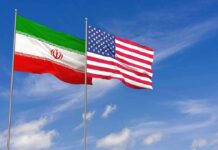
As the war with Iran claims American lives, President Trump stood on the Dover flight line to personally honor the fallen and remind the country what real commander-in-chief leadership looks like.
Story Snapshot
- President Trump attended a dignified transfer at Dover Air Force Base for service members killed in Iranian attacks.
- Six U.S. reservists from the 103rd Sustainment Command were returned from Kuwait in a solemn military ritual.
- Four additional troops killed after the ceasefire collapse were later honored in a separate transfer that Trump also attended.
- The ceremony highlights how presidential presence at Dover has become a test of respect for troops and the families who bear the cost of war.
Trump Marks First U.S. Casualties of Iran War at Dover
President Donald Trump traveled to Dover Air Force Base in Delaware to witness the return of six American service members killed in the opening days of the war with Iran. These troops died in an Iranian drone strike on a U.S. logistics hub at Port Shuaiba in Kuwait, the first American fatalities in the conflict, and all were reservists from the 103rd Sustainment Command. At Dover, their flag-draped transfer cases were carried from the aircraft to waiting vehicles in a ritual the military calls a dignified transfer.
CBS News and other outlets report that Trump was joined on the flight line by First Lady Melania Trump, Defense Secretary Pete Hegseth, and senior military leaders, all standing in salute as each case passed by. Video from Dover shows the president arriving aboard Air Force One, walking to the tarmac, and remaining in place through the full sequence of the transfer, as mortuary affairs teams began the careful process of preparing each fallen soldier for burial. The White House framed the visit as a trip to “honor our heroes” and comfort their families.
What a Dignified Transfer Means for Military Families
A dignified transfer is the standardized process by which the United States Armed Forces bring home the remains of service members who die overseas in the line of duty. The military treats this as one of its most solemn rituals, with strict protocol, quiet movements, and no speeches on the ramp as the caskets move from aircraft to vehicle. Families who choose to attend stand just yards away from their loved one’s remains, seeing for the first time the flag that drapes the case and the fellow troops who carry it.
Reporters covering this Dover ceremony describe raw emotion on the faces of relatives and fellow soldiers, but also a clear sense that the president’s presence matters in that moment. When a commander in chief stands on that line, he is literally watching the human cost of decisions made in Washington. For many military families, that is the bare minimum of respect they expect from the government that sent their sons and daughters into harm’s way. Trump was quoted telling families, “We love you. We love your child,” focusing on their loss rather than politics.
Presidential Presence at Dover and the Iran Conflict
CNN’s analysis notes that presidents have struggled for decades with how to handle Dover visits, because each dignified transfer highlights the weight of war in a very public way. Barack Obama drew praise from some for a midnight visit in 2009, while Joe Biden’s attendance during the Afghanistan withdrawal and after a Jordan drone attack drew scrutiny over his wider policies. Trump’s Dover trips now sit inside that same pattern, but with added controversy because of how media and political opponents frame his every move.
Coverage of the Iran war itself shows why these ceremonies hit a nerve for many conservatives. Reports describe Iranian and allied forces striking U.S. and Israeli positions, schools, and bases as fighting escalates. At home, many on the right see the Dover ritual as a reminder that foreign enemies are real, that American strength is necessary, and that the lives of service members cannot be reduced to talking points in elite global debates. When Trump stands beside the caskets, it contrasts sharply with years when Washington elites seemed more focused on climate showpieces or “woke” agendas than on the troops.
Four More Fallen After Ceasefire Collapse
In a separate later ceremony, Trump also attended a dignified transfer for four service members killed in new Iranian attacks that followed the collapse of a ceasefire. According to reporting, these troops were flown from the Middle East to Dover, where their families watched as the flag-covered cases were carried off the aircraft and into waiting vans. The article lists their names and home states, underscoring that these casualties came from across the country, from New York to Texas.
President Trump attended the dignified transfer of four fallen U.S. service members at Dover AFB, calling it "one of the hardest things to do as a president." The troops honored were 1st Lt. Tyler Feehan, Sgt. Angel Rampersad, Pvt. Isabella Gonzales, and Sgt. Michael Swinton, who…
— AL Khammas (@ALkhammas2) July 22, 2026
This second transfer reinforces how quickly a “ceasefire” on paper can give way to renewed attacks in the real world when hostile regimes test American resolve. For readers who worry about endless wars, the scene at Dover raises hard questions about how and when force is used, and how clearly mission goals are defined. But it also reminds us that the men and women who volunteer to serve deserve visible support from their president when the worst happens, not excuses or distance.
Why This Matters to Constitutional, Pro-Military Conservatives
For constitutional conservatives, the Dover ceremony strikes at several core values at once: respect for the military, the duty of civilian leaders, and honest accountability for the human cost of foreign policy. The ritual itself is not partisan; it is a straightforward act of honor carried out by uniformed Americans. But the decision to show up, to stand on that ramp, and to meet grieving families is a choice every president must make. Trump’s attendance shows a willingness to face that cost directly.
Many media stories focus on side issues like hats, photo angles, or social media reactions, turning dignified transfers into culture-war fodder. Yet the core fact remains: bodies of Americans killed by an enemy power are coming home, and a president who campaigned on standing up for the troops is meeting them at Dover. For a conservative audience tired of Washington games, that simple act of presence may matter more than clever speeches—because it shows, in the clearest way possible, who is willing to stand with our warriors and their families when it counts.
Sources:
cbsnews.com, youtube.com, theguardian.com, abcnews.com, bbc.com, instagram.com, cnn.com, reddit.com, abc7.com, abcnews.go.com
© theredwire.com 2026. All rights reserved.