

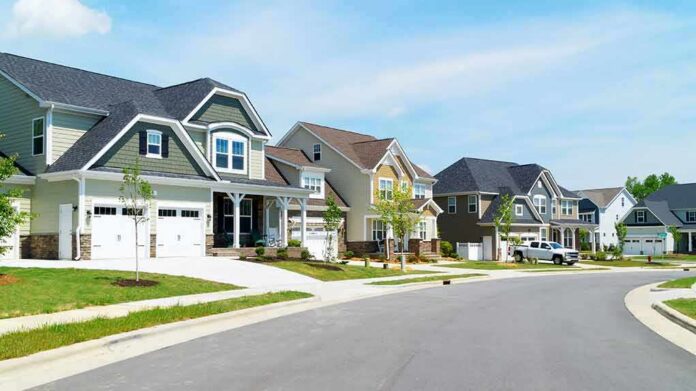
Buying a home costs so much because the country never built enough of them, and that shortage still shapes every listing, bid, and monthly payment.
Quick Take
- The United States has faced a long-running housing shortage, with estimates in the millions of homes.
- Experts say restrictive zoning and other land-use rules make it harder to build enough homes, especially in job-rich areas.
- Housing production fell badly after the Great Recession and never fully recovered, even as demand kept rising.
- Some researchers argue the problem is less a total shortage and more a shortage of affordable homes, so the debate is not fully settled.
Supply Fell Behind Demand
The basic math is brutal. More households wanted homes than builders supplied, and that gap widened over time. The U.S. Chamber of Commerce says the country has built fewer homes than needed for decades, with land-use limits and local zoning acting as major brakes on supply. Brookings and other analysts have put the missing-home estimate near 4 to 5 million units.
That shortage matters because home prices do not need wild speculation to climb. They rise when buyers chase too few homes. Zillow says home supply has lagged household growth for more than a decade, while new construction has only recently started to catch up. Redfin makes the same point more bluntly: houses are expensive because there are not enough of them, and the market still has not recovered from the post-2008 building slump.
Why Zoning Keeps Prices High
Restrictive zoning sits at the center of the fight over why homes cost so much. Alex Horowitz of the Urban Institute told National Public Radio that restrictive zoning is the “primary culprit” because it makes it hard to build homes where the jobs are. Jenny Schuetz of the Cleveland Federal Reserve has also said zoning rules make multifamily housing harder to build, even though it usually costs less per unit than single-family housing.
That is why the shortage hurts so much in fast-growing metro areas. When local rules limit density, builders cannot add enough apartments, townhomes, or smaller starter homes. The result is a tighter market, fewer choices, and a higher floor under prices. The Tufts analysis says the country has been building fewer homes relative to households for three decades, with zoning and land-use restrictions playing an important role.
Why Prices Stayed Hot After Demand Cooled
A lot of people expect home prices to fall when demand weakens. They have not, because supply is still tight. J.P. Morgan Private Bank says the housing market is driven by a shortage of supply, not exuberant demand, and notes that the shortage has been structural for more than a decade. That scarcity keeps sellers in control and leaves buyers fighting over too few listings, even when borrowing gets more expensive.
Home prices far outpaced wages, mortgage rates exploded monthly costs, and decades of underbuilding created a shortage of affordable starter homes.
Fed sucks. Regulators suck. pic.twitter.com/TgXYEZLfs4
— Rothmus 🏴 (@Rothmus) July 15, 2026
Rates, wages, and investor activity also matter, but they do not erase the deeper problem. Higher mortgage rates can slow sales, yet they do not create more homes. The same is true for investors: they can change who buys, but not the total number of units. That is why many economists still put the main blame on underbuilding, with restrictive rules and weak construction doing the most damage.
The One Big Caveat
There is one real wrinkle. Some research, including a University of Kansas study, argues that the United States does not have a nationwide shortage of all homes, only a shortage of homes affordable to lower-income renters. That critique does not erase the physical shortage argument, but it does show why people talk past each other. One side measures total units. The other measures affordability. Both can point to real pain.
That is the heart of the story. Buying a home costs so much because decades of underbuilding met a wall of local rules, and the result is a market where too many people still chase too few homes. The numbers, the policy fight, and the everyday buyer all point to the same pressure point: supply is tight, and tight supply is expensive.
Sources:
redstate.com, uschamber.com, en.wikipedia.org, clevelandfed.org, whitehouse.gov, localhousingsolutions.org, brookings.edu, urban.org
© theredwire.com 2026. All rights reserved.