When the Trump administration announced it would remove Syria’s former al-Qaeda affiliate from the U.S. terrorist blacklist, jaws hit the floor across both sides of the aisle, but for Americans who still believe in common sense, the real shock is how far Washington will bend over backward for international “stability” while our own border remains a sieve and taxpayers keep footing the bill for everyone but themselves.
At a Glance
- Trump administration officially revokes terrorist designation for Hayat Tahrir al-Sham (HTS), Syria’s former al-Qaeda wing
- U.S. lifts sanctions on Syria’s new government, citing “commitment to combating terrorism”
- Move sparks fierce debate over legitimizing groups with jihadist pasts
- Critics warn policy shift undermines U.S. counterterrorism credibility and emboldens bad actors globally
Trump’s Syria Sanctions Reversal: Terrorists Rebranded, Borders Forgotten
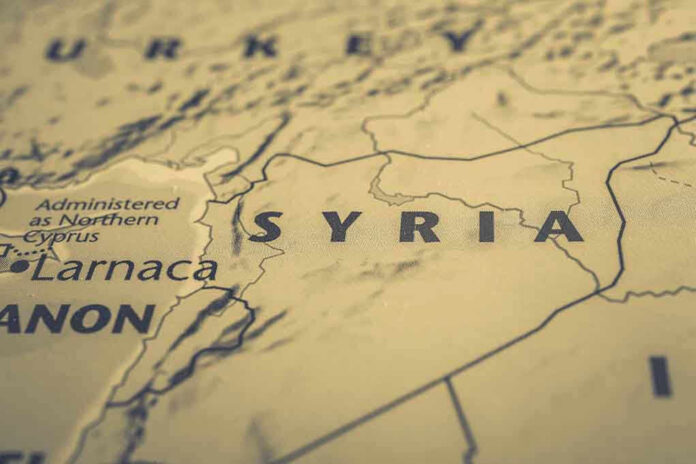
On July 7, Secretary of State Marco Rubio dropped the bombshell that the U.S. would scrub Hayat Tahrir al-Sham—a group literally born out of al-Qaeda in Syria—off the Foreign Terrorist Organization list. That’s right. In what the State Department calls a “bold step for peace,” the same outfit that spent years building car bombs, executing prisoners, and flying the black flag of jihad just got a handshake and a hall pass from Washington.
Sanctions on the new Syrian government, now headed by ex-HTS kingpin Ahmed al-Sharaa, evaporated overnight after a Trump executive order on June 30. The rationale? The “dissolution” of HTS and the regime’s supposed commitment to fighting terrorism. Apparently, all it takes to rewrite history and scrub your rap sheet clean is a press release and a promise to play nice at the next Abraham Accords photo op. Meanwhile, the American taxpayer is left scratching their head, wondering why the same government that can forgive jihadists can’t forgive their own inflation-strapped citizens.
A Stunning Precedent: From Terrorist to Prime Minister
Anyone with a memory stretching back five years remembers HTS under its original name, Jabhat al-Nusra—the Syrian branch of al-Qaeda. After a few strategic rebrandings and some very convenient public statements about “cutting ties,” the group muscled its way into control of the anti-Assad opposition. In late 2024, HTS led the charge to topple Assad, and by 2025, their leader Ahmed al-Sharaa was taking meetings with State Department “experts” as the new Syrian prime minister.
The U.S. government now claims that because HTS “dissolved” and al-Sharaa’s government has pledged to crack down on terrorism, all is forgiven. This is not just rewriting the rules—it’s tearing up the old playbook and setting it on fire. Never mind that intelligence analysts warn HTS’s break with al-Qaeda is, at best, cosmetic. Never mind that the same group’s fingerprints are all over a decade of war crimes. The administration’s message is clear: If you’re a well-connected strongman who promises to behave, Washington will look the other way. If you’re a U.S. citizen asking for border security or an end to runaway spending, well, get in line.
What About American Security and Values?
This U.S. policy pivot isn’t happening in a vacuum. While Washington bends over backward to legitimize a government led by ex-jihadists, the American border is still under siege. The same week the administration announced Syria’s sanctions relief, Customs and Border Protection reported a 93% drop in apprehensions at the southwest border over the past year. The administration credits “sustained deterrence,” but let’s call it what it is: a combination of tough state-led crackdowns and a deliberate pause in humanitarian grants that once funded services for illegal migrants. Apparently, when it comes to securing the border or prioritizing citizens, the White House finds its spine—but only when the cameras are off.
As for the message this move sends globally, the answer is simple: If you can seize power and promise reforms, Washington will eventually play ball, no matter how bloody your resume. This is the same logic that’s led to endless “peace processes” that never seem to bring peace, but always seem to bring headaches—and bills—for the American people. Does anyone really believe this will encourage other militant groups to lay down arms, or is it just another invitation for the next batch of thugs to rebrand, repackage, and cash in?
The Real Cost: Credibility, Security, and Common Sense
While humanitarian groups cautiously applaud the potential for more aid, and policy wonks talk about “regional normalization,” the real cost of this maneuver is the erosion of America’s credibility in counterterrorism. By removing a group with such a recent, well-documented history of extremism from the terrorist blacklist, Washington risks emboldening every radical outfit looking to swap their AK-47s for a seat at the UN. The message to actual allies is equally clear: U.S. promises are only good until the next photo op, and U.S. principles are negotiable if the optics look right.
What’s most absurd is that while the administration claims this is about “stabilizing Syria” and “promoting peace,” American families are still reeling from inflation, border chaos, and a government that seems more interested in fixing problems overseas than addressing the rot at home. The Constitution gets lip service, while our border security, national sovereignty, and the interests of everyday Americans get sidelined for the latest geopolitical experiment in the Middle East.