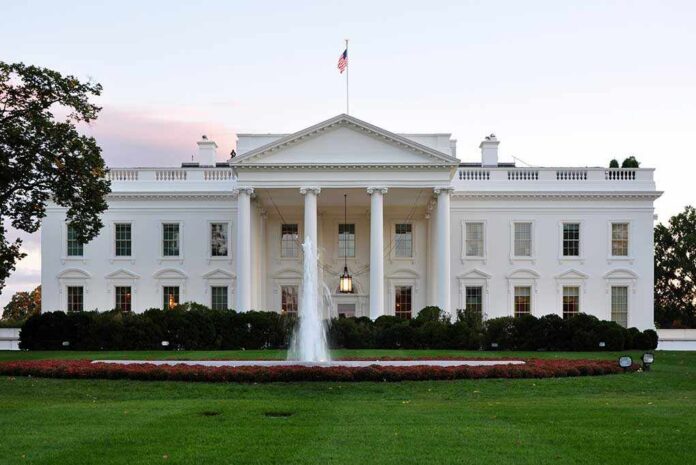
President Donald Trump hosted Iraq’s new prime minister at the White House to press U.S. interests and push back on Iran’s reach, with energy and security on the table.
Story Highlights
- Trump met Iraqi Prime Minister Ali al-Zaidi at the White House after weeks of public backing.
- The visit capped Trump’s invitation after al-Zaidi’s nomination and government formation.
- Talks centered on oil investment, security cooperation, and countering Iran-backed militias.
- U.S. officials framed the trip as a chance to reset ties on fair terms that serve American interests.
White House Meeting Signals Strategic Pivot With Baghdad
President Donald Trump welcomed Iraqi Prime Minister Ali al-Zaidi to the White House for high-stakes talks in Washington. The meeting followed Trump’s early support for al-Zaidi during Iraq’s government formation and his public pledge that the United States “stands firmly behind him”. Iraqi officials and U.S. outlets confirmed the Washington trip as al-Zaidi’s first foreign visit since taking office, underscoring the importance both sides place on the relationship and the moment.
Trump invited al-Zaidi soon after his nomination and repeated the offer after Iraq’s parliament swore him in. Statements from the Iraqi prime minister’s office and U.S. reporting described a direct call, an open invitation to visit the White House, and Washington’s interest in deeper ties. The timeline shows a coordinated push: signal support, help stabilize a new cabinet, and then lock in a face-to-face summit to set terms for security and energy cooperation.
Energy Deals And Security Cooperation Drive U.S. Agenda
White House discussions focused on practical goals: oil and gas investment, fair market access, and a security plan that reduces militia threats to Americans and partners. Reporting on the trip pointed to expected energy agreements and a stronger economic track to balance security ties. U.S. envoys framed the relationship around mutual benefit under Trump’s leadership, highlighting a reset from past years’ drift and mixed signals that frustrated American firms and taxpayers alike.
For conservative readers, these aims are straightforward. American policy should protect U.S. workers, defend our troops, and lower energy costs at home. Securing investment channels and safer conditions for U.S. companies can help reduce reliance on hostile suppliers. Pressing Baghdad to restrain or disarm rogue armed groups protects Americans and keeps faith with families who want clear results abroad without endless missions or blank checks.
Countering Iran’s Influence Without Open-Ended Commitments
Analysts and outlets described a core strategic thread: reduce Tehran’s leverage inside Iraq while building a state-to-state partnership that respects Iraq’s sovereignty. Reports tied Trump’s early backing for al-Zaidi to that goal and flagged militia pressure as a key test for the new government. Trump’s visible support and the White House platform give al-Zaidi political space to resist Iran-aligned factions, but Washington will judge progress by real steps on security and contracts, not speeches.
This model follows a familiar pattern in U.S.–Iraq diplomacy. American leaders endorse a prime minister, invite him to Washington, and then seek deals that anchor the relationship in trade and counterterrorism. Past cycles delivered short-term wins but uneven follow-through. Today’s talks try to fix that by tying support to outcomes that help both nations and reduce room for militias to threaten U.S. interests or terrorize Iraqi families.
What Success Looks Like For Americans
Clear success markers are simple. First, a public roadmap for oil and gas projects that brings transparent terms and protects U.S. investors. Second, joint steps that cut militia attacks and hold killers accountable under Iraqi law. Third, a timetable that shifts U.S. roles from guarding convoys to advising vetted forces, so America is not stuck with open-ended missions or wasteful spending. These steps align with limited government, strong defense, and respect for taxpayers.
Trump rolls out the White House welcome mat for new Iraqi Prime Minister Ali al-Zaidi.
The PM is scheduled to arrive at 11am and meet w/Trump in the Oval at 11:15am.https://t.co/ObyFR1EJWh
— darlene superville (@dsupervilleap) July 14, 2026
The Trump administration’s message is direct. Washington will support a partner government in Baghdad that delivers on security and opens its economy to fair competition. It will not subsidize chaos, tolerate attacks on Americans, or reward opaque deals that enrich militias. The White House meeting with al-Zaidi sets that tone. Now, results must follow in contracts signed, militias curbed, and a safer path for both nations—without new forever wars or handouts.
Sources:
youtube.com, iq.usembassy.gov, reuters.com, aljazeera.com, turkiyetoday.com, apnews.com, yahoo.com
© theredwire.com 2026. All rights reserved.