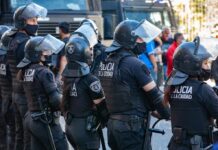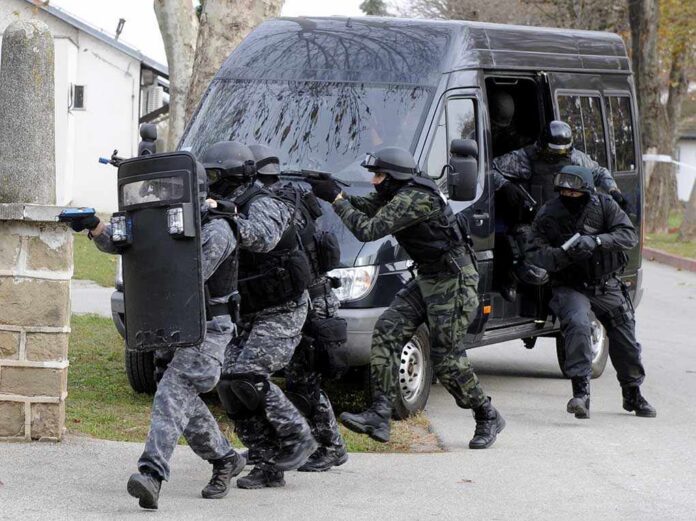
A single traffic stop in Portland exposed the country’s most combustible argument: when federal agents say “self-defense,” half the nation hears “accountability,” and the other half hears “abuse.”
Quick Take
- Border Patrol shot two Venezuelan nationals during a January 8, 2026 stop outside a Southeast Portland health clinic after authorities said a vehicle was used as a weapon.
- Federal officials tied the pair to illegal entry and alleged links to a Tren de Aragua-associated prostitution operation; local leaders demanded outside investigations.
- The passenger later pleaded guilty to illegal entry, accepted strict probation terms, and faces likely deportation.
- The Portland incident landed one day after a separate Minneapolis enforcement shooting that ignited nationwide protests and skepticism over similar “vehicle threat” claims.
What Happened Outside the Clinic, and Why It Became National Fuel
Portland’s January 8, 2026 shooting unfolded in seconds but detonated weeks of political tension. A U.S. Border Patrol agent confronted a vehicle during a stop near Adventist Health in Southeast Portland around 2:20 p.m. Authorities said the driver, Luis David Niño-Moncada, tried to run the agent down, prompting the agent to fire. Both the driver and passenger, Yorlenys Betzabeth Zambrano-Contreras, suffered gunshot wounds, then drove away.
The most telling detail came after the shots: the wounded pair did not wait for medical help at the scene. Reports said they drove roughly 2.5 miles to an apartment in Northeast Portland, called 911, and went to a hospital. That sequence matters because it shaped the immediate narrative. Federal officials framed flight as consistent with criminal involvement. City leaders and activists framed it as predictable fear in a sanctuary-city environment.
The Guilty Plea That Changed the Legal Lens, Not the Political One
Zambrano-Contreras later pleaded guilty in federal court to illegally entering the United States from Mexico on September 16, 2023. The plea came with conditions that read like a tight leash: probation, a curfew, and restrictions on movement while she awaited deportation. Conservatives should notice what that plea does and does not do. It confirms unlawful entry. It does not, by itself, prove every allegation that swirled after the shooting.
The backstory explains why this case hit a nerve. Reports said she was arrested after that 2023 entry but released because detention space was limited, then failed to appear for an immigration check-in. That sequence reflects a basic system problem: enforcement without follow-through breeds exactly the public cynicism that makes every later use-of-force incident harder to adjudicate. When the pipeline leaks, the public stops believing assurances from any side.
Allegations of Tren de Aragua Ties: Serious Claims, Uneven Public Proof
Federal statements linked the pair to a prostitution ring and alleged ties to Tren de Aragua, a Venezuelan transnational gang that has become shorthand for cross-border criminal expansion. Portland Police Chief Bob Day also referenced “some nexus” to the gang, which carries weight because it suggests local law enforcement saw more than a political talking point. Still, “nexus” language also signals caution: investigators can suspect and track patterns without having courtroom-tested proof.
Common sense and conservative values both demand the same thing here: treat public safety threats as real, and treat allegations as allegations until charges and evidence land in the open. Gang-related exploitation networks, especially those involving prostitution, thrive in places where jurisdictional friction slows action. At the same time, loose labels can become propaganda, and propaganda is how trust collapses. Trust is a security asset; losing it makes streets less safe.
Why Portland’s Leaders Clashed with DHS, and Why That Clash Persists
Portland officials responded the way Portland often responds to federal immigration enforcement: with suspicion and demands to halt operations. The mayor and council leadership called for investigations and pushed back hard against the federal justification. DHS defended the agent’s decision as self-defense. That standoff is not just ideological theater; it’s a governance problem. Federal agencies enforce national law. Cities manage the fallout: protests, strained police staffing, community fear, and political backlash.
People over 40 have seen this movie before: Washington says the threat is urgent, and local government says the tactics are reckless. The unresolved question is always the same: who pays the price if the threat is real and enforcement is restrained, and who pays the price if enforcement is aggressive and a mistake happens? The public rarely gets a clean answer, because the evidence comes out slowly, if at all.
The Minneapolis Shadow: One Day Earlier, the Same “Vehicle” Claim
The Portland shooting did not arrive in isolation. One day earlier, in Minneapolis, ICE enforcement activity ended with the death of U.S. citizen Renée Nicole Good after an agent shot as her vehicle allegedly moved toward him—an account disputed by video reporting. That timing mattered because it primed the public to distrust any similar explanation. When agencies repeatedly cite a vehicle as the threat, critics hear a script. Supporters hear a pattern of officers confronting real danger.
Conservative readers should hold two ideas at once without blinking. Officers have a right to survive encounters, and suspects do use cars as weapons. But institutions also earn skepticism when they communicate poorly, release selective facts, or hide behind investigations that take forever. If the government wants compliance and respect, it must show its work faster and more transparently—especially when actions occur in politically hostile cities.
What This Case Really Tests: Border Capacity, Local Autonomy, and Credible Accountability
Zambrano-Contreras’s guilty plea on illegal entry points back to the capacity crisis that started this chain: limited detention space, missed check-ins, and a system that fails to close loops. Portland’s outrage points to another broken loop: investigators examine shootings, but the public often sees only press statements and protests. The durable lesson is not partisan. A country cannot run immigration policy on catch-and-release and expect calm when enforcement finally shows up.
Woman Who Shot Portland Trump Supporters Outside ICE HQ Now Plays Victimhttps://t.co/RSkcaGI9r0
— PJ Media Updates (@PJMediaUpdates) February 10, 2026
Portland’s case will likely end with deportation for the illegal entry and continued investigation of the shooting itself. The larger fight will not end. Sanctuary-city politics, federal authority, and public safety fears have formed a triangle that keeps producing these flashpoints. The only off-ramp is competence: secure borders, clear standards for force, rapid evidence release when legally possible, and consequences that apply to everyone—citizens, migrants, and the government alike.
Sources:
Woman shot by border agent in Portland pleads guilty to entering U.S. illegally
Protesters vent outrage over immigration enforcement shootings in Minneapolis, Portland
ICE shoots two people in Portland, Oregon