
A fatal ICE shooting in Minneapolis has ignited a storm of controversy and comparisons to George Floyd’s death, with narratives clashing and media shaping public perception.
Story Snapshot
- Renee Nicole Good was fatally shot by an ICE agent during an immigration operation.
- The incident occurred near the site of George Floyd’s 2020 killing, drawing parallels and protests.
- Competing narratives from federal and local officials fuel debate over the shooting’s justification.
- Political and media framing intensify public reaction and perception.
Understanding the Incident
On January 7, 2026, Renee Nicole Good, a 37-year-old Minneapolis resident, was shot by an ICE agent during a targeted immigration operation. The Department of Homeland Security (DHS) claims Good attempted to run over agents with her vehicle, prompting the use of “defensive” force. Multiple videos of the incident surfaced, sparking debate over whether the shooting was justified. Local officials, including Mayor Jacob Frey, dispute the federal narrative, likening the event to the controversial killing of George Floyd.
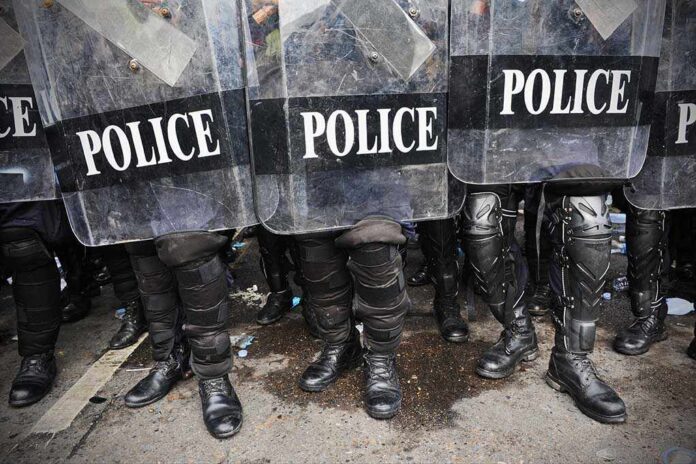
The operation took place in south Minneapolis, less than a mile from where George Floyd was killed in 2020. This geographical proximity fueled immediate public reactions and protests. Demonstrations formed at the scene, and tensions escalated outside federal buildings, with confrontations between demonstrators and federal officers. The Minnesota Bureau of Criminal Apprehension has opened an investigation into the shooting, which continues to unfold.
Media and Political Framing
The incident quickly became a focal point for media and political narratives. Mainstream outlets focused on factual reporting and conflicting accounts from federal and local sources. In contrast, alternative media and commentators framed the event as a politically manipulated incident, coining it as a “psy-op” from both sides. This framing suggests deliberate narrative shaping to advance broader agendas, such as systemic violence and racism versus law-and-order justifications.
The rapid spread of videos and the proximity of the event to George Floyd’s death site intensified media coverage and public interest. Minneapolis, already a symbol of policing and racial justice debates, became the stage for renewed scrutiny over law enforcement actions. The involvement of federal immigration agents, as opposed to local police, introduced national debates on immigration enforcement and federal authority into the discussion.
Stakeholders and Motivations
Key stakeholders include Renee Nicole Good’s family, ICE officer Jonathan Ross, and various political figures. ICE and DHS aim to defend the agent’s actions, citing self-defense against a perceived vehicular threat. Local officials, including Mayor Frey and Governor Tim Walz, challenge this narrative, emphasizing the need for accountability and transparency. Activists and advocacy groups use the incident to highlight potential patterns of systemic violence and call for reforms.
Federal and local authorities are at odds, with public statements from local leaders criticizing federal actions and demanding ICE’s withdrawal from Minneapolis. The clash of narratives creates a polarized environment, where different constituencies accept divergent interpretations of the incident. The involvement of a prior incident involving the ICE officer, where he was dragged by a vehicle, adds complexity to the narrative.
Implications and Future Developments
The short-term implications include heightened tensions and potential unrest in Minneapolis, reminiscent of the aftermath of George Floyd’s death. The incident strains federal-local relations, with local leaders advocating for ICE’s departure and questioning the agency’s authority in the city. The narrative polarization underscores the role of media in shaping public perception and trust in institutions.
Long-term, the incident may influence federal accountability and immigration enforcement policies. Calls for clearer jurisdictional rules and mandatory body cams for federal agents could gain traction. The impact on public trust in law enforcement and media persists, as contradictory narratives and rapid framing challenge institutional credibility. The ongoing investigation by the Minnesota BCA will play a crucial role in determining the incident’s outcome and subsequent policy discussions.
Sources:
City of Minneapolis Official News
Minnesota Department of Public Safety