

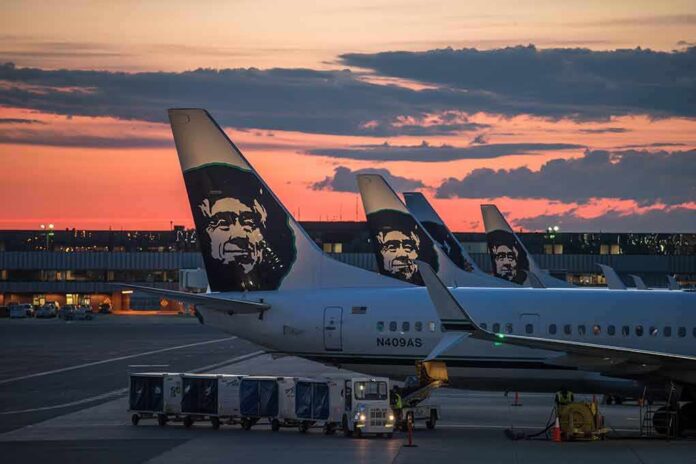
A government mandate cutting 10% of flights at major airports ignites frustration over political gridlock.
Story Overview
- The FAA and DOT directed a 10% reduction in flight schedules at 40 major airports due to the government shutdown.
- This unprecedented move highlights the impact of political gridlock on public transportation and the economy.
- Passengers face cancellations, rescheduling, and potential financial losses.
- Airlines and airports are struggling to maintain operations amid reduced staffing.
Impact of the Government Shutdown on Aviation
The Federal Aviation Administration (FAA) and Department of Transportation (DOT) have mandated all U.S. airlines to cut their flight schedules by 10% at 40 major airports. This directive, issued on November 6, 2025, comes in response to staffing shortages caused by an ongoing government shutdown. The aim is to maintain safety standards and manage air traffic with limited resources, directly affecting passengers and airline operations.
Flights Cut 10% at 40 Major Airports https://t.co/ORXDp4UpbT
— V.Streifel (@streifel_v) November 6, 2025
Immediate Effects on Airlines and Passengers
Airlines such as United, Delta, and American are scrambling to comply with the directive while minimizing disruption to their services. Passengers are experiencing cancellations and delays, causing financial losses and inconveniences. The sudden implementation of these cuts has placed additional strain on airline customer service and operational management.
Flight cancellations and rescheduling are now routine, as airlines adjust their schedules to meet the new requirements. Airport authorities are also working to accommodate these changes, ensuring the safety and efficiency of operations amid reduced flight volumes.
The Political and Economic Repercussions
The ongoing government shutdown that prompted these flight cuts is a stark reminder of how political stalemates can have immediate, tangible impacts on everyday life. The aviation sector, heavily dependent on federal oversight, is particularly vulnerable to such disruptions. As Congress remains deadlocked, the pressure mounts to resolve the shutdown and restore normal operations.
The long-term implications of this situation could include an erosion of consumer confidence in air travel and potential financial repercussions for airlines and airports. The precedent set by this federal intervention may influence future regulatory actions in the aviation industry.
Sources:
United Airlines newsroom confirms FAA/DOT directive and compliance