
For the first time, U.S. holiday retail sales are forecast to break $1 trillion in just 60 days.
Story Snapshot
- National Retail Federation projects $1.01–$1.02 trillion in November–December sales.
- Growth expected at 3.7% to 4.2% year over year from $972 billion last season.
- Forecast counts retail excluding autos, gas, and restaurants, by design.
- NRF chief says this would be the first time the 60-day window tops $1 trillion.
NRF Puts A Trillion-Dollar Bow On 2026 Holiday Forecast
The National Retail Federation said U.S. holiday retail sales in November and December are set to rise between 3.7% and 4.2%, reaching about $1.01–$1.02 trillion, up from $972 billion last year. The trade group defines the season as November 1 through December 31 and excludes automobile dealers, gasoline stations, and restaurants to focus on core retail categories. Reuters echoed the $1.013 trillion midpoint and 4.2% figure in its coverage of the outlook.
National Retail Federation President and Chief Executive Officer Matthew Shay framed the mark as a first for the two-month period. He said these 60 days have never crossed the $1 trillion line before, underscoring the milestone’s symbolic weight for retailers who rely on the season for a large share of annual sales. The projection suggests solid demand despite higher prices and mixed signals from big-box chains about value-focused shoppers.
How The Forecast Was Built And What It Covers
The forecast draws on a model that includes consumer spending, employment, wages, inflation, disposable income, and long-run retail sales history. That blend aims to catch both paychecks and prices. The scope excludes automobile dealers, gasoline stations, and food service. That keeps attention on department stores, general merchandise, electronics, home goods, and online retail. The method aligns with “core retail” concepts that analysts use to strip out volatile or non-retail categories.
The group’s range matters for planning. Retailers use the band to set inventory, staffing, and promotions. A 3.7% outcome would still mark a record by dollars. A 4.2% result would place the season near the top of the past decade’s growth pace without the pandemic spikes. Several outlets reported the upper bound as the headline number, but the official guidance is a range, not a single point.
Why Households May Spend More This Year
Jobs and wages remain the prime fuel for holiday budgets. Steady employment gives families confidence to book travel, deck the house, and click “buy” on gifts. Slower inflation also helps a paycheck stretch further than last year. Reporting noted that higher-income households could carry more of the lift, as they have more room for discretionary buys and premium brands in a season built on gifting and gatherings. Retailers tailor deals to widen the tent for value seekers and splurgers.
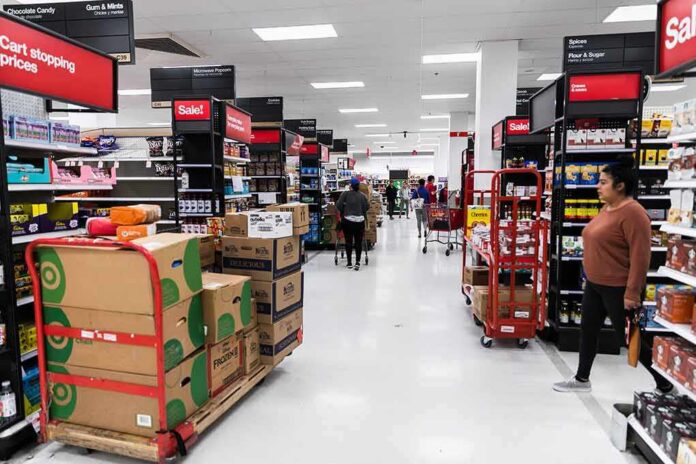
Online sales continue to rise as a share of spend. Promotions start earlier, shipping is faster, and curbside pickup removes friction. That shift helps many categories from toys to tech. Brick-and-mortar still matters for browsing and last-minute runs. The strongest chains blend both. A trillion-dollar season does not mean every store wins. It means the total pie gets larger, and those who match price, service, and convenience will claim the larger slices.
What This Milestone Does And Does Not Mean
The trillion-dollar mark is a nominal milestone. Dollars are not adjusted for inflation, so part of the rise reflects higher prices. The defined scope also excludes gasoline stations, restaurants, and automobiles, so it does not capture all holiday-related spending. That clarity avoids apples-to-oranges debates and lets retailers compare against the same basket each year. A forecast is not the final score; the Census Bureau’s monthly tallies and retailer results will settle the season after New Year’s.
Common sense aligns with the projection’s frame. Families budget around paychecks and prices; stores invest for demand they expect, not wish for. A clear definition and a published range treat the public with respect. The free market rewards those who read the customer well and deliver value. If the season lands near the top of the range, it will confirm resilient consumers and disciplined operators. If it comes in lighter, retailers will adjust fast, because that is what they do best.
Sources:
insiderpaper.com, reuters.com, nrf.com, bloomberg.com, bicycleretailer.com, jckonline.com
© theredwire.com 2026. All rights reserved.