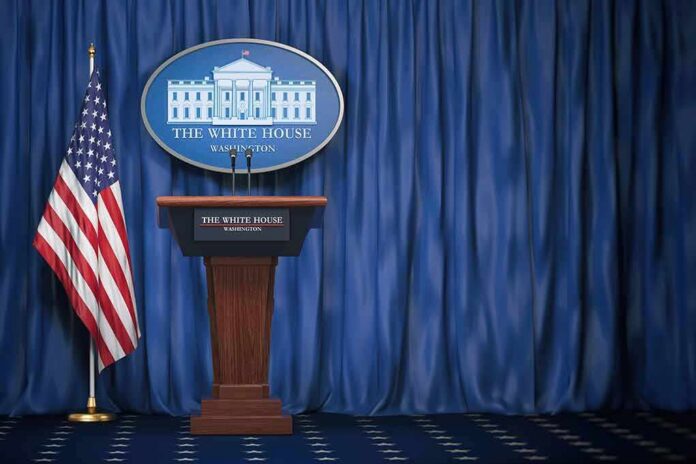
After the White House barred CNN, MS NOW, and Politico, the television pool said it will stop covering President Trump from inside the building, escalating a fight over who gets to witness the people’s business up close.
Story Snapshot
- President Trump barred three outlets from White House access after slamming their coverage as “fake news”.
- Reporters from the outlets say their hard passes were deactivated and seized at the gate.
- The outlets filed a lawsuit arguing the ban is unconstitutional viewpoint discrimination and lacks due process.
- Network pool producers plan to halt inside coverage to protest selective access and protect shared norms.
What the White House Did and Why It Matters
President Trump announced on Friday, September 18, that CNN, MS NOW, and Politico would be banned from the White House because of what he called “fake news” and dishonest reporting. On Saturday, reporters from the outlets arrived for work and found their credentials deactivated. Security turned them away and took their badges, according to on-air reports and later write-ups. The administration described the move as an access decision on White House grounds, not a ban on publication itself.
The access change hit more than pride. White House entry controls who gets into briefings, who sees events in person, and who asks questions first. That affects how fast news reaches the public and which facts set the day’s agenda. When one outlet is locked out, rivals can gain an edge. When several are locked out, the whole press corps must decide whether to accept the new rules or push back together to keep coverage fair for viewers and readers.
The Lawsuit and the Core Constitutional Clash
CNN, MS NOW, and Politico filed suit against the administration, saying the ban punishes their reporting and violates the First Amendment and the Fifth Amendment’s due process protections. Their filing argues the government cannot yank access with no warning or clear process, and cannot pick winners and losers based on viewpoint. Prior cases involving Jim Acosta’s pass and the Associated Press’s access fights show courts often reject arbitrary or viewpoint-based exclusions from White House areas and press pools.
The White House has said past access steps were tied to standards and names, not speech, but the record here includes a direct link to coverage. Trump’s own posts blasted the outlets as “fake news,” and reports do not cite a specific rule breach by those newsrooms beyond that criticism. Legal experts say that tie could be a key weakness for the government, since courts view viewpoint discrimination as a serious First Amendment problem in managed press spaces, even when those are not open to everyone.
How the Pool Protest Changes the Stakes
Television networks that staff the rotating White House pool indicated they will pause inside coverage rather than participate under selective rules, according to broadcast reports. Pool duty is a shared system: one crew records and reports for all. If the pool refuses to enter, the White House loses the daily video and notes that help every outlet, including those still credentialed. That move raises pressure on both sides to find a workable standard that treats outlets equally for access while keeping order and security inside the complex.
CNN, MS NOW, and Politico are suing over the White House’s denial of press access, citing the First Amendment—and as a former journalist, I am outraged. The American people had two chances to ban him from the White House, and they didn’t. #FreePress https://t.co/37KFxaUsy8
— Randy Hucks (@randyhucks) September 21, 2026
For viewers, this standoff means fewer live looks inside key moments and more distance between leaders and the public. For conservatives fed up with biased coverage, the ban may feel like overdue accountability. For liberals alarmed by government pressure on media, it looks like power used to punish critics. For the growing middle that thinks Washington protects insiders first, it reads as another fight where institutions guard turf instead of fixing the rules in plain sight and on neutral terms.
What to Watch Next: Rules, Records, and Remedies
Courts will ask basic questions. Who issued the order? What written policy allowed it? How was it applied to others? Reports so far do not include a formal directive, rule citation, or timeline for review, which makes the case hinge on public statements and checkpoint actions. Judges have forced the White House to restore access before when due process was missing. A similar ruling could come fast here, especially if the record shows viewpoint-based motives tied to official acts.
Why This Moment Feels Bigger Than a Media Spat
Americans across the spectrum are tired of elites protecting their own. Many see media giants and government power as two sides of the same coin. This clash is a stress test for both. If the White House can exclude critics by label, future leaders will try it again. If major outlets bend facts or act with double standards, trust crumbles. The fix is simple but hard: clear, public, viewpoint-neutral access rules and a press that earns trust with careful work and fast corrections.
Sources:
abcnews4.com, politico.com, katu.com, apnews.com, usatoday.com, media.cadc.uscourts.gov
© theredwire.com 2026. All rights reserved.