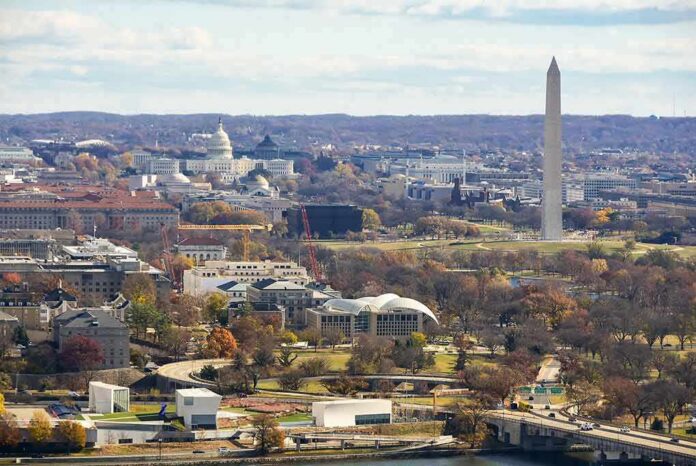
Federal planners advanced a 250-foot Triumphal Arch at Memorial Circle while President Trump said the site will also serve national security needs as a “top grade Military Complex.”
Story Highlights
- Interior and Park Service records show the project is moving through formal reviews
- Design reviewers granted preliminary site and building approval for the location
- Planning documents outline a fast construction pace and long workdays
- Opponents dispute authorization and warn of harm to historic views
What Moved the Project Forward This Year
The Interior Department and the National Park Service advanced the arch through formal planning steps and a preservation review. Officials circulated a draft memorandum of agreement that lists mitigation such as vibration monitoring and an archaeology plan. The Park Service also said the arch fits the corridor’s ceremonial purpose, describing the avenue as a place that honors valor and American heritage. These filings show the plan has an administrative path, not just a speech or sketch.
The National Capital Planning Commission granted preliminary approval for site and building plans. That vote gave the project a key green light to keep moving through design and compliance steps. President Trump said his team filed renderings and plans with the Commission of Fine Arts earlier in the year, framing the arch as a major national monument. Together, those moves put the proposal into the federal pipeline where deadlines, comments, and mitigation get tracked.
Trump’s Added Security Frame, and What Records Show
President Trump said the project will double as a “top grade Military Complex/Triumphal Arch,” citing national security and a request from the military. Public documents released so far center on a monument and site plan. They do not include a defense mission statement or named Pentagon sponsor in the material reviewed here. That leaves the security use claim politically important but not yet matched by technical filings in the cited record.
Reporters also quoted claims that the complex could host security posts, including snipers or drones, and store ammunition. Those assertions heighten debate around safety and preparedness. The available planning sources in this packet focus on heritage, traffic, and views, not weapons storage or force protection design. If more defense documents emerge, they could clarify how any dual use would work under law and within the ceremonial landscape.
Timeline, Construction Pace, and Mitigation
Planning materials describe a fast build window. Reports say construction could run two to three years, with excavation poised to begin quickly and crews scheduled for up to 20 hours per day, year-round. The Park Service’s mitigation framework would document adverse effects and manage work risks through steps such as vibration monitoring and an archaeological plan. These measures show agencies are preparing to constrain harm while keeping the schedule moving.
The Park Service acknowledged adverse effects on historic properties and views but concluded the arch should remain at the proposed site, citing ceremonial goals. That position aims to balance heritage impacts with the project’s stated purpose. It also sets a paper trail that courts and commissions will weigh against objections about sightlines and the character of the monumental core.
Opposition: Views, Law, and Location
Veterans, preservation groups, and commentators argue the project lacks new, specific congressional authorization and would harm iconic views, including the visual link between Arlington National Cemetery, Arlington House, and the Lincoln Memorial. Some opponents call the arch a vanity project and say it disrespects nearby hallowed ground. Their filings and public comments target both the process and the choice of site, which is among the most sensitive in the nation’s civic landscape.
🚨 JUST IN: President Trump reveals at the request of the military and for national security, he is converting the Triumphal Arch in DC to a MILITARY complex/arch that will “house, store, and have the rapid ability to use large numbers of drones, plus Snipers” 🔥
“On both the…
— Theusadailynews (@thescottbessent) September 20, 2026
Preservation reports say the arch would adversely affect dozens of historic sites or districts and alter major sightlines across the river corridor. That finding does not stop the project by itself, but it raises the bar for mitigation and invites court challenges and appeals. The administration answers that Memorial Circle already serves as a ceremonial gateway and that the arch would honor sacrifice and strengthen national pride. The legal fight will test which aim carries more weight.
What to Watch Next
Three factors will shape the outcome. First, whether agencies publish any defense documents that describe a concrete security mission at the site, which could support the President’s dual-use claim. Second, whether Congress addresses funding or authorization questions raised by critics. Third, how review bodies handle final design, traffic, and view protections. For readers who value secure borders, strong defense, and honest stewardship, those details decide if this build serves both heritage and safety.
Sources:
theguardian.com, yahoo.com, cnbc.com, npr.org, washingtonian.com, politico.com, wtop.com
© theredwire.com 2026. All rights reserved.