

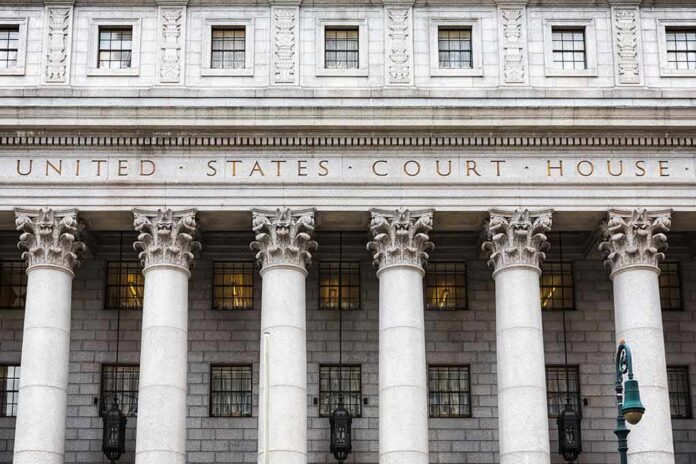
Prosecutors told a Manhattan judge that a loaded magazine wrapped in underwear and a handgun linked to a murder were recovered in a high-profile case tied to a New York court appearance, underscoring a serious courthouse security failure risk.
Story Snapshot
- Prosecutors said a loaded magazine was wrapped in underwear and a matching handgun was recovered in the case.
- Court testimony identified the officer who found the magazine and described the concealment in detail.
- The gun was linked by prosecutors to the killing of UnitedHealthcare’s chief executive, raising stakes for security.
- National data show courthouse threats persist over decades, shaping safety policy nationwide.
What Prosecutors and Witnesses Described in Court
Manhattan prosecutors detailed how evidence connected to a murder case included a loaded handgun and a magazine wrapped in underwear, found with other items like identification and a notebook. Reporting from the hearing lists both the firearm and the magazine among materials the defense sought to suppress. The testimony identified the officer who opened the wrapping and found the loaded magazine, giving the court a step-by-step account of the concealment and recovery during the case proceedings.
Prosecutors said the handgun matched the weapon used to kill UnitedHealthcare chief executive Brian Thompson, tying the seized firearm to a deadly crime and heightening public safety concerns. That linkage adds weight to the court’s review of how the items were carried and stored. The incident was described during a pretrial hearing in Manhattan Criminal Court, which placed the account on the record and allowed both sides to argue over whether the gun and magazine could be used as evidence.
How the Evidence Was Packaged and Why It Matters
Court testimony said a police veteran opened a gray pair of underwear and found a magazine loaded with bullets inside. That detail matters for two reasons. First, it shows intent to hide a deadly item in a way that could bypass casual checks. Second, it explains why the defense targeted the search and seizure in its suppression bid. The hearing also noted a silencer, a passport, and other personal items among the property, painting a fuller picture for the judge.
The reporting that prosecutors tied the handgun to the Thompson killing changes the stakes from a simple weapons case to one linked to a homicide. Courts treat those facts with special care, because a ruling on evidence can shape the entire trial. The judge must weigh how the items were found, whether procedures were followed, and how closely each item connects to the charged crimes. Those steps help protect both public safety and due process.
Courthouse Security Trends and Public Concerns
National studies show that weapons and threats at courthouses are not new, even if each case feels shocking. One study documented 185 court-targeted shootings, bombings, and arson attacks from 1970 to 2009, and another analysis counted more than 400 court-targeted acts in a more recent seven-year span. These numbers drive tighter screening, more training, and clearer rules on what enters public buildings where judges, staff, and victims seek justice.
Nutjob strolled into NYC court with loaded handgun tucked in his underwear https://t.co/yNNMWn411y pic.twitter.com/DQGGMsaUYz
— New York Post Metro (@nypmetro) September 23, 2026
People across the political spectrum worry that the system is not protecting them. Many feel that leaders talk tough but fail to deliver basic safety. Incidents like a loaded magazine wrapped in underwear feed that anger, because they suggest bad actors can get close to the justice system’s core. Strong screening, clear chain-of-custody rules, and transparent court reviews help restore trust. They show that facts, not spin, decide what evidence a jury will hear.
Sources:
us.headtopics.com, nyed.uscourts.gov, bronxda.nyc.gov, caselaw.findlaw.com
© theredwire.com 2026. All rights reserved.