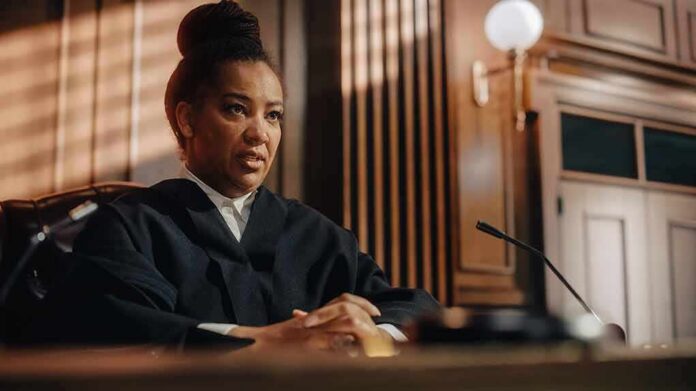
After five days of deadlock, a Massachusetts judge moved to declare a mistrial in the Lindsay Clancy case and gave the defense one hour to seek an emergency halt from the state’s highest court.
Story Snapshot
- Jurors told the judge multiple times they could not reach a unanimous verdict.
- The judge used a special instruction to push further talks before signaling mistrial.
- Massachusetts law limits how often a deadlocked jury can be sent back to deliberate.
- The defense raced to the Supreme Judicial Court for an emergency stay.
What the Jury Reported and Why It Matters
Reuters reported that jurors told Judge William Sullivan they were “at an impasse” after four days of talks, and the next day said they still could not reach a unanimous verdict. The panel had already worked through a long trial record. Reporters said the case spanned nearly six weeks, more than 80 witnesses, and over 300 exhibits. Five days of deliberations ended with no decision. Those facts set the stage for limits in state law on how long a deadlocked jury can keep going.
NBC News and other outlets explained that Massachusetts procedure allows a judge to send jurors back only so many times without their consent once they twice report a true impasse. Judges can deliver a careful instruction to urge more discussion, but they must avoid pressure that could force a holdout to give in. On the fifth day, Judge Sullivan used that tool, often called a “dynamite” or deadlock instruction, before signaling that a mistrial was next if stalemate held.
What the Judge Did Inside the Courtroom
According to ABC News, Judge Sullivan said he planned to declare a mistrial but paused for one hour so defense lawyer Kevin Reddington could ask the Massachusetts Supreme Judicial Court for an emergency stay. That step showed the court treated the defense challenge as a live legal issue, not a stunt. Earlier, the judge also rejected removing a juror the defense claimed was not following the reasonable-doubt rule, saying he would not take sides between one and eleven jurors.
Reporters said the judge’s moves fit a common pattern. Courts try to fix deadlocks without coercion and then stop when the law’s limit is reached. Here, the panel’s repeated notes and long effort pointed toward that limit. The judge also had to balance speed and fairness. He kept the jury together, used the standard instruction, and then paused for rapid review by the high court before reading a mistrial on the record, as ABC described.
What the Defense Is Arguing Now
The defense said the jury should be polled on partial verdicts before any mistrial is final, because a partial acquittal could block a retrial on those counts. ABC summarized that push while noting the one-hour clock for the high court filing. The request aims to protect double-jeopardy rights if any charge was already decided. The available reporting does not include the stay petition itself, so the exact legal claims remain unseen for now.
Lindsay Clancy Case: Judge Prepares to Declare Mistrial, Defense Given One Hour to Petition for Stay | Oxygen https://t.co/wl78RsnBlX
— Oxygen True Crime (@oxygen) September 4, 2026
Across the country, people see cases like this as proof that the system serves insiders, not citizens. This case taps that nerve on both sides. Conservatives worry about drawn-out trials and rules that seem to shield failure. Liberals worry about fairness, bias, and unequal justice. Here the record shows a court trying to follow the rules under stress: deadlock notes, a standard instruction, a pause for urgent review, and then a likely reset if the high court does not step in.
What Comes Next and Why It Affects You
If the Supreme Judicial Court denies the stay, the trial court can read the mistrial in open court and release the jury. Prosecutors may retry the case, since a mistrial is not an acquittal. If the court orders a poll for partial verdicts, any not-guilty result on a count could stop a retrial on that count. Until the stay ruling or transcript appears, some finer points will stay unclear. But the core fact remains: the jury could not agree, and the law now guides the reset.
Sources:
bbc.com, www-cdn.abcnews.com, theguardian.com, nypost.com, nbcnews.com, bostonglobe.com
© theredwire.com 2026. All rights reserved.