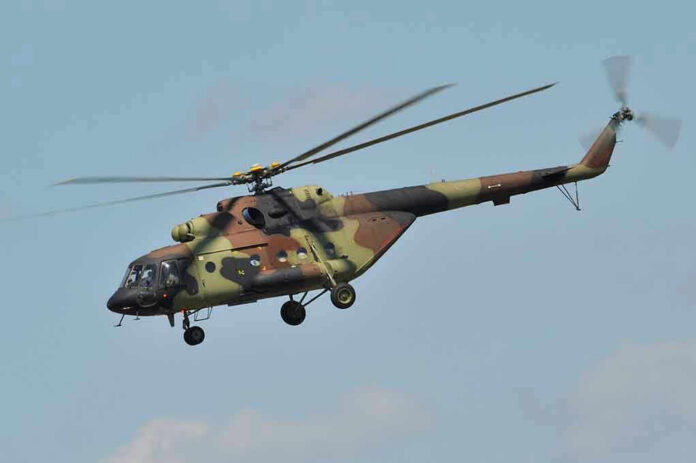
As questions swirl over an Army Apache crash near the Strait of Hormuz, the clearest facts so far highlight both a successful rescue and a troubling lack of answers about what brought the helicopter down.
Story Snapshot
- Trump says the two Army Apache pilots are safe, with no reported injuries after the crash near the Strait of Hormuz.
- Reports confirm the crew was rescued from the water within hours, helped by a U.S. Navy surface drone, and is in stable condition.
- Military officials say the cause of the crash is still under investigation, with possibilities ranging from Iranian fire to mechanical failure.
- The incident comes amid high Iran-Israel tensions and raises serious concerns about U.S. readiness, transparency, and the growing cost of war.
What Happened To The Apache Near The Strait Of Hormuz?
A United States Army AH-64 Apache attack helicopter crashed near the Strait of Hormuz, a narrow but vital oil and shipping lane already on edge from conflict between Iran and Israel.[3] President Donald Trump confirmed that the helicopter went down on Monday and that both crew members were recovered alive from the water.[3][2] The area is under the watch of United States Central Command, and the crash instantly drew attention because any incident there can spark fears of a wider clash with Iran.[1][3]
United States military officials said a U.S. Navy surface drone located and rescued the two crew members within about two hours, and Central Command reported that they were in stable condition after the recovery.[2] Trump, speaking to reporters on the runway at John F. Kennedy International Airport in New York, emphasized that “The pilots are fine…Nobody injured,” and promised that a formal report on the incident would follow.[2][3] Other outlets echoed that both crew members were “rescued safely” or “unharmed.”[5]
What We Know – And Do Not Know – About The Cause
News reports that rely on United States officials and the New York Times agree on one key point: the cause of the Apache crash is still unclear.[2][3] Officials have not ruled out hostile action, and say it is not immediately clear whether the helicopter was shot down by Iranian fire, suffered a mechanical failure, or ran into some other problem.[2][3][5] Central Command and the Defense Department did not immediately give detailed public comments about the crash, leaving many questions unanswered in the crucial first days.[3]
This official silence created room for speculation and competing stories, especially on social media and foreign media outlets. Some commentary pushed the idea that Iranian weapons may have brought the aircraft down, while others suggested a possible accident tied to mechanical issues or heavy operations.[2][5] So far, none of the public reports include flight data, wreckage analysis, maintenance records, or cockpit audio that would clearly show what failed on the aircraft or whether it was hit by a weapon.[1] Without that technical evidence, the public is left with broad possibilities instead of firm answers.
Trump’s Message, Media Spin, And The Costs Of A Shadow War
Trump’s first response focused on what most Americans care about first: our people.[1][2][3] By stating plainly that the pilots were “fine” and that nobody was injured, he reassured military families and showed that the rescue worked, even in dangerous waters watched by Iran.[2][3] That message was quickly repeated across television and online coverage of the incident, helping frame the crash as a survivable event rather than an immediate disaster or trigger for war.[4][5]
At the same time, other outlets linked the crash to the larger United States–Israeli war with Iran and to the mounting cost of that conflict.[5] One detailed broadcast report said the Apache was the first of its kind lost in this war and claimed that at least forty-two United States aircraft have been lost or damaged since the fighting began, including jets, refueling planes, special operations aircraft, helicopters, and drones.[5] That reporting also cited intelligence estimates that Iran still has roughly seventy percent of its pre-war missile stockpile and about seventy-five percent of its mobile launchers, with access restored to most of its missile sites near the Strait.[5] If these numbers hold, they raise serious questions about Washington’s strategy, the effectiveness of months of strikes, and the burden placed on our pilots and hardware.
Why This Matters For Security, Transparency, And Conservative Voters
The Strait of Hormuz has long been a flashpoint where a single incident can be used to push the United States toward deeper entanglement or to score propaganda points against America.[1][2] When an attack helicopter crashes there and officials cannot quickly explain why, foreign regimes and agenda-driven media rush to fill the gap with their own stories. That is why many conservatives insist on clear facts, strong oversight, and full accountability from the Pentagon before accepting any narrative that could drag the country into another long and costly conflict.
Axios reports that US officials are investigating whether an Army AH-64 Apache helicopter crash near the Strait of Hormuz was caused by Iranian gunfire. While the rescued crew members remain unharmed, defense teams are verifying if hostile interference or technical failure…
— X-K (@ConflictRadarME) June 9, 2026
For now, the firm facts are limited but important: the Apache went down in a hostile neighborhood; both pilots survived and were rescued; Trump has promised a report; and the cause has not yet been proven.[2][3] Until the Army and the Department of Defense release a full, unclassified summary of what went wrong, Americans will have to read every new claim with caution. The stakes are high: not just for two brave pilots, but for our national strength, our tax dollars, and our willingness to keep fighting open-ended wars in dangerous straits while our own borders and families still need attention at home.
Sources:
[1] YouTube – Trump says pilots fine after Army Apache helicopter crashes near …
[2] Web – Trump confirms US Apache crash near Strait of Hormuz, pilots safe
[3] Web – Army Helicopter Crashes Near Strait Of Hormuz, Pilots Unharmed
[4] Web – US Army AH-64 Apache crashes near Strait of Hormuz
[5] Web – Trump: 2 crew ‘fine’ after U.S. Apache crash near Strait of Hormuz
© theredwire.com 2026. All rights reserved.