

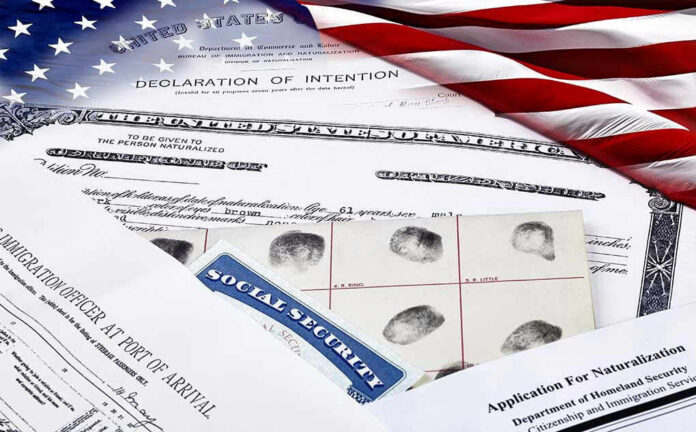
Trump’s latest citizenship fee plan would slap a bigger bill on legal immigrants while stripping away the safety valve for low-income applicants.
Quick Take
- The proposed naturalization fee would rise by **$570**, from **$760 to $1,330** for paper filings.[2]
- The plan would also end fee waivers and cut back reduced-fee options for many lower-income applicants.[2][3]
- The Department of Homeland Security says the higher fees are needed to cover processing costs and fully fund the system.[2][3]
- Critics say the move would make citizenship harder to reach for working families who already face high costs.[1][3][6]
What the Plan Changes
The Trump administration has proposed a sharp increase in the cost of becoming a United States citizen. Under the plan reported by CBS News, the naturalization application would rise from $760 to $1,330 for paper filings, while online filings would climb from $710 to $1,280.[2] The proposal also raises the cost of asking United States Citizenship and Immigration Services to reconsider a denial. That fee would jump by $645.[2]
The administration says the higher fees are meant to fully cover the cost of processing applications.[2] That argument fits a long pattern in immigration policy, where the agency says fee hikes are needed to keep operations running and reduce backlogs.[3][4] Supporters of the change can say a fee-funded agency should pay its own bills. But the size of the increase, paired with the removal of waivers, turns a cost-recovery plan into a much harder gate for citizenship.
Why the Fee Hike Hits Hard
The biggest fight is not only the price increase. It is the loss of fee relief. The proposed rule would eliminate fee waivers for citizenship cases and remove reduced-fee access for immigrants whose household income is at or below 400 percent of the federal poverty line.[2] Earlier reporting on the Trump-era proposal also said the new rules would wipe out a reduced-fee option for families between 150 percent and 200 percent of poverty and almost eliminate waivers for everyone else.[1]
That matters because naturalization is already a major expense for many lawful permanent residents. Critics warned that the earlier Trump proposal would push the total cost to $1,170 and make the process unaffordable for many green card holders.[1][3] Congressional opponents said the fee hike would create a barrier to citizenship and pressure low-income applicants to stay on the sidelines.[6] Even neutral summaries of later fee rules note that USCIS has repeatedly justified fee increases as a way to recover costs and improve operations.[3][4]
The Broader Immigration Message
This is part of a wider fight over how much the government should charge people who want to live lawfully in America. Immigration fee disputes have long centered on the same two claims: the agency says it needs more money to process cases, while critics say higher fees shut out the very people the system is supposed to serve.[3][4] The Trump plan lands squarely in that debate by treating naturalization less like a civic milestone and more like a premium service.
NEW: @USCIS is proposing to increase the cost to green card holders of becoming a U.S. citizen by $570, and wants to eliminate existing fee waivers for certain low-income immigrants.
The Trump admin says it no longer believes in encouraging naturalization with low-cost options. pic.twitter.com/e72C1DFGJm
— Aaron Reichlin-Melnick (@ReichlinMelnick) June 22, 2026
For readers who value limited government and a stable rule of law, the policy raises a simple question: should citizenship become harder to reach because Washington wants more revenue?[2][3] The administration’s case is that users should pay the real cost of the system.[2] The countercase is that a republic should not make citizenship feel like a luxury good, especially when the same government already places heavy burdens on families through taxes, inflation, and rising living costs.[1][6]
What Happens Next
The fee proposal is not immediate. It must still move through the federal rulemaking process, including public comment.[2] That gives opponents, legal groups, and lawmakers a chance to push back before the change takes effect. The debate is likely to stay sharp because the numbers are easy to understand and the stakes are plain. A $570 jump may look small in Washington. For many families, it can be the difference between filing now or waiting years.
Sources:
[1] Web – Trump plan would increase citizenship application fee by $570
[2] Web – Trump Administration Proposes Increased Immigration Fees
[3] Web – USCIS issues final rule increasing fees
[4] Web – USCIS Finalizes Increase in Fees for Immigration-Related Applications
[6] Web – Explainer | Trump and Congress’s Punishing New Immigration Fees
© theredwire.com 2026. All rights reserved.