
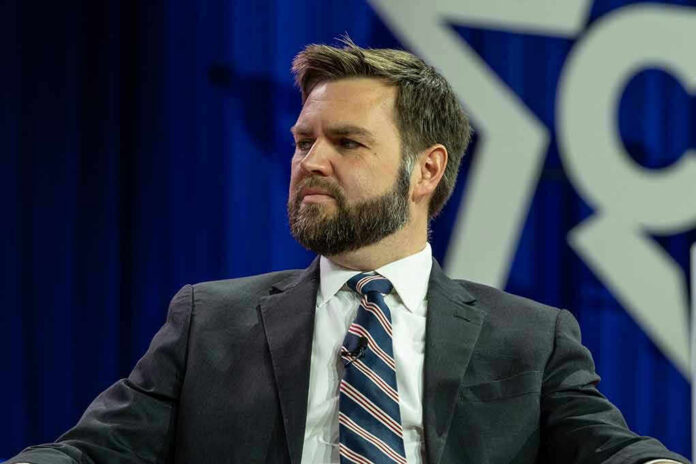
Vice President JD Vance’s “little weasel” jab at Abdul El-Sayed shows how a high-stakes Michigan race is sliding from policy to personal attacks.
Story Snapshot
- Vance mocked El-Sayed at an October 15 Michigan rally, amplifying GOP attacks on his priorities.
- President Trump and Mike Rogers have tied El-Sayed to “extremism,” but offered no public evidence.
- El-Sayed counters that his focus is Michigan costs and ending foreign aid he says hurts local budgets.
- Scholars say more negativity can erode trust without clearly changing votes.
Rally Flashpoint: Vance’s Insult Becomes the Story
Vice President JD Vance used a Monroe, Michigan rally on October 15 to label Democratic Senate nominee Abdul El-Sayed a “little weasel,” saying he obsesses over conflicts abroad instead of Michigan issues. A separate report said Vance framed El-Sayed as focused on Israel and foreign policy, not local needs. The jab fits a months-long pattern. Republicans have pressed a case that El-Sayed’s views on Israel and aid abroad make him wrong for the state, and they have done so in blunt terms.
El-Sayed shot back with sharp language at his own events, answering the insult with a profane retort reported by a national outlet. The exchange signaled a turn in the race. Personal attacks grabbed attention just as voters seek clear answers on jobs, energy, and prices. Both sides now trade sound bites that travel fast. That helps partisan morale but can drown out details on taxes, health care, and roads, which most families rank above campaign drama.
Escalating Claims: From “Weasel” to “Extremist”
President Trump called El-Sayed a “RADICAL Extremist, Terrorist Sympathizer” on social media, and Republican nominee Mike Rogers cited alleged links to foreign groups during their first debate. Michigan Public reported Rogers provided no evidence at the debate to back claims about El-Sayed, his family, or ties to organizations labeled terrorist by the United States government. The gap between accusation and public proof has widened, even as the language has grown more severe.
The British Broadcasting Corporation reported the debate spotlighted increased anti-Muslim rhetoric, placing these attacks in a larger national trend. That framing matters in Michigan, where Arab American voters and many independents dislike religiously tinged smears. When charges lean on identity instead of records, they can backfire. They can also push the race into a culture fight, which often helps turnout but rarely clarifies what either candidate would do on inflation or infrastructure.
El-Sayed’s Rebuttal: Spend at Home, Not Abroad
El-Sayed argues he opposes large aid packages to Israel because he wants those tax dollars used in Michigan for schools, health care, and roads. He says his focus is kitchen-table costs, Medicare for All, and curbing corporate money in politics, not foreign causes. Supportive coverage has highlighted a volunteer-heavy field effort and a message that links foreign aid cuts to lower costs for families, though such sources are advocacy-leaning and not neutral audits of his plan’s math.
Whether voters accept that link will shape the race. Cutting foreign aid does not automatically lower local taxes, and Congress controls the purse. But the message speaks to a shared worry across party lines: Washington sends money and attention overseas while bridges crumble and drug prices rise. That complaint resonates with people who feel left behind by both parties and who doubt that elected leaders put their needs first.
What the Primary and Research Say About Negativity
El-Sayed won a tight Democratic primary and moved into a marquee general election in a true battleground. Tight primaries show division, but they are not proof of weakness in November. Political research also cuts against the idea that more attacks guarantee victory. Reviews find negative campaigning is memorable and can inform, but it does not reliably boost vote share and can lower trust in government and public mood.
I disagree. Dr El-Sayed is the Michigan Senate Democrat candidate and shame on Chuck Schumer not sending any money to help him win. We need more senate seats so it won’t be 50-50 and Fetterman be the deciding vote.
— Shawn Gilliam #VotingMatters (@JShawnTru07) October 16, 2026
That is the quiet warning in this fight. The insults may harden the base. They may also push moderates away and deepen the sense that Washington cares more about scoring points than solving problems. Many voters, right and left, already think the system works for insiders, not workers. When campaigns trade labels like “weasel” and “extremist,” it confirms their fear that leaders want headlines over hard fixes.
Why This Matters for Michigan Families
Michigan households face real pressures: high prices, uneven wages, and rising insurance and energy costs. Voters need clear plans on bringing down medical bills, repairing roads, and keeping energy reliable and affordable. They also deserve proof when a candidate is accused of dangerous ties. If evidence exists, it should be made public and specific. If not, the race should center on policies that can be measured and held to account after Election Day.
Sources:
cbsnews.com, nbcnews.com, detroitnews.com, ians.in, semafor.com, thehill.com, npr.org
© theredwire.com 2026. All rights reserved.