
Police say Selma Blair injured airline crew and later kicked an officer, while her team calls it a medical emergency—two stark stories now headed for court.
Story Snapshot
- Queens prosecutors charged Blair with two counts of assault; she pleaded not guilty.
- An officer’s filing says Blair kicked him during hospital transport after the plane landed.
- Reports say two flight attendants were hurt; the FBI issued a federal summons tied to onboard acts.
- Blair’s lawyer says missed medication and a head injury left her disoriented, with no intent to harm.
What Police, Prosecutors, and Airlines Say Happened
Port Authority police said they met Delta Flight 938 at the gate at John F. Kennedy International Airport after a report of an abusive passenger from Los Angeles. Officials identified actor Selma Blair as the suspect and detained her around 11 p.m. after the aircraft parked. News reports, citing pilot messages, said two flight attendants suffered injuries, including a bloody nose and bite marks during the flight. These accounts formed the backbone of early coverage and the law-enforcement response.
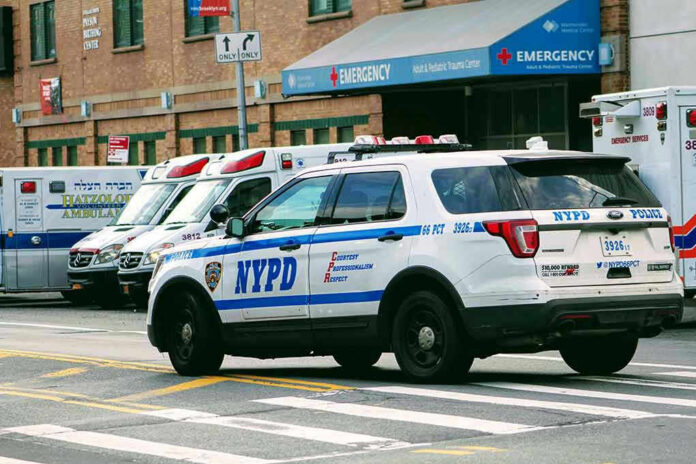
New York state prosecutors then filed two assault counts tied to events after landing. A charging record described what a police officer said occurred during transport to Jamaica Hospital Medical Center. The filing said Blair freed a leg from stretcher straps and kicked the officer several times in the face, neck, and chest, causing pain and swelling. Blair appeared in Queens court and pleaded not guilty to the state charges, setting up a contest over intent and cause.
The Federal Layer: Aircraft Jurisdiction and Next Steps
The Associated Press reported that the Federal Bureau of Investigation (FBI) issued Blair a federal summons for alleged assaults aboard the aircraft. That step reflects the special federal jurisdiction that covers crimes on planes. A summons is not proof beyond a reasonable doubt; it signals that federal authorities see enough to proceed. The agency declined deeper public comment, which is common but leaves the public sorting claims without full records. The federal matter remains pending.
Unruly-passenger cases draw attention, yet they are uncommon when compared with total air travel. Federal Aviation Administration (FAA) data show a surge in 2021 and a sharp fall since then. The FAA warns its database covers only incidents reported by crew, so it is not complete. Most cases do not become criminal prosecutions. The agency referred a small subset for prosecution in recent years, while most enforcement involves civil penalties and fines under its zero-tolerance policy.
Blair’s Medical-Event Defense and Why Intent Matters
Blair’s representative said she had a medical emergency on the flight and did not try to open any aircraft door. Her team also said she has a condition called pseudobulbar affect, which can make episodes seem alarming to people who do not know her. Her attorney told the court that she missed doses of a powerful medication, fell and hit her head, worked long hours, and that altitude worsened confusion and disorientation. He argued there was no intent to harm.
Selma Blair steps back into the spotlight just days after her arrest over an alleged altercation aboard a Delta flight as her team blames a medical emergency and says there is far more to the story while the actress pleads not guilty to two assault charges#NYI pic.twitter.com/FA8ltfbd6O
— NewYork-Insight (@NewYork_Insight) October 17, 2026
Courts separate bad outcomes from criminal intent. The state counts and any federal case will likely hinge on what Blair knew and meant to do, and on medical records that could show impairment. Police and airline accounts frame a safety threat to crew and passengers. The defense frames a health crisis. Both can be serious at once. That tension is why laws allow criminal charges while also letting defendants present medical evidence to challenge intent or capacity.
Why This Case Resonates Beyond One Flight
Air travel relies on trust that crew can keep order and get help fast. Workers say they face more pressure, while passengers feel stuck with delays, tight seats, and frayed nerves. When a celebrity is involved, the system’s bias toward headlines, not nuance, gets worse. Officials share limited records, and anonymous sources fill gaps. That fuels public anger at institutions on both sides—those who see chaos in the skies and those who see rush-to-judgment justice.
What to Watch For Next
Watch for the Queens case file, including body-camera video, hospital records, and any nurse complaint. Look for a federal filing that details the aircraft allegations. Seek Delta and airport reports, timestamps, and air traffic audio to build a clear timeline. If medical experts confirm a genuine episode, that could shift how prosecutors charge or how a jury weighs intent. If records show deliberate acts, penalties could be severe under state and federal law.
Sources:
facebook.com, people.com, abc7news.com, timesofisrael.com, reuters.com, faa.gov
© theredwire.com 2026. All rights reserved.