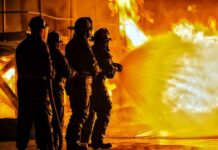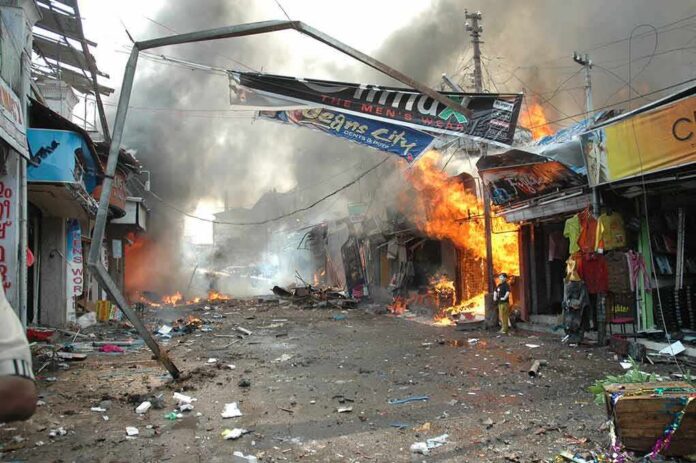
Russian missile and drone strikes set buildings ablaze across Ukraine overnight, forcing firefighters to battle large urban fires and rescue trapped civilians, authorities said.
Story Highlights
- Missiles and drones hit Kyiv and multiple regions, injuring and killing civilians.
- Fires tore through homes, warehouses, and shops; rescuers pulled people from rubble.
- A recent warehouse blast west of Kyiv became the year’s deadliest single attack by toll.
- Attacks fit a wider pattern of larger, faster strike waves straining cities and services.
What Happened Overnight
Ukrainian officials reported that Russia fired missiles and drones at Kyiv and nearby towns overnight, injuring at least 19 people in the capital area and sparking fires in several districts. Emergency crews said blasts damaged apartment blocks and storage sites as debris fell across neighborhoods. Local rescue teams worked through the night to douse flames and clear wreckage. Officials confirmed at least one death in the Kyiv region during a recent wave of similar attacks that hit suburbs hard.
Firefighters faced fast-spreading blazes at shops and warehouses as blasts ripped through thin-walled structures. Recent strikes on logistics hubs and storage depots have triggered intense fires, making rescue work slower and riskier. In Kyiv, city responders reported multiple call-outs at once, stretching crews and equipment as smoke filled stairwells and power flickers complicated elevator rescues. Authorities warned residents to shelter during alerts and avoid glassed areas vulnerable to shock waves.
Fires, Rescues, and Rising Toll
Ukraine’s State Emergency Service said teams pulled adults and a child from collapsed buildings in recent barrages around the capital, where falling debris and secondary fires remain common hazards. In past weeks, Russian strikes set off significant urban fires, including at a shopping area in southern Ukraine and at residential sites, with images showing flames leaping across rooftops. Kyiv’s mayor reported multiple neighborhoods hit in one night, with fires breaking out as fragments landed across courtyards and streets.
Officials say the deadliest single attack this year, by known toll, came west of Kyiv, where a strike on a warehouse site triggered massive explosions and fires that killed at least 38 people as the count rose in the days after. That blast leveled nearby homes and scorched blocks of buildings, highlighting how storage facilities can magnify damage once ignited. Investigators and emergency managers continue to survey wreckage for structural risks and hidden hotspots before allowing residents to return.
A Pattern of Larger, Faster Salvos
Security analysts track a shift toward larger mixed salvos of drones and missiles that arrive in waves and compress the time between major attacks. Think tank work found the average size of Russian strike packages rose sharply from 2022 to 2025, while pauses between major barrages shortened, leaving cities and air defenses with less recovery time. Damage reporting shows strikes concentrate on urban, industrial, energy, and port areas, amplifying fire risk and civilian disruption.
This wartime pattern also affects how numbers emerge. Early reports focus on visible effects like smoke, fires, and injuries, and totals often shift as crews gain access and confirm identities. Independent conflict trackers warn that fatality counts in active war zones are among the most inconsistent data points due to access limits and fear among witnesses. Ukraine’s civil defense urges patience as teams verify damage and casualties while keeping firefighters and medics safe under renewed alerts.
Why It Matters for Americans
These fires show how modern salvos can overwhelm local services and threaten civilians even far from the front. City responders in Ukraine face choices many American towns plan for only on paper: how to fight multiple fires at once when power, water lines, and roads are hit. The same stress points—aging buildings, tight budgets, and gear shortages—worry both the right and left at home. People see images of burned-out blocks and ask whether any government, including ours, is ready if crisis comes.
What To Watch Next
Emergency leaders in Kyiv say they are adding shelter guidance, faster alerts, and safer stairwell protocols as attacks adapt. Analysts will watch whether Russia keeps using larger mixed strikes or shifts to precision hits on energy and storage sites that can spark outsized fires. Casualty numbers may change as searches finish, but the trend is clear: salvos that start fires in dense areas raise the cost for civilians and first responders every time the sirens sound.
Sources:
youtube.com, apnews.com, reuters.com, re-russia.net, everycasualty.org, cnn.com
© theredwire.com 2026. All rights reserved.